The German Air Force is advancing its emergency medical response capabilities through a cutting-edge modular evacuation system designed for the Airbus A400M transport aircraft. Currently undergoing field testing, this innovative approach of a rapid medical evacuation system promises to slash preparation times significantly while maintaining the highest standards of patient care.
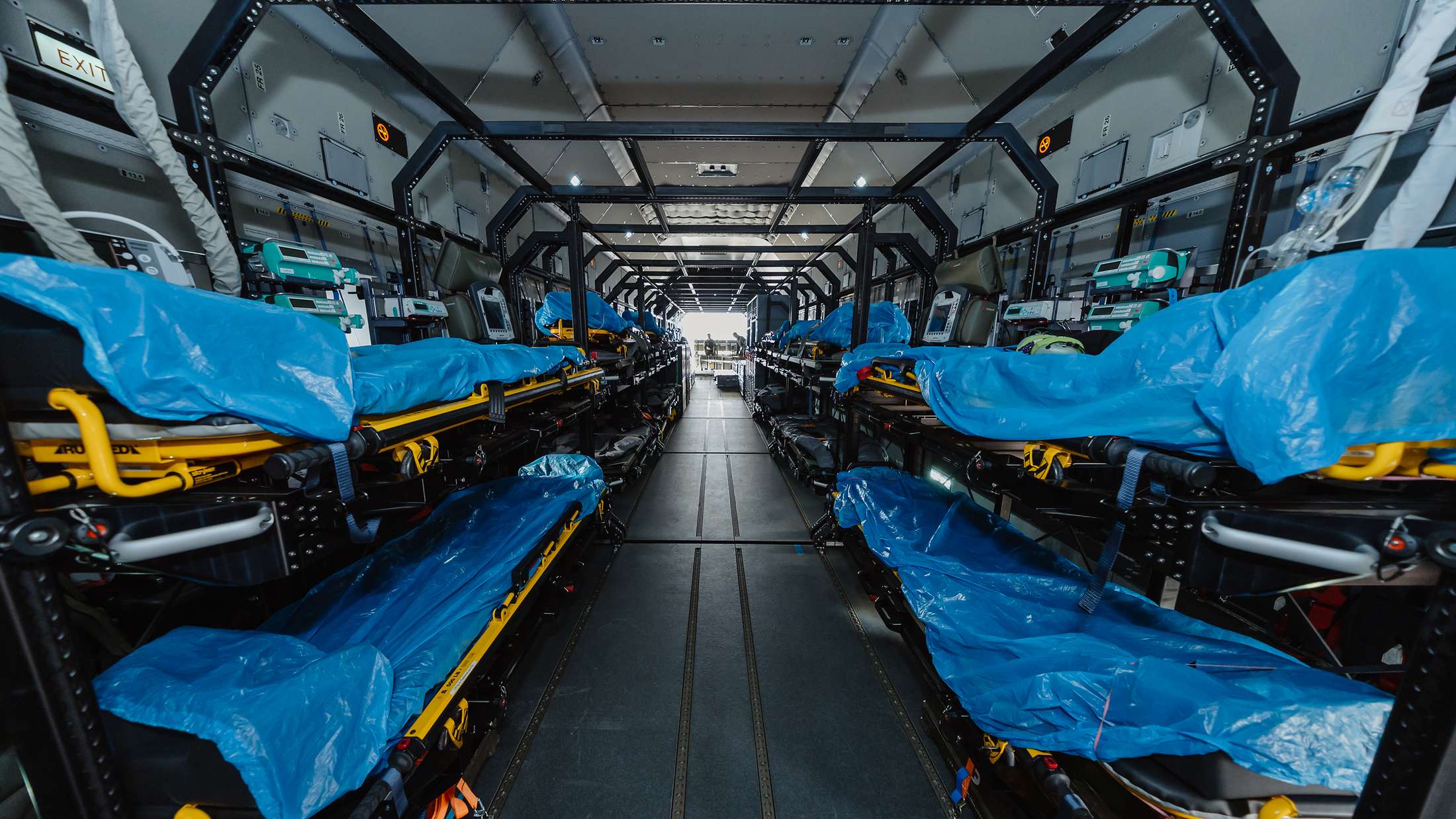
The core breakthrough of this new system is its palletized design, which fundamentally changes how military medics prepare aircraft for emergency transport missions. Rather than individually installing stretchers, medical equipment, and supply containers – a laborious process requiring several hours – maintenance crews can now deploy pre-assembled units that simply slot into the cargo hold and connect to existing infrastructure.
This modular approach of the German Air Force dramatically reduces the conversion window from the traditional four to six hours down to approximately 90 minutes. For air forces operating under tight scheduling constraints, this time savings proves invaluable. Aircraft can continue executing routine training and transport operations until a genuine emergency demands rapid reconfiguration, eliminating the need for dedicated, constantly equipped standby aircraft.
Medical Excellence Adapted for Military Operations
The evacuation platform incorporates contemporary intensive care standards typically found in civilian ground ambulances. A baseline configuration provides capacity for twelve stretcher cases distributed across three loading modules, along with four intensive care treatment spaces spanning two additional modules. The remaining storage allocates space for pharmaceuticals, medical consumables, and specialized equipment.
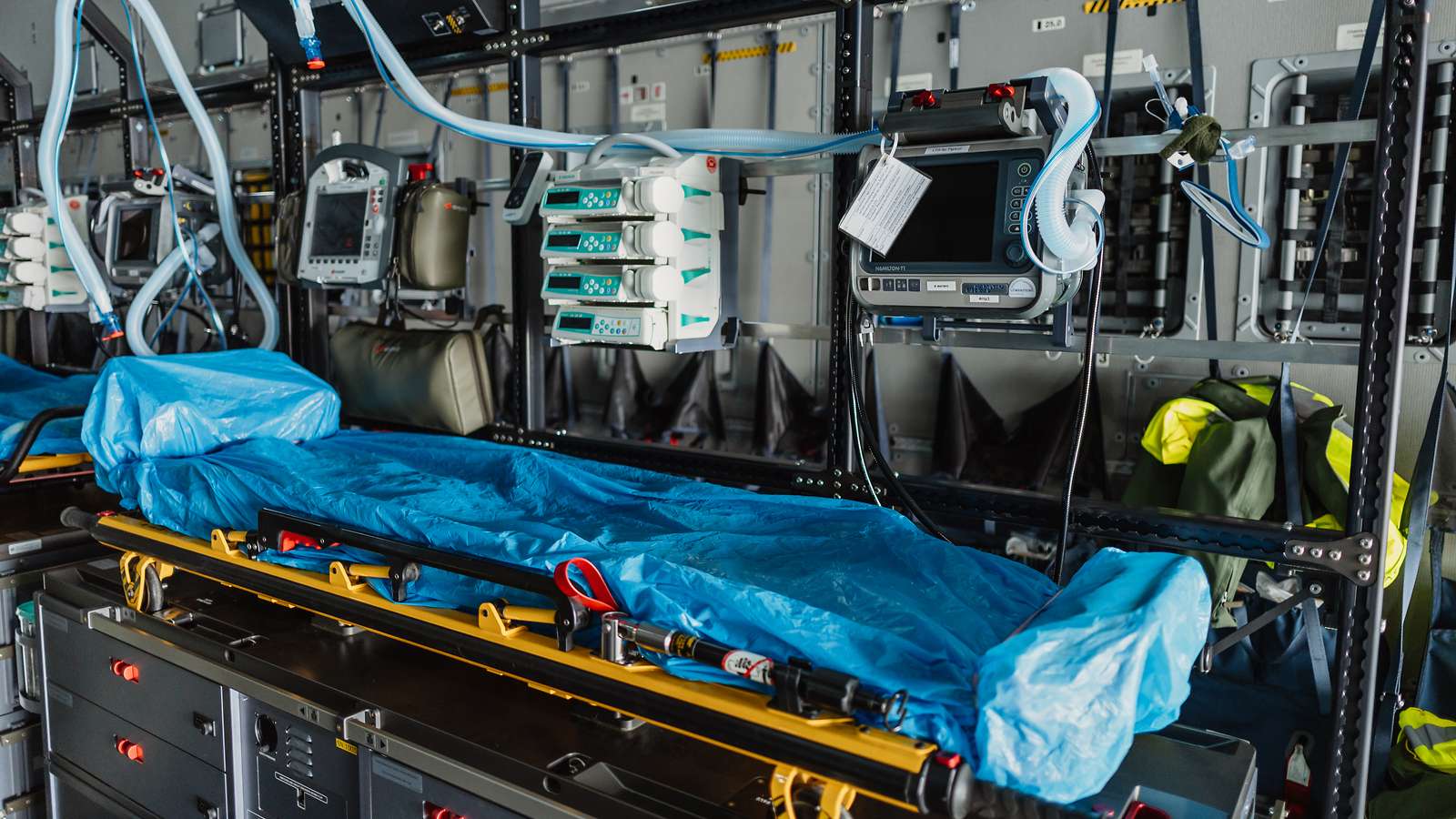
The technological suite matches modern hospital standards, featuring advanced patient monitoring systems, mechanical ventilation apparatus, fluid delivery mechanisms, and diagnostic displays. Military-specific adaptations address operational requirements, including low-visibility color schemes and specialized screen technologies compatible with thermal imaging systems used during night operations.
Medical personnel oft he German Air Force involved in system evaluation noted that the palletized approach enables ground-level preparation, allowing medical teams to configure each evacuation package according to specific mission parameters before aircraft departure.
German Air Force – Phased Implementation Strategy
The German Department of Defense plans to acquire 46 modular units by 2029, supporting conversion capability for up to six A400M aircraft while maintaining operational reserves. Initial system delivery to active squadrons is anticipated in mid-2027, contingent upon completion of airworthiness certification procedures.
Project managers report full adherence to development timelines, with anticipated field deployment beginning shortly after regulatory approval.
Expansion Across NATO and Beyond
The system’s standardized architecture permits adoption not only by the German Air Force but other nations operating comparable military transport aircraft. Participating countries can implement the system following either independent certification processes or mutual recognition of German regulatory approval.
Development roadmaps further contemplate adapting the palletized concept for integration with the Lockheed C-130J transport platform, potentially establishing compatibility across multiple NATO air forces.
Personnel within the medical evacuation community anticipate the operational deployment with considerable enthusiasm, viewing the system as a transformative advancement in rapid casualty response capabilities across European defense forces.
Text: Editorial Team
Mit WhatsApp immer auf dem neuesten Stand bleiben!