Dengue fever poses a persistent threat to the Singapore Armed Forces (SAF), particularly due to its tropical training environment and dense camp settings. Over five decades, SAF’s dengue strategy has transformed from broad, SAF-wide measures to a precision-driven, camp-specific response model. This paper presents the evolution, effectiveness, and lessons from this transition, offering a scalable model for institutional vector control.
We conducted a historical and systems-level review of dengue control strategies in the SAF from the 1970s to 2024. This included archival audits, field operations data, environmental health policies, and comparative analysis with national and international military practices. Key innovations examined include the Gravitrap Aedes Index (GAI), the two-tiered Dengue Response Plan, stakeholder task forces, and the integration of technologies such as drones and AI for vector surveillance.
Results:
The SAF’s dengue incidence has remained consistently low in recent years, even as national case counts fluctuated. Introduction of the GAI-enabled early hotspot detection, while the Baseline and Enhanced tiers allowed tailored resource deployment. Operational efficiencies included a 40%–60% reduction in manpower for inspections and reduced outbreak duration. However, challenges remain in sustaining stakeholder ownership, data quality, and applying tools in internet-limited environments.
Conclusion:
The SAF’s dengue control system exemplifies how institutional public health strategies can evolve through continuous learning, technological adoption, and inter-agency alignment. Its approach demonstrates that even in high-risk, dynamic military environments, sustained vector control and force health protection are achievable through precision, adaptability, and stakeholder engagement.
Introduction
Dengue fever remains a pressing public health challenge for Singapore, with its tropical climate fostering the proliferation of Aedes mosquitoes that transmit the virus. As a densely populated city-state with global connectivity, Singapore has developed some of the world’s most advanced dengue control strategies. Within this context, the Singapore Armed Forces (SAF) has faced unique challenges in safeguarding its personnel, infrastructure, and operational readiness from dengue outbreaks over the past five decades.
Unlike civilian contexts, the SAF operates in environments where high-density living, outdoor training areas, and diverse operational demands amplify the risks posed by vector-borne diseases. Early efforts in the SAF mirrored national strategies, employing broad, SAF-wide measures to control outbreaks. However, over time, the SAF’s approach has evolved into a highly targeted, camp-specific strategy, driven by data and a focus on efficiency.
This paper documents the SAF’s journey in dengue control, detailing the historical progression of its strategies, the adoption of innovative technologies such as the Gravitrap Aedes Index (GAI), and the transition to a simplified two-tier response mechanism. It explores how these advancements have led to significant reductions in manpower costs and operational disruptions while maintaining consistently low dengue incidence.
By critically analysing the SAF’s achievements and lessons learned, this paper aims to contribute to the broader understanding of institutional dengue control. Furthermore, it positions the SAF’s approach as a scalable model for other organizations, offering insights into how evidence-based, collaborative, and adaptable practices can effectively combat vector-borne diseases in both military and civilian settings.
Historical Evolution of SAF Dengue Management in SAF
Early Strategies and Decentralized Control (1970s–1980s)
From its inception, the Singapore Armed Forces (SAF) aligned its dengue control strategies with national public health measures led by the Ministry of Environment (and later the National Environment Agency, (NEA) [1]. In the early decades, Singapore focused on vector control through larvicide application, elimination of mosquito breeding sites, and public health education campaigns[2]. These approaches were mirrored in SAF camps, with routine inspections and general SAF-wide policies aimed at ensuring a clean and vector-free environment.
From the 1970s to the early 1980s, the SAF maintained nine Hygiene and Vector Control Units (HVCUs) strategically located across major camps and airbases. These units operated with the support of hundreds of Hygiene Assistants, whose responsibilities included maintaining camp hygiene and performing routine vector control.
Between 1982 and 1984, resource constraints led to a reduction in the number of HVCUs, from nine to six, and a corresponding halving of the Hygiene Assistants workforce. By 1984, only four HVCUs remained operational due to further manpower shortages. Responsibility for environmental health was subsequently shifted to unit-level medical officers. Units without assigned medical officers depended on coverage by adjacent medical personnel. These officers were tasked with conducting camp inspections, supervising food hygiene, and coordinating vector control efforts in liaison with unit headquarters. Maintenance staff, trained in-house by the Preventive Medicine Branch (PMB) of HQ Medical Corps, were expected to carry out basic hygiene measures.
Transition and Outsourcing (1986–1998)
In 1986, the SAF abolished the maintenance personnel vocation. Consequently, vector control duties were informally reassigned to medical staff and other available service members, most of whom lacked formal training in environmental health practices. By 1994, only four HVCUs remained, in Pulau Tekong, Pulau Brani, SAFTI, and Sungei Gedong. The decentralised and inconsistent vector control efforts at unit level, typically executed by untrained personnel, proved inadequate as evidenced by dengue outbreaks in 1991 and 1993.
These public health challenges, coupled with regulatory requirements under the Environmental Public Health Act (1987) and the Destruction of Disease-Bearing Insects Act (1968), prompted the SAF to commercialise vector control services in 1995. The first outsourced vector control contract aimed to elevate standards of environmental hygiene while alleviating manpower pressures within the SAF. Contractual work was supervised by SAF camp maintenance personnel; however, this oversight role was often delegated to junior staff with limited knowledge of vector control practices. To ensure quality assurance, three Public Health Inspection teams, led by Public Health Inspectors from the PMB were established to audit the work of private contractors regularly.
Institutionalisation and Capacity Building (1999–2005)
Recognising the need for greater accountability and technical competence, the SAF introduced the role of Environmental Control Officers (ECOs) in 1999. Each unit was mandated to appoint at least one trained ECO to oversee and enforce environmental health measures. Appointed ECOs are required to attend the Vector Management and Control Course (VMCC), conducted by the Singapore Environment Institute (SEI), the training arm of the NEA. This initiative represented a pivotal step in professionalising dengue control within the SAF.
In 2000, vector control services were formally decentralised to the unit level, enabling greater responsiveness and localised management of vector control activities. Each unit’s ECO was empowered to liaise directly with contractors, coordinate surveillance and intervention efforts, and ensure adherence to environmental health standards.
From its inception, the SAF aligned its dengue control with national strategies. However, the SAF also faced operational challenges that necessitated unique adaptations. Camps located near forested or coastal areas presented elevated risks due to favourable mosquito breeding conditions. Moreover, military training deployments across Southeast Asia, including Brunei, and Thailand, as well as parts of Taiwan, exposed personnel to hyperendemic dengue environments, further emphasizing the need for context-specific prevention strategies[3], [4]. Despite incremental improvements, dengue control in the SAF during this period remained reactive, with responses often triggered by case surges rather than proactive risk assessments. While the measures adopted were broadly effective in reducing large-scale outbreaks, the SAF recognised the need for a more evidence-based and pre-emptive approach, particularly in high-risk training and deployment environments.
Strategic Enhancements and Localised Risk Management (2005–2020)
The early 2000s marked a pivotal evolution in the Singapore Armed Forces’ (SAF) approach to dengue control, driven by advancements in surveillance technology and a more sophisticated understanding of dengue epidemiology[5]. This period saw a shift from reactive responses to a more structured and data-informed prevention framework.
Development of the SAF Dengue Control Plan (2007)
In 2007, the SAF introduced its first formal Dengue Control Plan, establishing a five-tiered alert system aligned with the NEA’s national alert levels. This structured approach allowed for a scalable response, with alert levels triggered either by changes in NEA alerts or the emergence of dengue clusters within SAF camps.
The 2007 plan mobilised a broad coalition of stakeholders, including pest control operators, building maintenance agents, unit commanders, ECOs, and the Headquarters Medical Corps’ (HQMC) Biodefence Centre (BDFC). BDFC was established from the former Preventive Medicine Branch and now oversees an expanded mandate, encompassing not only naturally occurring outbreaks but also biological warfare threats. The 2007 plan delineated preventive measures for all alert levels and outlined escalation protocols. When dengue clusters were confirmed in SAF camps, the SAF Dengue Contingency Plan was activated. This contingency plan called for intensified vector control operations, increased public health awareness efforts, and heightened inspection frequency.
Plan Revision and Operational Improvements (2014–2015)
In response to the nationwide dengue epidemic in 2014, during which the SAF Dengue Alert Level was raised to Level 3, the SAF undertook a significant revision of its Dengue Control Plan in 2015. A key outcome of this revision was the introduction of a three-tier response system, which enabled the SAF to escalate vector control measures across all camps based on weekly dengue case incidence. This updated framework marked a shift toward more proactive risk mitigation and operational responsiveness.
Under the revised plan, SAF units were instructed to expedite the rectification of behavioural, infrastructural, and maintenance deficiencies that contributed to mosquito breeding. The frequency of camp hygiene and vector control audits was increased from annually to semi-annually, enhancing oversight and early identification of risks. In addition, the plan called for strengthened inter-agency coordination and reinforced accountability at the unit level, ensuring that dengue prevention measures were implemented consistently and effectively.
Revised Environmental Control Course (2015)
Since 2015, Singapore Polytechnic has launched a short course titled Fundamental Course on Vector Management and Control. This course introduces vector biology, covering general morphology of mosquitoes, rodents, and other common pests. It also includes modules on pesticide usage, integrated pest management (IPM), and practical field exercises.
While the course content closely mirrors that of the Vector Management and Control Course (VMCC) conducted by the Singapore Environment Institute (SEI), it features a reduced focus on laboratory-based taxonomy. Specially tailored for MINDEF personnel, the course also includes SAF-specific content, such as briefings on dengue control directives, the roles and responsibilities of ECOs, and other Environmental Public Health matters relevant to the military context.
Despite these improvements, the SAF’s dengue control strategy continued to rely heavily on guidelines issued by the NEA. However, the operational and environmental conditions within SAF camps, many of which are in forested or coastal zones distinct from the urban areas typically managed by NEA, revealed the limitations of applying national-level criteria uniformly across all military sites. While the structured escalation framework improved overall preparedness, it also led to inefficiencies, such as the unnecessary deployment of resources to low-risk areas. These limitations prompted a strategic shift toward localised risk assessment, recognising the need for a more tailored approach. The SAF began exploring mechanisms to collect and analyse dengue-related data that was specific to its own installations, rather than relying solely on external benchmarks.
This shift aimed to enhance the precision of risk measurement within military environments, allowing for earlier detection and more effective, targeted interventions. By aligning its strategy more closely with the unique conditions of its operational landscape, the SAF moved toward a more adaptive and data-driven approach to dengue prevention and control.
Recent Innovations (2020–Present)
In response to the limitations of its earlier strategies, SAF deepened its collaboration with NEA, particularly through the integration of Gravitraps to monitor Aedes mosquito populations. These devices provided granular data on vector density. This enabled BDFC to identify and address potential hotspots in camps more proactively. Leveraging Gravitrap surveillance data alongside localised dengue risk indicators, such as confirmed dengue cases within camps and their surrounding vicinities, BDFC developed a transformative, precision-driven Dengue Response Plan. This model is characterised by data utilisation, camp-specific interventions, and strengthened inter-agency collaboration. At the heart of this approach lies the GAI, a metric that offers weekly insights into mosquito density across SAF installations.
The introduction of a two-tier response mechanism in the SAF Dengue Response Plan, comprising Baseline and Enhanced Levels, marked a pivotal shift in operational strategy. Baseline measures sustained routine prevention in low-risk camps, while Enhanced measures triggered targeted deployments in response to elevated risk, facilitating swift outbreak control. This system significantly improved resource allocation by concentrating manpower and operational focus on higher-risk areas, thereby reducing unnecessary inspections in camps with low transmission potential.
Operational efficiency was further bolstered through the SAF Dengue Task Force, a multi-stakeholder body comprising environmental control officers, unit commanders, and external contractors. This platform enhanced coordination, accountability, and execution of vector control measures. Beyond quantitative improvements, this period also brought qualitative benefits: reduced fatigue among Environmental Control Officers, improved compliance across units, and enhanced overall readiness due to fewer disease-related disruptions.
By aligning its strategies with national policies while tailoring implementation to the SAF’s operational contexts, including forested camps and overseas deployments, the current framework represents the culmination of over five decades of institutional learning and innovation. The SAF’s evolution from reactive, broad-spectrum measures to precise, data-informed, and context-specific interventions offers valuable insights for other organisations seeking to establish resilient and adaptive dengue control systems.
As the SAF expanded its overseas training operations to diverse environments such as Australia[6] and the United States[7], it encountered a broader range of mosquito-borne disease risks, including malaria, Japanese encephalitis, and Ross River virus. These experiences emphasised the need for proactive, environment-specific vector control strategies to safeguard personnel and ensure operational continuity. To address these challenges, BDFC plans to adopt enhanced surveillance and control methods, including outdoor mosquito traps to monitor vector species and densities, and enable early risk detection and support informed decision-making based on entomological data.
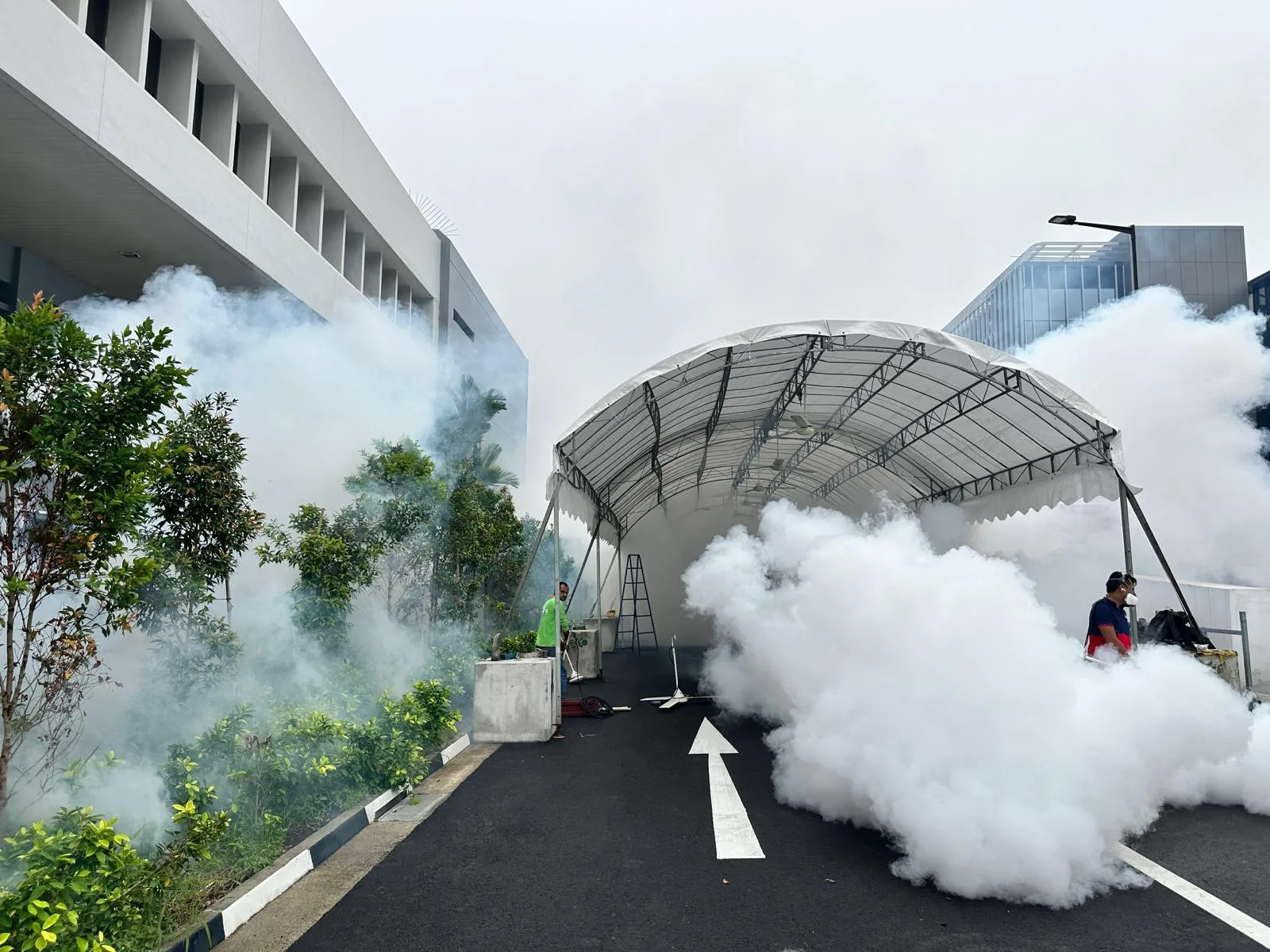
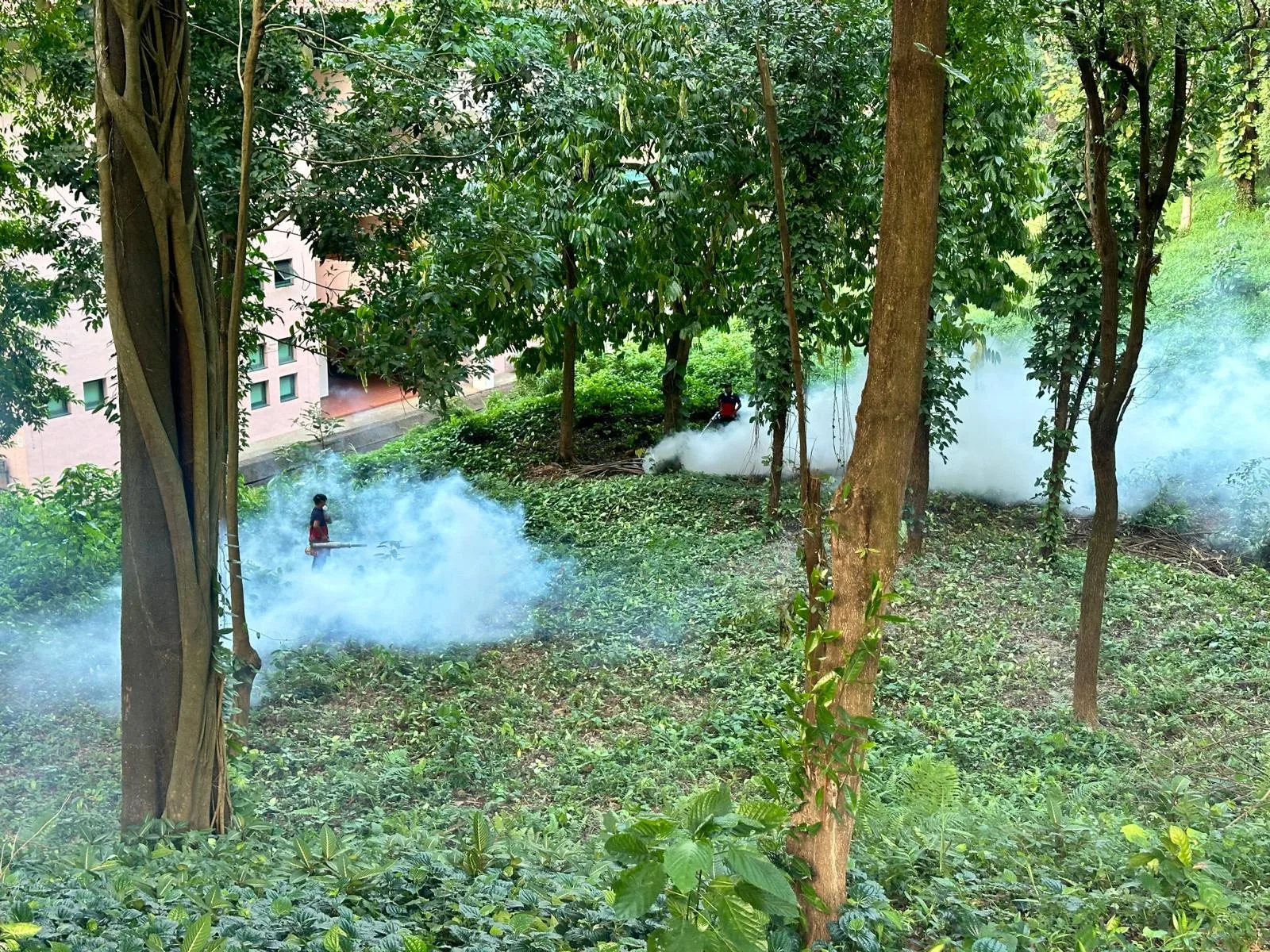
BDFC is also exploring automated vector control technologies such as drone-assisted larvicide dispersal, smart fogging machines with GPS-guided precision, and programmable mist blowers to treat breeding sites efficiently. These can be supported by GIS-enabled platforms that integrate vector, environmental, and climatic data for dynamic risk mapping and adaptive intervention planning. Additional measures such as insecticide-treated uniforms, bed nets, and pre-deployment health briefings further reduce disease risk in endemic regions. Together, these innovations reflect a shift toward a resilient, data-driven, and context-sensitive approach to vector control across both local and overseas training environments.
[1] Ooi, E.-E., Goh, K.-T., & Gubler, D. J. (2006). Dengue Prevention and 35 Years of Vector Control in Singapore. Emerging Infectious Diseases, 12(6), 887–893. [https://doi.org/10.3201/eid1206.050826]
[2] National Environment Agency. (2022). Singapore’s Dengue Control Program. Retrieved from [https://www.nea.gov.sg/]
[3] Shepard, D. S., Halasa, Y. A., Tyagi, B. K., et al. (2014). Economic and Disease Burden of Dengue in Southeast Asia. PLoS Neglected Tropical Diseases, 8(2), e2679. [https://doi.org/10.1371/journal.pntd.0002679]
[4] World Health Organization. (2022). Dengue and Severe Dengue. Retrieved from [https://www.who.int/]
[5] Goh, K.-T. (1997). Changing Epidemiology of Dengue in Singapore. The Lancet, 349(9067), 704–704. [https://doi.org/10.1016/S0140-6736(97)24025-7]
[6] Australian Department of Defence. (2021). Vector-Borne Disease Management in Military Deployments. Retrieved from [https://www.defence.gov.au/]
[7] Centers for Disease Control and Prevention (CDC). (2012). Dengue Prevention in U.S. Military Settings. Retrieved from [https://www.cdc.gov/]
The Current Dengue Response Plan
Description and Impacts
The SAF Dengue Response Plan exemplifies a data-driven, resource-efficient, and collaborative strategy that has successfully maintained low dengue incidence while ensuring operational sustainability since its launch in 2025. Central to its effectiveness is a camp-specific approach guided by the Gravitrap Aedes Index (GAI), enabling early detection of mosquito population surges and targeted interventions where risk is highest. The plan’s structured two-tier response system, comprising Baseline and Enhanced levels, ensures that resources are optimally allocated, reducing unnecessary inspections and achieving outbreak control typically within six weeks. Strong coordination through the SAF Dengue Task Force and alignment with NEA’s national strategy have enhanced accountability, inter-agency coherence, and responsiveness[1]. The plan has also improved morale by reducing ECO fatigue and promoting unit-level ownership through structured audits and clear reporting. Together, these measures have created a sustainable and operationally resilient framework for institutional dengue control.
Comparative Analysis
The SAF’s dengue control strategy aligns with Singapore’s national efforts while adapting to the military’s unique operational environments, including forested camps and overseas training areas. By leveraging the Gravitrap Aedes Index (GAI) and implementing a localised, two-tier response system, the SAF has developed a data-driven model that prioritises high-risk areas and enables targeted interventions. Compared to other militaries, such as those of the United States and Australia, which often rely on reactive or broad-based approaches, the SAF’s framework stands out for its precision, adaptability, and proactive surveillance. However, challenges remain. These include the need for continuous training, technological integration, stakeholder ownership, and customised strategies for overseas deployments. Additionally, the effectiveness of recent innovations still requires validation through robust data analysis. Addressing these limitations will be key to sustaining the SAF’s leadership in institutional dengue management and ensuring operational readiness across diverse environments.
Future Directions
Looking ahead, the SAF is advancing a suite of forward-looking strategies to enhance its dengue control framework through innovation, technology, and collaboration. Key efforts include leveraging artificial intelligence for predictive modelling of mosquito hotspots and deploying drones for aerial surveillance in inaccessible training areas. To support overseas operations in dengue-endemic regions, mobile preventive medicine units equipped with compact traps and fogging devices are being developed for rapid response. Training is also evolving, with gamified e-learning and advanced ECO upskilling to integrate next-generation tools like AI and drones. Regionally, the SAF is fostering partnerships and exchange programmes to promote shared learning and coordinated action against cross-border vector-borne threats. Finally, the SAF is testing emerging technologies such as robotic foggers and smart Gravitraps to enhance precision and scalability. These initiatives reinforce the SAF’s role as a leader in institutional public health and its commitment to operational readiness in the face of evolving disease challenges.
Conclusion
Over the past five decades, the Singapore Armed Forces (SAF) has progressively refined its approach to dengue control, moving from broad, centrally managed efforts to a more targeted, camp-specific strategy informed by data and operational needs. Tools such as the Gravitrap Aedes Index (GAI) and the introduction of a two-tier response framework have supported more efficient resource allocation and reduced disruptions from vector-borne illness.
This evolution reflects broader lessons on the value of proactive surveillance, cross-agency collaboration, and the need for context-specific interventions within institutional settings. While the SAF’s model may not be universally applicable, elements of its strategy, particularly its integration of data and operational tailoring, offer useful insights for other organisations operating in dengue-endemic environments.
Looking ahead, SAF’s exploration of artificial intelligence, drone-based surveillance, and regional collaboration aligns with ongoing efforts to modernise vector control practices. As with any public health initiative, continued evaluation, adaptability, and evidence-based refinement will be critical to ensuring long-term effectiveness in an evolving epidemiological landscape.
[1] Ministry of Health Singapore. (2023). Annual Dengue Reports. Retrieved from [https://www.moh.gov.sg/]
References
- Ooi, E.-E., Goh, K.-T., & Gubler, D. J. (2006). Dengue Prevention and 35 Years of Vector Control in Singapore. Emerging Infectious Diseases, 12(6), 887–893. [https://doi.org/10.3201/eid1206.050826]
- National Environment Agency. (2022). Singapore’s Dengue Control Program. Retrieved from [https://www.nea.gov.sg/]
- Shepard, D. S., Halasa, Y. A., Tyagi, B. K., et al. (2014). Economic and Disease Burden of Dengue in Southeast Asia. PLoS Neglected Tropical Diseases, 8(2), e2679. [https://doi.org/10.1371/journal.pntd.0002679]
- World Health Organization. (2022). Dengue and Severe Dengue. Retrieved from [https://www.who.int/]
- Goh, K.-T. (1997). Changing Epidemiology of Dengue in Singapore. The Lancet, 349(9067), 704–704. [https://doi.org/10.1016/S0140-6736(97)24025-7]
- Australian Department of Defence. (2021). Vector-Borne Disease Management in Military Deployments. Retrieved from [https://www.defence.gov.au/]
- Centers for Disease Control and Prevention (CDC). (2012). Dengue Prevention in U.S. Military Settings. Retrieved from [https://www.cdc.gov/]
- Ministry of Health Singapore. (2023). Annual Dengue Reports. Retrieved from [https://www.moh.gov.sg/]
Authors & Affiliations
SLTC(DR) Goh Jit Khong Jake1,2, Lam Hong Yeong Patrick1, Sathish Arivalan3
1 Force Health Group, Headquarters Medical Corps, Singapore Armed Forces, Ministry of Defence, Singapore
2 Saw Swee Hock School of Public Health, National University of Singapore, Singapore
3 National Environmental Agency
Corresponding Author
Name: SLTC(DR) Goh Jit Khong Jake
Workplace Address: Force Health Group, Headquarters Medical Corps, Singapore Armed Forces, 701 Transit Road, #02-03, Singapore 778910
Email Address: [email protected]
Mit WhatsApp immer auf dem neuesten Stand bleiben!