Rapid detection of chemical warfare agents and other toxic chemical threats on the battlefield has been on a trajectory towards cheaper, smaller, and faster systems. This article was first published at Warsight.
In the 1980s, chemical detectors were treated like holy icons, kept locked away, operated by trained specialists, and issued, perhaps, one per company of ground troops. They often had radioactive sources in them and incurred a lot of paperwork and security provisions.
A trend towards smaller, lighter, faster, cheaper, more sensitive, and more accurate chemical agent sensors was mightily pushed along by the US Joint Chemical Agent Detector programme over 20 years ago, resulting in the purchase and fielding of over a hundred thousand M4 JCAD units. It also made Smiths Detection the world’s largest chemical warfare detector manufacturer.
The M4 JCAD, a relatively small device, powered by AA batteries, handheld, easy to operate, and (crucially) not needing a radiation source to operate, changed the operational template. Instead of being issued one per company or, at best, one per platoon, now every squad, section, artillery piece, and combat vehicle could have a chemical detector.
But what is the next frontier? Existing types of instrumentation are getting better and at the high end, technologies that were once only in the laboratory are now in the hands of specialist reconnaissance teams. But what about the grassroots level? Is it possible to make chemical detection (or, indeed some form of biological early warning or radiation detection) ubiquitous?
The dawn of CBRN wearables
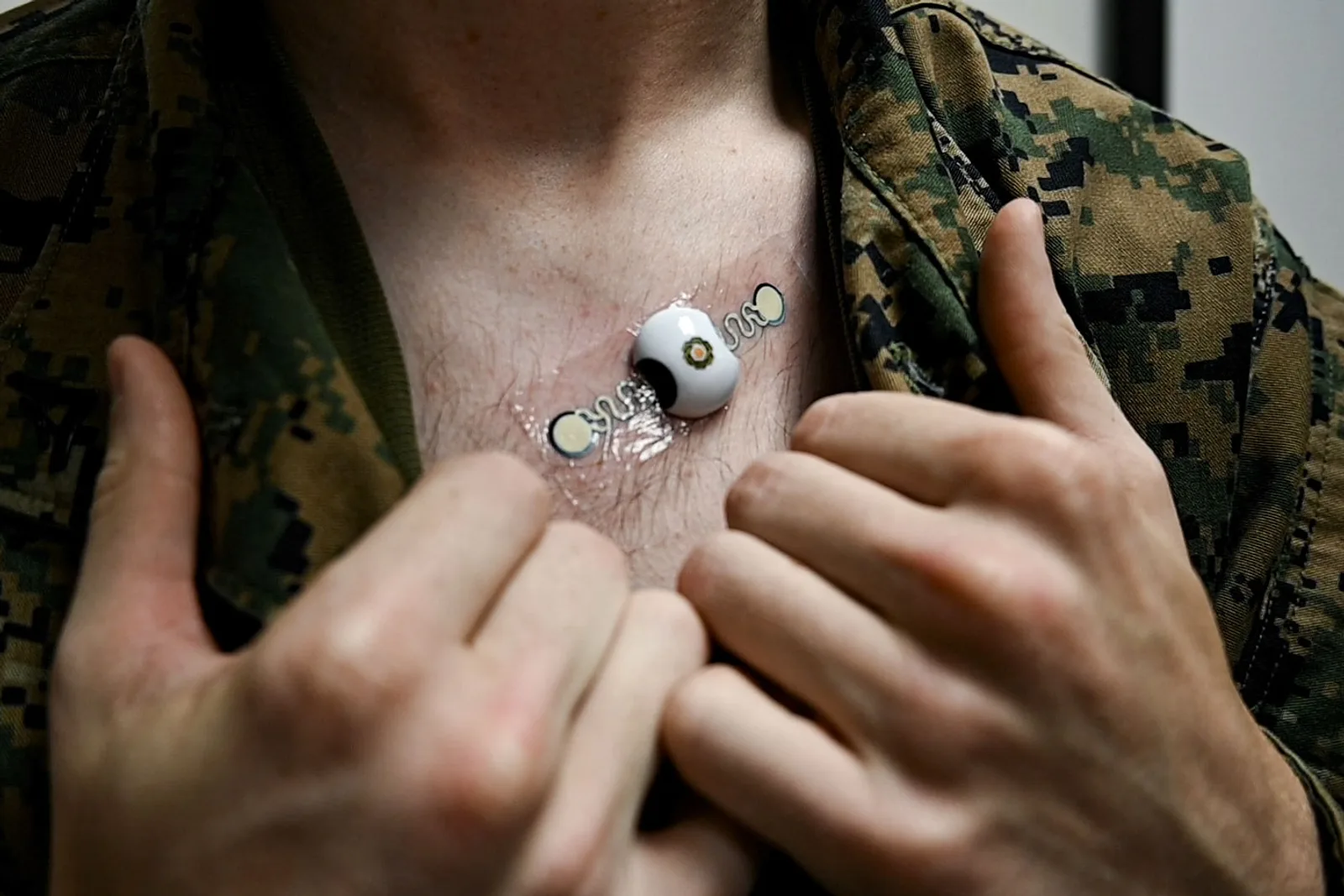
The US defence budget has a significant line item in it for ‘CBRN wearables’. The concept is that detection technology and, importantly, data connectivity, have become small enough, light enough, and cheap enough that individual soldiers can wear useful sensors either on their skin or on their clothing.
CBRN wearables have several advantages. For starters, if you make detection technology omnipresent on the battlefield, there is greatly improved situational awareness of the extent of possible hazards.
Second, if you do accumulative monitoring over a long period of time, it may be possible to discover the presence of a low-level hazard that would be a chronic health hazard for the exposed troops. Some chemical agents, nerve agents for example, are cumulative hazards in that a very long and slow exposure to very low levels too low to cause acute illness on the spot is a potential hazard. Studies have pointed in the direction of very low-level nerve agent exposure from the destruction of Iraqi chemical munitions as a cause of ‘Gulf War Illness’.
Wearables are not a new concept, but the first generations have been crude. Chemical detector papers and tapes have been worn on chemical protective clothing for decades to provide a crude but fast indication of the presence of nerve or blister agents, albeit with a high degree of false positives. Individual radiation dosimetry has been possible since the 1950s, although many dosimeters need a specialist device to read them.
Two approaches
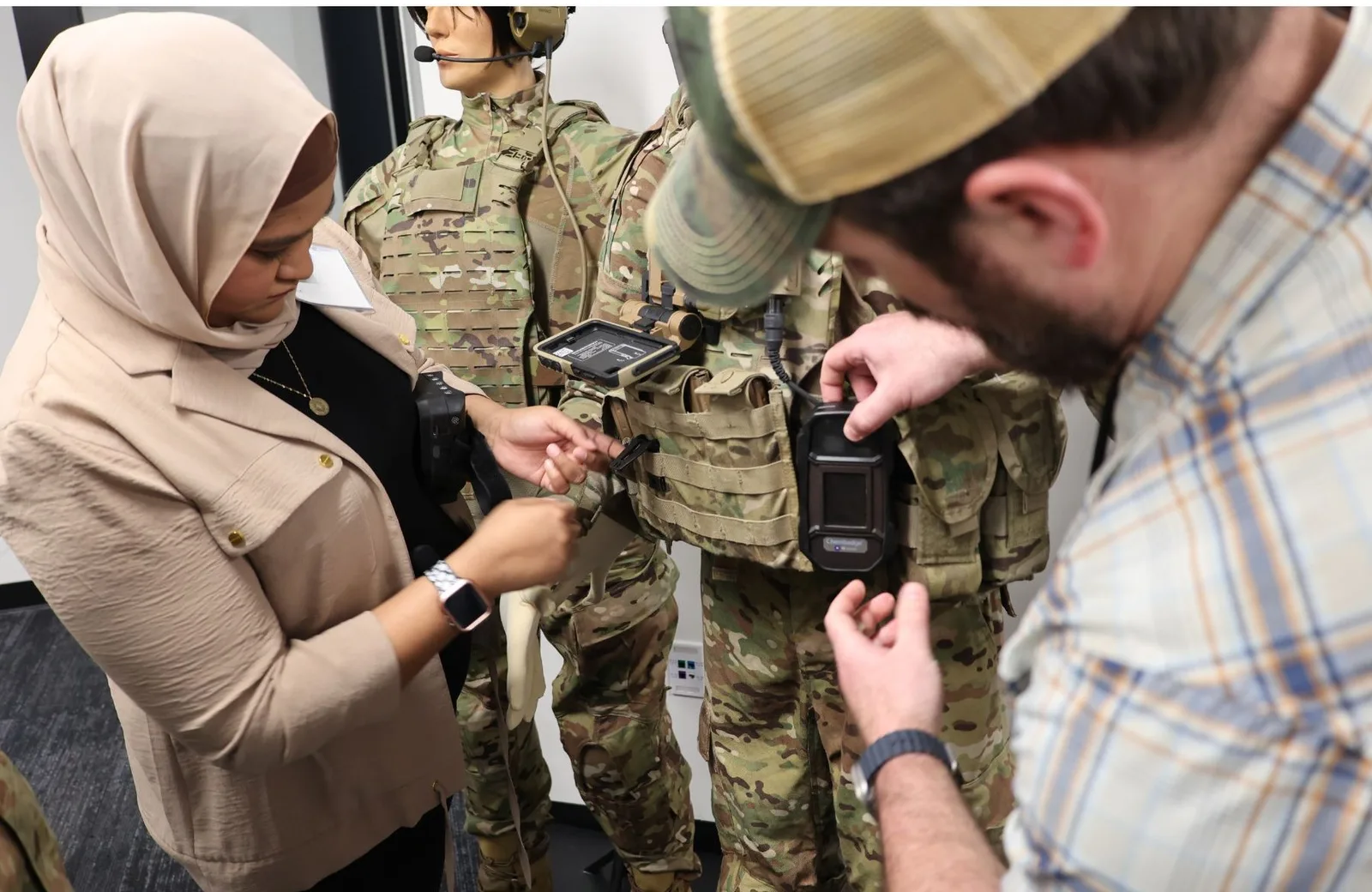
Two philosophical approaches lend themselves to wearable detection. The first is to make some chemical detection technology small enough that it can be worn on a patch on skin or integrated into clothing. It should be noted that existing handheld sensors are small and getting smaller, so at what point do they get considered ‘wearable’? The US CVCAD (Compact Vapor Chemical Agent Detector) project is blurring the definitions here, with companies like Teledyne-FLIR claiming a handheld device is ‘wearable’. Technology is simply not yet at the point of a chemical detection device that is a skin patch.
The second approach, and the one getting most traction of the term ‘wearable’, is to conduct biomedical monitoring of the wearer in the hopes that various physiological measurements give an indicator of some hazard. This approach that leverages a lot of work from the existing medical and biotech sectors is showing the most promise at present.
Perhaps the most interesting aspects are the potential to monitor for specific biomarkers indicative of chemical agent exposure, such as acetylcholinesterase. A drop in acetylcholinesterase count shows nerve agent exposure. This would be, in effect, a convergence between the two approaches, at least for nerve agents.
As with other CBRN developments, the Pentagon is one of the big drivers of wearables over the last few years, with the US’ Wearable All-Hazard Remote-monitoring Program (WARP) being a particularly noteworthy effort. Two aspects of this programme have emerged into the light in recent years as part of testing and evaluation efforts. These have focused on biomedical detection. The US has evaluated systems by Hexoskin and LifeLens for use in CBRN monitoring.
One should add that widespread biomedical monitoring of deployed troops for dozens or more types of data could quite easily allow for other types of situational awareness well beyond CBRN defence, such as environmental health issues, food or water issues, and whether or not a particular team or unit is facing undue heat stress.
There is a lot more work to be done in this sector. Those truly curious to see what sort of data the US military is looking to collect through wearables can look at the 2025 WARP RFI for some interesting details. Some interesting work is likely to result from research into wearable detection.
Text: Dan Kaszeta
Dan Kaszeta is a London-based security and defence consultant. He has 35 years of experience centred upon chemical, biological, radiological, and nuclear (CBRN) defence issues, having served in posts in the US Army, the Department of Defense, the White House, and the US Secret Service before moving to the UK in 2008. He was an associate fellow of the Royal United Services Institute from 2021 to 2024. He is also a published historian and a Fellow of the Royal Historical Society.
Mit WhatsApp immer auf dem neuesten Stand bleiben!