En Route Critical Care Team Performance Assessment: A Literature Review of Methods and Innovations

Derek M. Sorensen, Durel D. Williams, Katelyn M. Kay, Kent C. Etherton

En Route Care (ERC) teams are pivotal to US military global patient movement and joint force sustainment, a role rendered even more urgent by the demands of Strategic Competition of Great Powers 30, 31. Despite their operational importance, assessment methods for ERC teams remain underdeveloped, inconsistently standardized, and lack robust validation. This systematic review synthesizes peer-reviewed, doctrinal, and grey literature (2003–2024), incorporating military guidance from the Joint Trauma System and US Department of Defense (DOD) to critically appraise all studies
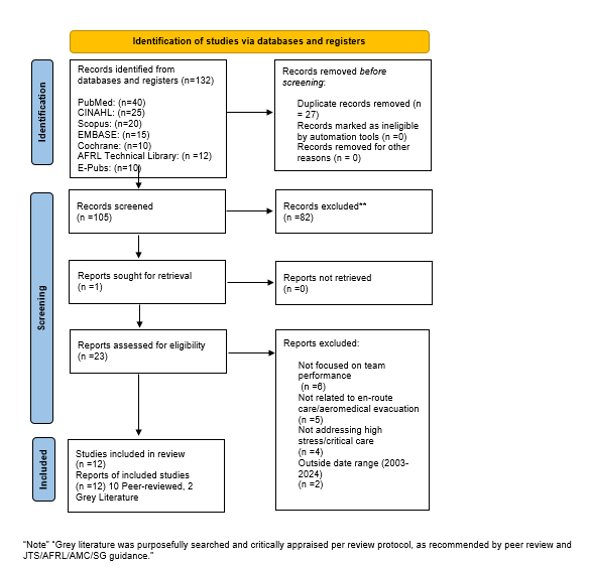
Figure 1: PRISMA Flow Diagram for Study Selection

Current ERC team assessment relies chiefly on Mission Essential Task Lists (METLs), subject matter expert (SME)-developed scorecards, simulation, after-action reports, and observer forms, which exhibit inconsistent documentation and offer limited continuous feedback 2-5, 29. Recent advances feature multimodal approaches: wearable physiological monitoring, digital performance analytics, and validated non-technical skills assessment tools, which showed exceptional predictive and diagnostic power in simulation and operational scenarios 6, 7, 16, 19. Machine learning tools (e.g., State Space Grids)22, centralized data repositories, and protocol-driven clinical practice guidelines (CPGs) now enable more objective and actionable performance measurement 1, 8, 9, 24.

Findings underscore the need for ERC assessment that is digitally integrated, evidence-based, operationally validated, and tailored to unpredictable, high-consequence operational environments. Adopting validated teamwork frameworks (TEAM), continuing to build digital repositories, expanding advanced analytics and simulation, and real-world operational validation are recommended as critical steps 6, 7, 13, 16, 29. These innovations promise to strengthen operational medical readiness and improve patient outcomes for global patient movement.

Anzeige

Introduction

ERC teams serve as global lifelines for US and allied military personnel, providing advanced medical care in austere, high-threat environments where rapid stabilization and evacuation are required for mission success. Their proven effectiveness across the range of military operations has made them an indispensable joint force sustainment asset, yet their performance assessment frameworks have not kept pace with the evolving complexity of modern conflict 30, 31. The onset of Strategic Competition of Great Powers has further highlighted the urgent need for rigorous, standardized, and technologically integrated tools to continuously monitor ERC readiness and competency 1 -3, 29-31.

Despite longstanding recognition of ERC teams’ value, the literature reveals persistent gaps in documentation, feedback, and validation of team-based assessment tools. Existing methods, though foundational, often lack operational relevance and adaptability to unpredictable environments, limiting their utility for strategic planning and force sustainment. Accordingly, this review systematically synthesizes current frameworks and recent advances to determine how ERC performance assessments can better align with doctrinal guidance and emerging operational requirements, providing a blueprint for enhanced readiness in future military operations.

Methods

Study Identification and Screening Process

A systematic search was conducted across PubMed, CINAHL, Scopus, EMBASE, Cochrane, AFRL Technical Library, DOD E-Pubs, the Joint Trauma System Clinical Practice Guideline (CPG) repository, and DTIC, including literature published from 2003 to 2024. The search strategy employed key terms: (“en-route critical care” OR “aeromedical evacuation” OR “ERC team” OR “critical care transport”) AND (“team performance assessment” OR “competency evaluation” OR “teamwork measurement” OR “simulation” OR “non-technical skills”) NOT (“emergency department” OR “hospital” OR “ICU”). Filters were set to include only English-language, human subject studies within the specified date range 1 ,6, 7.

Manual review of additional sources included Air Force Instructions (AFIs), Air Force Manuals (AFMANs), technical and training documents, Joint Trauma System CPGs, and DTIC/AFRL technical reports, as well as reviewer-suggested grey literature (e.g., JTS ERC CPG, Marine Corps En Route Care System/ERCS) 10, 12.

In total, 132 records were identified. After removal of duplicates (n=27), 105 unique records remained for initial screening. Title and abstract screening were conducted independently by two reviewers, with disagreements resolved by consensus, based on explicit inclusion and exclusion criteria guided by Joint Trauma System, AMC/SG, and DoD protocols 11. Articles not meeting inclusion criteria were excluded, with all exclusion decisions documented per Preferred Reporting Items for Systematic reviews and Meta-Analysis (PRISMA) guidelines 27.

Results

PRISMA Flow Diagram

The results of this multi-stage screening are detailed in the PRISMA flow diagram (Figure 1), which quantifies records removed at each step and the reasons for exclusion, ensuring transparency and reproducibility throughout the selection process.

Study Characteristics

Table 1 presents design, sample size, quality ratings using the Mix Methods Appraisal Tool (MMAT), and key limitations for each included study demonstrating spectrum, methodological rigor, and operational context.
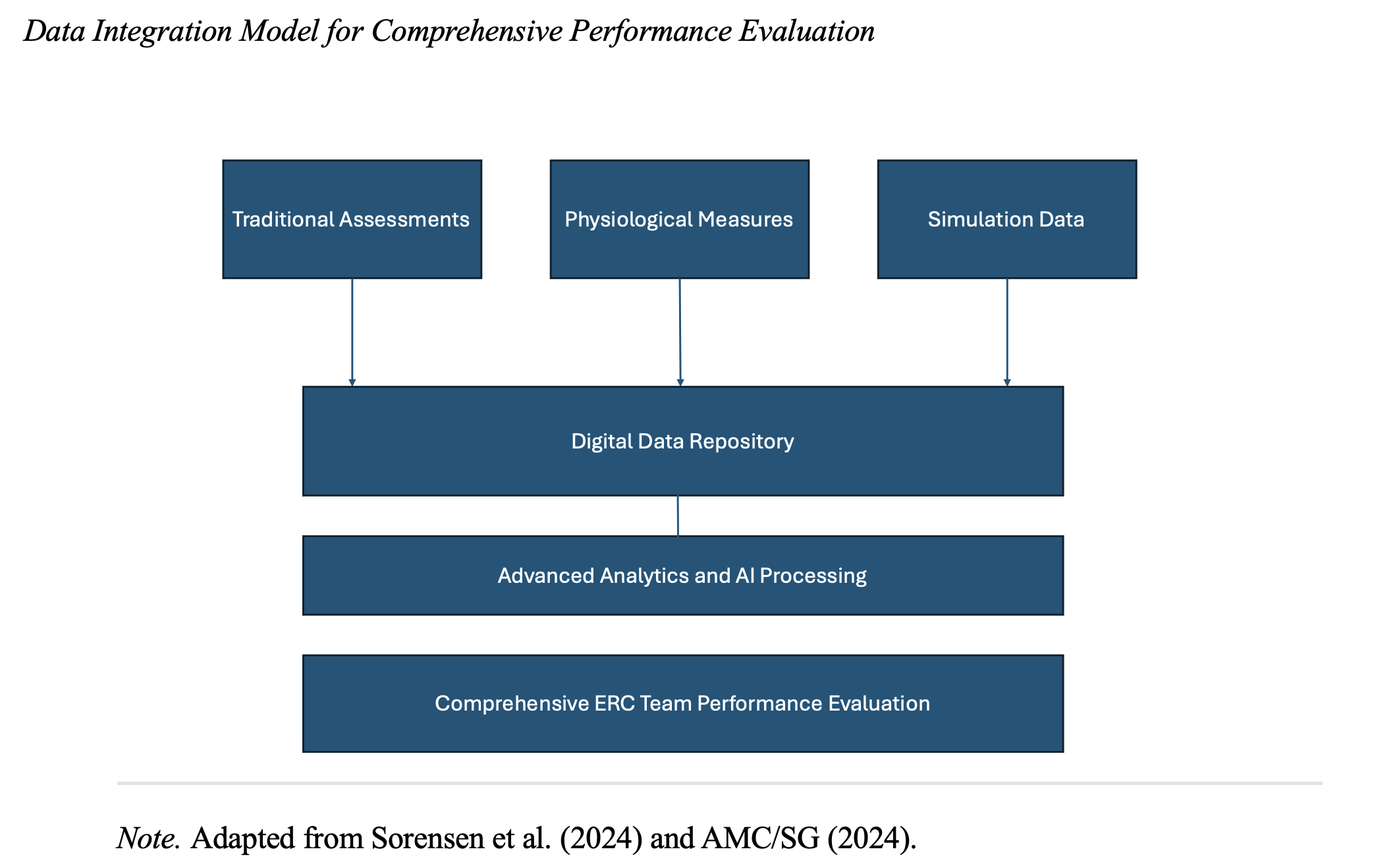
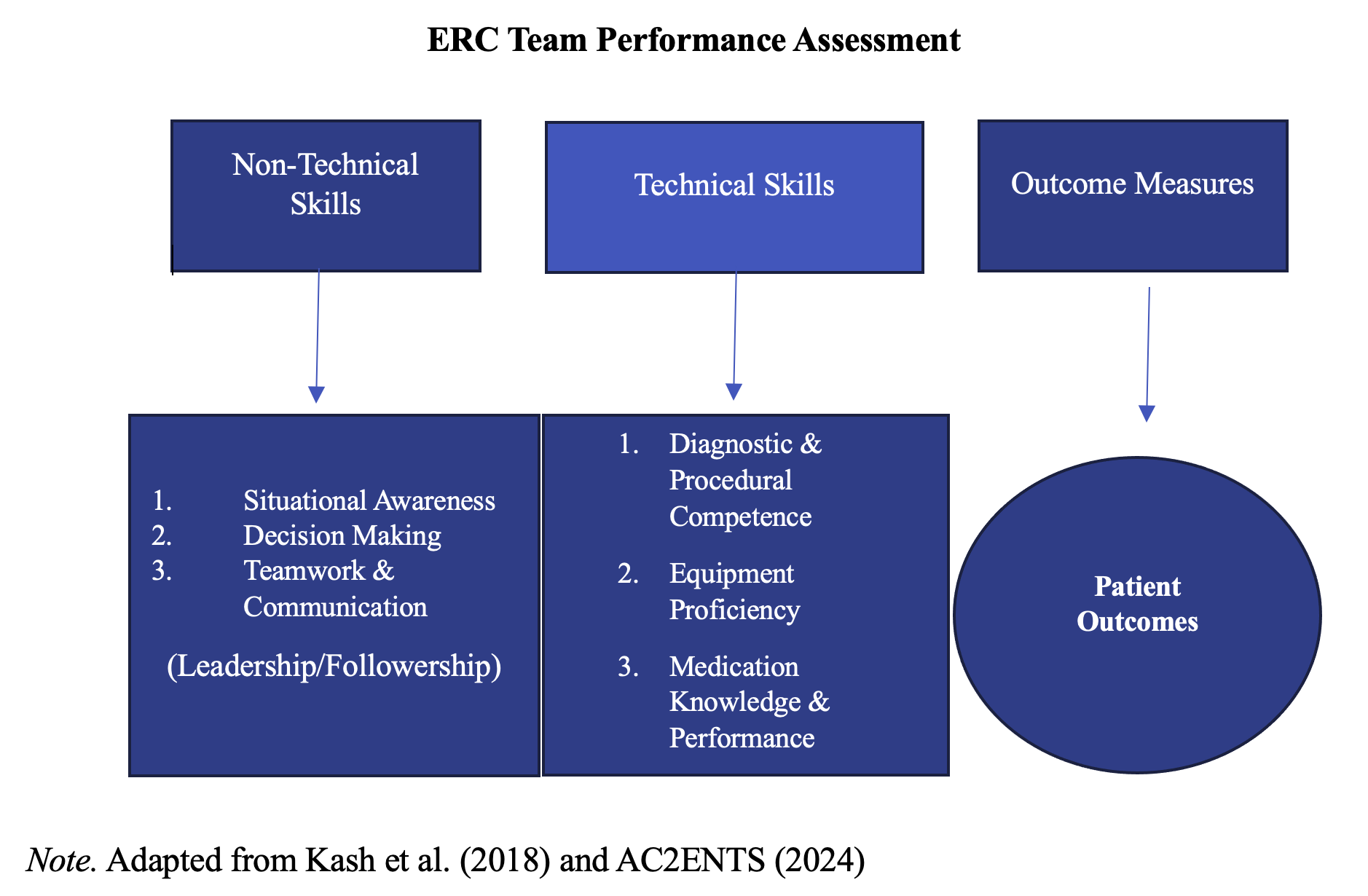
Table 1.

Quality Appraisal of Included Studies Using MMAT

Study Design Sample Size MMAT Score Setting Key Biases/Limitations
Hatzfeld et al. Mixed Methods 120 4 of 5 ERC, Military Selection bias, self-report
Andicochea et al. Survey 75 3 of 5 ERC, Flight Med Limited generalizability
Valdez-Delgado et al. Retrospective 60 5 of 5 CCATT Incomplete documentation
McLaney et al. Qualitative 30 5 of 5 AE Teams Small sample
Rosen et al. Simulation 48 4 of 5 Healthcare Sim Scenario-specific
Cooper et al. 2010 Survey/SIM 120 4 of 5 ED Teams Generalizability
TEAM Study (Swe) Observe/Survey 39 5 of 5 ED, Trauma/Resus Context adaptation
WestJEM 2024 Mixed Methods 32 4 of 5 ED Teams Interprofessional var.
PlosOne 2019 SR/Quasi-exp Multi 4 of 5 ED/Acute Intervention heterog.
Cooper et al. 2023 Mapping Review 22 studies 4 of 5 Emerg Teams Study heterogeneity
JTS ERC CPG 2024 Practice Guide N/A N/A Military/En Route Protocol-focused
DTIC 2010 (USMC) Tech Report N/A N/A ERCS (Marine) Implementation issues 

Discussion

ERC Performance Assessment Methods

Current ERC performance evaluation assesses METLs via SME-developed binary scorecards, simulation, and after-action reports2 -5, 29. Simulation, especially high-fidelity and physiologically augmented environments, is now essential for developing and maintaining proficiency and operational medical readiness tracking 6,29.

Innovations and Multimodal Approaches
Modern ERC assessment now integrates multimodal methods to address legacy gaps:

  1. Wearable physiological monitors provide quantifiable, real-time stress and performance data in both simulation and live scenarios 1, 8, 10, 12, 29 -30.
  2. Digital performance analytics enable granular reporting, improved feedback loops, and facilitate centralized data capture for readiness tracking 12, 29, 30.
  3. Validated behavioral marker systems such as (TEAM) have become standard templates for assessing ERC teamwork; each tool demonstrates unique strengths in predicting team effectiveness and operational outcomes. Furthermore, ongoing data is being reviewed and considered for publication regarding the Assessment of Combat Casualty Evacuation Non-Technical Skill (AsCENTS) tool for derivation and validation of Operational Assessment purposes 6, 7, 13-16, 19, 29.

Figure 2 conceptualizes the integration of traditional assessments, physiological measures, and simulation data into a unified digital repository. This data then undergoes advanced analytics and AI processing, resulting in comprehensive ERC team performance evaluation.

Figure 2: Data Integration Model for Comprehensive Performance Evaluation

Behavioral Marker Frameworks & Advanced Analytics

Structured, validated behavioral marker tools such as ANTS 13, SPLINTS 15, and TEAM 6- 7,16 Multiple non-technical skill assessments have relevant elements for assessing teamworking behaviors for ERC teams. In particular the elements of the TEAM score have been incorporated into operational ERC assessments. There is significant opportunity to assess, consolidate, and adapt elements from a variety of NTS tools for incorporation into ERC assessments This integrative, multimodal approach, including stakeholder feedback and advanced analytics (AI, state space grids) is depicted in the Framework for Comprehensive ERC Team Performance Assessment.

Figure 3 summarizes the comprehensive framework for ERC team performance assessment: aligning procedural competence and equipment proficiency (technical skills), communication, leadership, and teamwork (non-technical skills), and tracking patient outcomes as primary metrics

Figure 3: Framework for Comprehensive ERC Team Performance Assessment

Addressing Gaps

All major limitations, lack of continuity, observer bias, and incomplete documentation are accounted for in current best-practice recommendations and addressed by the digital and integrated frameworks shown in Figures 2 and 3. Adoption of continuous digital analytics and broad stakeholder input, as recommended in recent JTS and AMC/SG guidance, is mission-critical for the Strategic Competition of Great Powers 1 ,10, 29-31.

Implications for Strategic Competition of Great Powers

Strategic Competition of Great Powers requires ERC teams to function at an unprecedented level of readiness, flexibility, and analytic rigor 30 -31. Only fully integrated, data-driven, and doctrinally aligned performance assessment will suffice going forward.

Recommendations & Future Directions

  • Expand digital data repositories 1, 8, 12
  • Adapt validated frameworks 6 ,7, 13, 16
  • Replicate the operational environment with simulation and augment with analytics 6, 8, 9, 29
  • Validate tools for a variety of operational environments 1, 29- 30

Conclusion

ERC teams are foundational to force sustainment and global patient movement in modern conflicts. Assessment methods must be evidence-based, validated, and digitally integrated, with core recommendations and frameworks visualized in the figures and tables of this review. These advances are essential for readiness, training impact, and robust medical capability for Strategic Competition of Great Powers 1, 2, 4, 10, 30- 31.

Author list and biography

Durel D. Williams, M.S.I.O.P, 711th Human Performance Wing
[email protected].

Durel D. Williams is a Civilian Contractor and Retired USAF Master Sergeant specializing in Industrial & Organizational Psychology research and development related to human performance, with expertise in resiliency, data analytics, workplace psychology and suicidality research.

Kent C. Etherton, PhD, 711 Human Performance Wing
[email protected]

Kent Etherton is a Research Psychologist at the Air Force Research Laboratory with a Ph.D. in Human Factors and Industrial/Organizational Psychology. His current work focuses on leveraging training data to develop and validate competency models of human performance, confidence calibration, and identifying training data requirements for performance evaluation.

Derek M. Sorensen, M.D, MHPE, 711 Human Performance Wing
[email protected]

Derek M. Sorensen is a Colonel in the United States Air Force serving as an Emergency and Critical Medicine physician with a master’s degree in health professions education currently specializing in operational medical education, training, evaluation, research, and development for en-route casualty care.

Katelyn M. Kay, M.S., 711 Human Performance Wing
[email protected]

Ms. Katelyn Kay is a Research Psychologist with the Air Force Research Laboratory, 711th Human Performance Wing. She received her M.S. in Human Factors from Embry Riddle Aeronautical University in 2022. Her research focuses on identifying data requirements that improve the capture of human performance data.

References

  1. Joint Trauma System. En Route Care Patient Packaging. Clinical Practice Guideline. JTS CPG ID:97. Published August 21, 2024. Accessed September 2, 2025. https://jts.health.mil/assets/docs/cpgs/En_Route_Care_Patient_Packaging_21_Aug_2024_ID97.pdf
  2. Hatzfeld JJ, Hildebrandt G, Maddry JK, Rodriquez D Jr, Bridges E, Ritter AC, et al. Top ten research priorities for US military en route combat casualty care. Mil Med. 2021;186(3-4):e359‑65. doi:10.1093/milmed/usaa447
  3. Andicochea CT, Wilson J, Raetz E, Walrath B. An assessment of flight surgeon confidence to perform en route care. Mil Med. 2019;184(Suppl 1):306‑9. doi:10.1093/milmed/usz308
  4. Valdez-Delgado KK, Medellin KL, Arana AA, Hare J, Maddry JK, Ng PC, et al. Utilization of the en route aeromedical patient movement form by critical care air transport teams. Mil Med. 2023;188(Suppl 6):436‑43. doi:10.1093/milmed/usad124
  5. McLaney E, Morassaei S, Hughes L, Davies R, Campbell M, Di Prospero L. A framework for interprofessional team collaboration in a hospital setting: advancing team competencies and behaviours. Healthc Manage Forum. 2022;35(2):112‑7. doi:10.1177/08404704211065887
  6. Rosen MA, Salas E, Wilson KA, King HB, Salisbury M, Augenstein JS, et al. Measuring team performance in simulation-based training: adopting best practices for healthcare. Simul Healthc. 2008;3(1):33‑41. doi:10.1097/SIH.0b013e3181626276
  7. Cooper S, Cant R, Porter J, Sellick K, Somers G, Kinsman L, et al. Rating medical emergency teamwork performance: development of the Team Emergency Assessment Measure (TEAM). Resuscitation. 2010;81(4):446‑52. doi:10.1016/j.resuscitation.2009.11.027
  8. Assessing team performance: a mixed-methods analysis using interprofessional in situ simulation. West J Emerg Med. 2024;25(4):487‑95. doi:10.5811/westjem.2024.4.60217
  9. Impact of early assessment and intervention by teams involving acute care physicians on care quality in the emergency department: a systematic review. PLoS One. 2019;14(7):e0220709. doi:10.1371/journal.pone.0220709
  10. Marine Corps En Route Care System (ERCS). DTIC report ADA421103. Published 2010. Accessed September 2, 2025. https://apps.dtic.mil/sti/tr/pdf/ADA421103.pdf
  11. Hong QN, Fàbregues S, Bartlett G, Boardman F, Cargo M, Dagenais P, et al. The Mixed Methods Appraisal Tool (MMAT) version 2018. Educ Inf. 2018;34(4):285‑91. doi:10.3233/EFI-180221
  12. Air Force Research Laboratory. En Route Care Training. AFRL; 2024. Accessed September 2, 2025. https://afresearchlab.com/technology/en-route-care-training/
  13. Flin R, Patey R, Glavin R, Maran N. Anaesthetists’ non-technical skills. Br J Anaesth. 2010;105(1):38‑44. doi:10.1093/bja/aeq134
  14. Brouwers MC, Kho ME, Browman GP, Burgers JS, Cluzeau F, Feder G, et al. AGREE II: Advancing guideline development. CMAJ. 2010;182(18):E839‑42. doi:10.1503/cmaj.090449
  15. Mitchell L, Flin R, Yule S, Mitchell J, Coutts K, Youngson G. Evaluation of the scrub practitioners’ list of intraoperative non-technical skills (SPLINTS) system. Int J Nurs Stud. 2012;49(2):201‑11. doi:10.1016/j.ijnurstu.2011.08.010
  16. Cooper S, Connell C, Cant R. Review article: Use of the TEAM measure in rating emergency teams’ non-technical skills: a mapping review. Emerg Med Australas. 2023;35(3):375‑83. doi:10.1111/1742-6723.14123
  17. Kash BA, Cheon O, Halzack NM, Miller TR. Measuring team effectiveness in health care: an inventory of survey tools. J Interprof Care. 2018;32(6):694‑700. doi:10.1080/13561820.2018.1500455
  18. Sorensen D, Cristancho S, Soh M, Varpio L. Team stress and its impact on interprofessional teams: a narrative review. Teach Learn Med. 2024;36(2):163‑73. doi:10.1080/10401334.2023.2239421
  19. Corrigan SL, Roberts S, Warmington S, et al. Monitoring stress and allostatic load in first responders and tactical operators using heart rate variability: a systematic review. BMC Public Health. 2021;21:1701. doi:10.1186/s12889-021-11520-2
  20. Mühl C, van den Broek EL, Brouwer AM, Nijboer F, van Wouwe N, Heylen D. Deriving a cortisol-related stress indicator from wearable skin conductance measurements. Front Comput Sci. 2020;2:39. doi:10.3389/fcomp.2020.00039
  21. Plews DJ, Lawley JS, Serpell BG, McKune AJ. Monitoring stress and allostatic load in first responders and tactical operators using heart rate variability: a systematic review. Int J Environ Res Public Health. 2021;18(18):9751. doi:10.3390/ijerph18189751
  22. Barry ES, Teunissen P, Varpio L. Followership in interprofessional healthcare teams: a narrative review. BMJ Leader. 2024;8(2):127‑32. doi:10.1136/leader-2023-000783
  23. Sassenus S, Van den Bossche P, Poels K. Team stress: grasping physiological stress dynamics in small teams through state space grids. Department of Training and Education Sciences, University of Antwerp; 2024.
  24. Department of the Air Force. Air Force Instruction (AFI) 41-106: Medical readiness program management. Washington, DC: Department of the Air Force; 2020.
  25. Department of the Air Force. Critical Care Air Transport Team (CCATT) (AFTTP 3-42.51). Washington, DC: Department of the Air Force; 2022.
  26. Department of the Air Force. Air Force Instruction (AFI) 11-2AE V3: Aeromedical evacuation (AE) operations procedures. Washington, DC: Department of the Air Force; 2020.
  27. Department of the Air Force. En Route Critical Care (DAFI 48-107 V2). Washington, DC: Department of the Air Force; 2020.
  28. Page MJ, McKenzie JE, Bossuyt PM, Boutron I, Hoffmann TC, Mulrow CD, et al. The PRISMA 2020 statement: updated guideline for reporting systematic reviews. PLoS Med. 2021;18(3):e1003583. doi:10.1371/journal.pmed.1003583
  29. Air Mobility Command Surgeon General. Letter of support for ERC team performance assessment tool memorandum. Washington, DC: Department of the Air Force; February 24, 2024.
  30. National Defense University Press. Strategic Assessment 2020: Into a New Era of Great Power Competition. NDU Press; 2020. Accessed September 2, 2025.
  31. Lynch TF III. Major findings on contemporary Great Power Competition. In: Strategic Assessment 2020. NDU Press; November 3, 2020. Accessed September 2, 2025.

Appendix

  1. FFCCT: CRITICAL CARE AIR TRANSPORT TEAM

MET:  CRITICAL CARE MEDICAL PERSONNEL PROVIDING OPERATIONAL SUPPORT FOR EN ROUTE CARE.   TEAM PROVIDES ADVANCED MEDICAL CAPABILITY TO EVACUATE CRITICALLY ILL AND/OR INJURED PATIENTS REQUIRING SURGERY, RESUSCITATION, OR ADVANCED CARE DURING TRANSPORT.  CCATT IS ASSIGNED OR ATTACHED TO AN AE EXPEDITIONARY ELEMENT AND BECOME AN OPERATIONS GROUP CAPABILITY WITHIN THE EXPEDITIONARY AE ELEMENT COMMAND STRUCTURE.  CCATT, IN CONJUNCTION WITH THE EQUIPMENT PACKAGE UTC FFCC4, PROVIDES CARE FOR A MAXIMUM PATIENT LOAD OF UP TO 6 HIGH-ACUITY PATIENTS (IF TEAM COMPOSITION IS AUGMENTED WITH AN ADDITIONAL NURSE), OR UP TO 6 LOWER-ACUITY, STABLIZED PATIENTS; LOADS ARE DEPENDENT ON  PATIENT ACUITY LEVELS AND TEAM AUGMENTATION STATUS.

  1. OPR: AMC/SGK
  2. OCR: AMC/SGX 12 Aug 2024
  3. PERFORMANCE MEASURES/SAMPLES OF BEHAVIOR


STANDARD                                 MEASURE

  1. YES/NO                               CORRECTLY PRE-FLIGHT AND OPERATE MEDICAL EQUIPMENT IAW AFMAN 10-2909 AND THE AE EQUIPMENT COMPENDIUM OR AS REQUIRED BY MISSION PARAMETERS.
  2. YES/NO                                ALL PERSONNEL MAINTAIN INDIVIDUAL AND UTC READINESS REQUIREMENTS IAW AFI 41-106 DAFI 48-107, VOLUME 2 AND AFTTP 3-42.51.
  3. YES/NO                                UTC MEMBERS HAVE BEEN ISSUED PROPER INDIVIDUAL PROTECTIVE CLOTHING AND EQUIPMENT FOR FLIGHT OPERATIONS IAW DAFI 48-107, VOLUME 2.
  4. YES/NO                                 ALL UTC TEAM MEMBERS TRAINED ON AIR FORCE TACTICS, TECHNIQUES AND PROCEDURES (AFTTP)
    3-42.51, CRITICAL CARE AIR TRANSPORT TEAM; AND ARE FAMILIAR WITH AIR FORCE TACTICS, TECHNIQUES AND PROCEDURES (AFTTP) 3-42.5, FAMILIARIZATION WITH AEROMEDICAL EVACUATION (AE) OPERATIONS PROCEDURES; AFMAN 11-2AE V3, AEROMEDICAL OPERATIONS AND DAFI 48-107, VOLUMES 1, 2, 3, AND 4.
  5. YES/NO                                 REVIEW FLIGHT CREW INFORMATION FILES (FCIF) AND SQUADRON READ FILES PRIOR TO EACH MISSION.
  6. YES/NO                                 DURING PRE-FLIGHT PLANNING, CORRECTLY CALCULATE AND PROPERLY COORDINATE POWER REQUIREMENTS INCLUDING CONSIDERING POTENTIAL MISSION DELAYS AT THE FLIGHT LINE, DURING GROUND TRANSPORT, AND FOR PATIENT EMERGENCIES.  COMMUNICATE THESE REQUIREMENTS TO THE MCD.
  7. YES/NO                                 DURING PRE-FLIGHT PLANNING, CORRECTLY CALCULATE AND PROPERLY COORDINATE OXYGEN REQUIREMENTS INCLUDING CONSIDERING POTENTIAL MISSION DELAYS AT THE FLIGHT LINE, DURING GROUND TRANSPORT, AND FOR PATIENT EMERGENCIES.  COMMUNICATE THESE REQUIREMENTS TO THE MCD.
  8. YES/NO                                 DURING PRE-FLIGHT PLANNING DETERMINE MEDICATION AND FLUID REQUIREMENTS FOR TRANSPORT; ENSURE THAT APPROPRIATE SUPPLIES ARE PROCURED FROM THE SENDING MTF OR OTHER RESOURCES.
  9. YES/NO                                 PACKAGE AND MAINTAIN AUTHORIZED EQUIPMENT AND SUPPLIES IAW UTC FFCCA – 887N ALLOWANCE STANDARD.
  10. YES/NO                                 DEMONSTRATE PROPER PROCEDURES FOR SECURING ALL EQUIPMENT, TO INCLUDE SPARE EQUIPMENT.
  11. YES/NO                                 DEMONSTRATE USE OF PROPER SAFETY PRACTICES. EXAMPLES INCLUDE: 1) REMOVAL OF RINGS;  2) WEARING GLOVES WHILE LOADING AND UNLOADING LITTERS AND EQUIPMENT;  3) USE OF GOGGLES DURING ENGINE-RUNNING ONLOAD/OFFLOAD (ERO);  4) REMOVAL OF GLOVES WHEN HANDLING OXYGEN;  5) FAMILIARITY WITH GROUND OPERATIONS INVOLVED IN LAUNCH AND RECOVERY, BASIC FLIGHT LINE SAFETY, I.E. CIRCLE OF SAFETY, FOD AND THE DIFFERENCES INVOLVED IN A TACTICAL ENVIRONMENT; 6) COLLABORATION NOTED BETWEEN CCATT AND AECMS AS NEEDED DURING GROUND OPERATIONS; 7) CCATT DUTY/REST GUIDANCE IN DAFI 48-107, VOLUME 2 IS FOLLOWED.
  12. YES/NO                                 UTC MEMBERS ARE TRAINED AND ABLE TO ENSURE AIR FORCE INSTRUCTIONS AND SAFETY STANDARDS ARE FOLLOWED DURING ENPLANING/DEPLANING PATIENTS, VEHICLE MARSHALLING AND REFUELING PROCEDURES.
  13. YES/NO                                 DESCRIBE THE PROCEDURES FOR SAFETY DURING ERO (FIXED/ROTOR); APPROPRIATE PERSONAL PROTECTIVE EQUIPMENT.
  14. YES/NO                                 DEMONSTRATE DOCUMENTATION OF PATIENT CARE UTILIZING THE AF FORM 3899L; EN ROUTE CRITICAL CARE FLOW SHEET.
  15. YES/NO                                 DEMONSTRATE UNDERSTANDING OF PROPER COMMAND AND CONTROL NOTIFICATIONS AND DOCUMENTATION REQUIRED IN THE EVENT OF A MEDICAL EMERGENCY OR PATIENT STATUS CHANGE IN-FLIGHT.
  16. YES/NO                                 DEMONSTRATE OR VERBALIZE BASIC KNOWLEDGE OF THE FOLLOWING AE EQUIPMENT: THERAPEUTIC LIQUID OXYGEN UNIT (PT LOX); UNITRON/FREQUENCY CONVERTER.
  17. YES/NO                                 VERBALIZE IN-FLIGHT INFECTION CONTROL PROCEDURES; STANDARD PRECAUTIONS; KNOWLEDGE OF AFI ON INFECTION CONTROL, AECP FOR HEALTHCARE WORKED EXPOSURE TO BLOOD AND BODY FLUIDS AND CONTROL BIOHAZARDOUS WASTE IAW THEATER GUIDELINES. 
  18. YES/NO                                 RESPOND APPROPRIATELY DURING IN-FLIGHT AIRCRAFT EMERGENCY.
  19. YES/NO                                 DEMONSTRATE KNOWLEDGE OF EMERGENCY PERSONAL OXYGEN SOURCE(S) AND HOW TO DON, OPERATE, ETC.
  20. YES/NO                                 VERBALIZE PROPER CLEANING AND DISINFECTING OF PMI PER MANUFACTURER’S RECOMMENDATION.
  21. YES/NO                                 VERBALIZE PROCESS FOR REPORTING AND REPLACING BROKEN OR DAMAGED PMI IAW DAFI 48-107, VOLUME 1.
  22. YES/NO                                 AT MISSION COMPLETION, STORE/SECURE MEDICAL EQUIPMENT AND KITS, RE-STOCK USED ITEMS, RE-PACK ALLOWANCE STANDARD, AND PLUG IN PMI.
  23. YES/NO                                 VERBALIZE AND DEMONSTRATE KNOWLEDGE OF CONTROLLED SUBSTANCE DOCUMENTATION FOR EACH PATIENT AND FOR A MISSION IAW DAFI 48-107, VOLUME 1 & 2.

Personnel assigned will be current in the respective AFSC CMRP skills for the position they fill in the UTC. CMRP requirements must be accomplished IAW AFI 41-106, Air Force Medical Readiness Program.

Mit WhatsApp immer auf dem neuesten Stand bleiben!

EN: Subscribe to our WhatsApp channel to receive the latest news directly on your mobile phone. Simply scan the QR code or click on this link.

DE: Abonnieren Sie unseren WhatsApp-Kanal, um die Neuigkeiten direkt auf Ihr Handy zu erhalten. Einfach den QR-Code scannen oder auf diesen Link klicken.

Beitrag teilen

Anzeige

Das könnte Sie auch interessieren

Es wurden keine Ergebnisse gefunden.

DEF-JOBS

Ähnliche Posts

Es wurden keine Ergebnisse gefunden.
Index