When providing initial medical care to wounded soldiers, every minute counts, but it is also essential to document the treatment steps as precisely as possible throughout the chain of survival – a challenge on battlefields. With this in mind, BWI has developed an artificial intelligence (AI) application for speech recognition and automated patient documentation. This prototype has now been successfully tested.
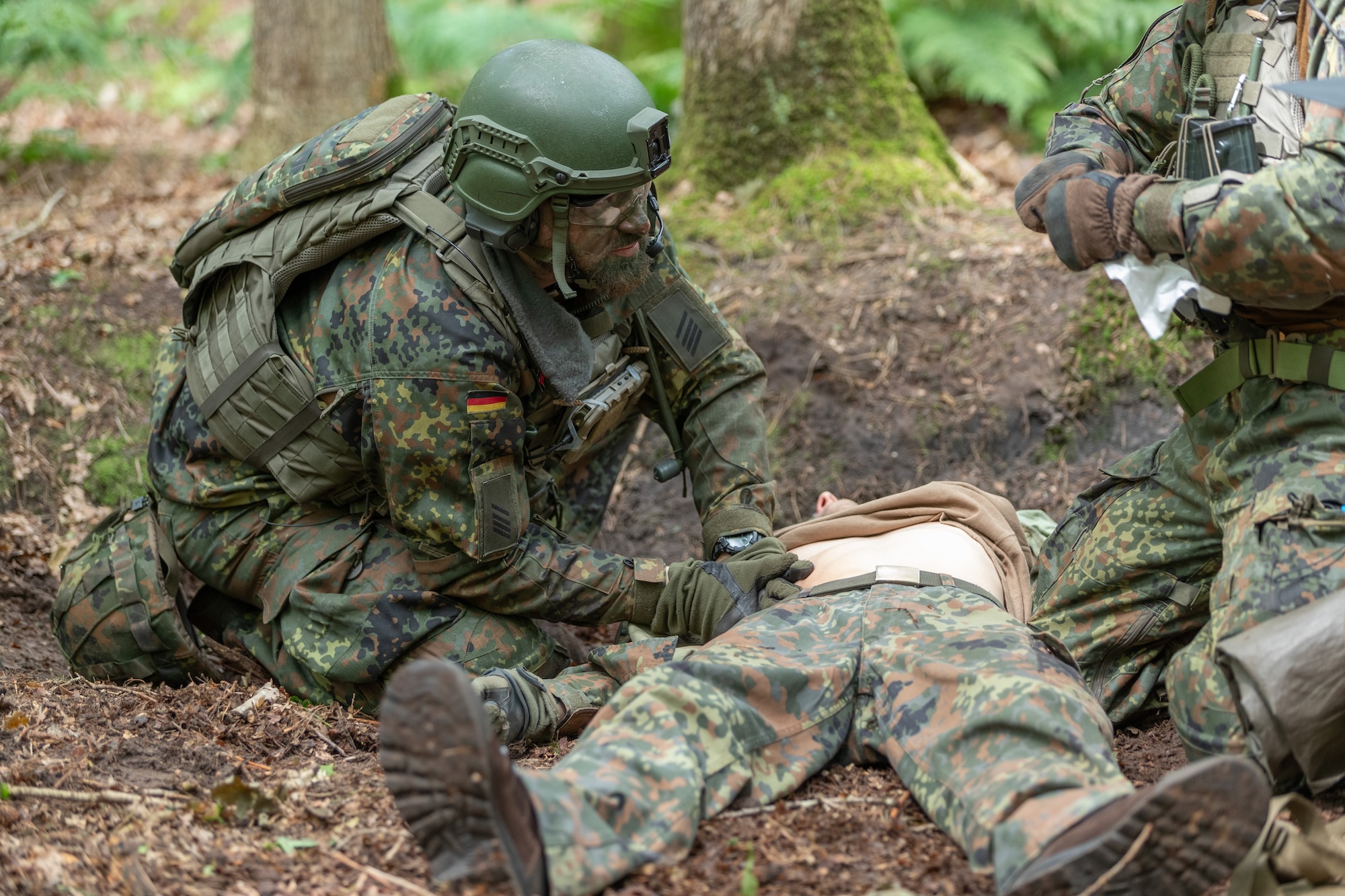
Providing initial care to wounded soldiers on the battlefield and transporting them afterwards takes place under extremely difficult conditions: time pressure, poor lighting, lack of space, and bloody gloves make it difficult to record data by hand that is essential for further treatment. For these reasons, immediate documentation is often not possible.
BWI has developed an IT solution for these special requirements of patient documentation on the battlefield: Using speech recognition trained in emergency medicine and based on artificial intelligence, spoken information is automatically recorded, transcribed, and transferred in a structured manner to standard medical documentation.
The advantage of this speech-to-structure solution is that while the AI automatically converts the voice input into a structured file, the first responder can use both hands to treat the wounded.
Speech recognition by specially trained AI
As part of an experiment, BWI worked with a specialized service provider to develop an initial prototype, the scope of which covered the first responder at the site of the injury until handover to the first medical expert.
To this end, BWI worked with its project partner to train an AI and refine the speech recognition technology so that it can recognize even the first responder’s unclear words in the correct context under stress and high combat noise levels. In addition, the fact that first responders on site often communicate in their own preclinical military language was taken into account.
Mobile use at the forefront of the chain of survival
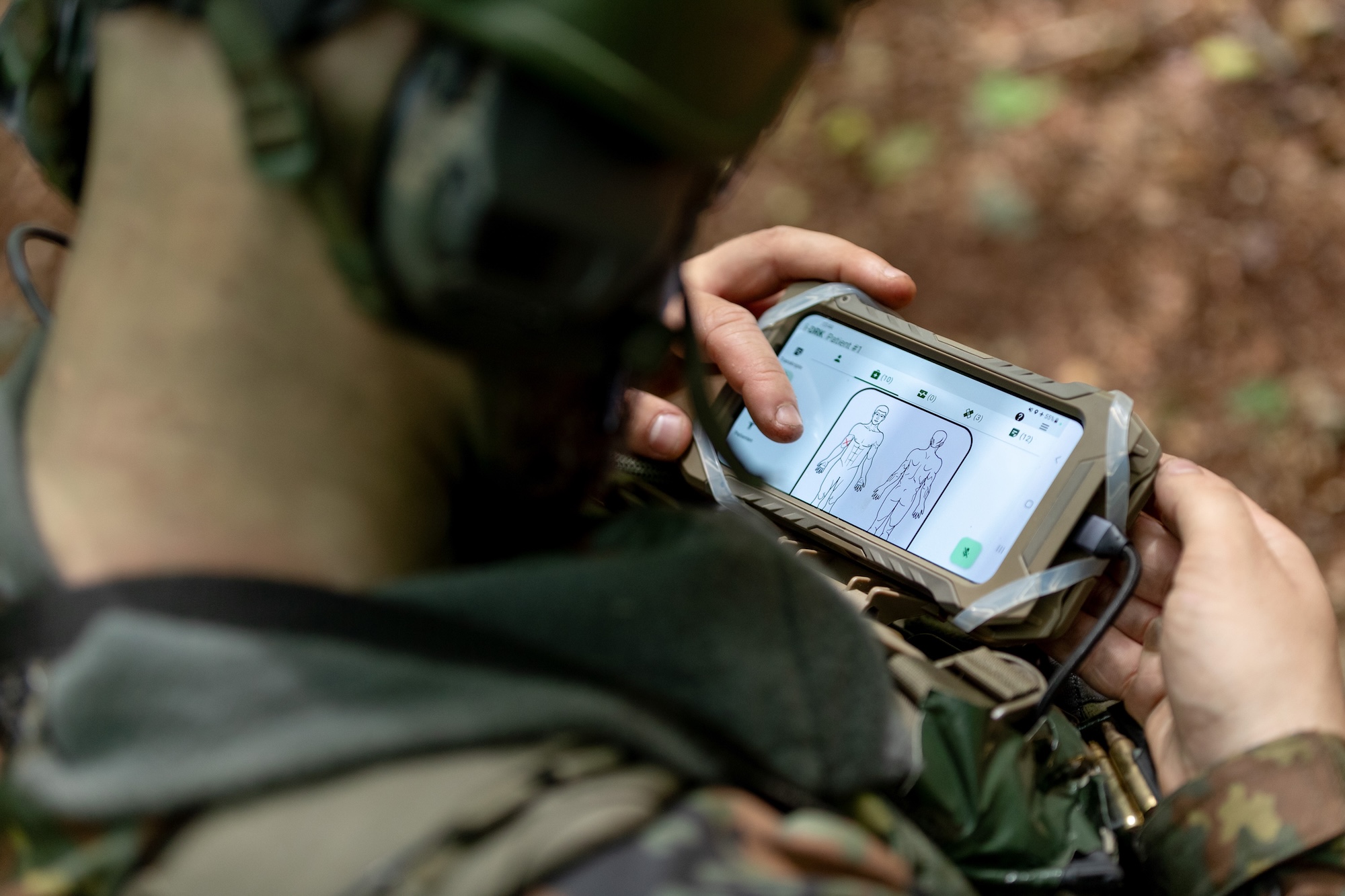
The AI application is installed on the standard mobile device that soldiers already carry with them. It is attached to the soldier’s equipment together with a headset and therefore does not impair the wearer’s mobility.
The application works in offline mode on the mobile device – also due to tactical requirements on the battlefield. As soon as the device is switched on, the AI recognizes the specific medical terminology used, for example in the conversation between the first responder and his accompanying soldier.
This spoken information is automatically recorded, transcribed, and transferred in a structured manner to standard medical documentation. Time stamps—for example, when morphine is administered—are also automatically documented.
In addition, the data is enriched with GPS position data. This creates a transferable file containing a digital image with injuries, vital signs, treatment measures, and exact timestamps. This information makes it easier for the medical services involved in the chain of survival to assess the further medical measures to be taken.
Successful testing
After the AI speech recognition experiment was successfully completed by the BWI in cooperation with the German Armed Forces Medical Service, the functionalities of the prototype were also successfully demonstrated in action during the German Armed Forces Medical Service’s information and training exercise in July 2025.
The findings and the prototype could now be incorporated into a patient care, assistance, and documentation system for mobile medical personnel. The data generated could also be used to generate situation reports at various levels. The German Armed Forces will now decide on how to proceed.
Author:
Marco Schriek,
Principal Consultant, Center of Excellence Consulting, BWI