Anzeige
NewsMilitärmedizin

Evacuation drones: The truth about Ukraine’s pioneering role

In a statement published two days ago, Ukraine’s Ministry of Defence claimed to be the first country to have developed evacuation drones. Regardless of the recent first deployment of such a drone in Ukraine’s defensive war against Russia, systems such as Avilus’s Grille also play a role. The ministry’s claim goes too far, as the following article shows.
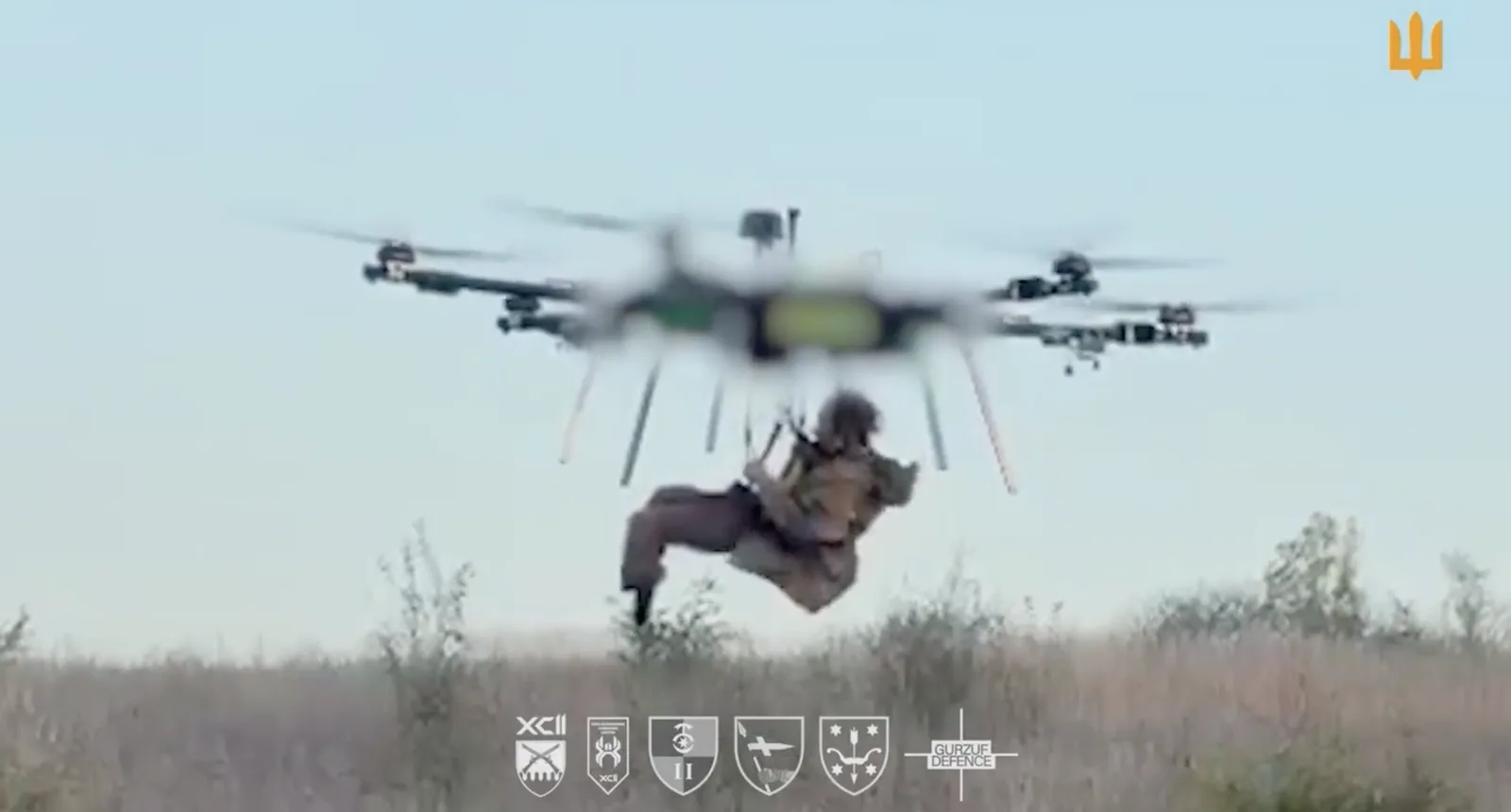
A Ukrainian video shows the first-ever evacuation of a wounded person by drone.
Screenshot: Verteidigungsministerium Ukraine

Under the headline “Ukraine is the first in the world to develop evacuation drones”, Ukraine’s Ministry of Defence yesterday published a piece on evacuation drones. In it, the ministry says Ukraine is the first country in the world to have developed unmanned aerial vehicles (UAVs) for evacuation as a dedicated capability. That claim does not hold up.

Nevertheless, the occasion for the report is genuine and significant: a few days ago, Ukraine evacuated a wounded soldier by unmanned aircraft for the first time.

A rescue with caveats

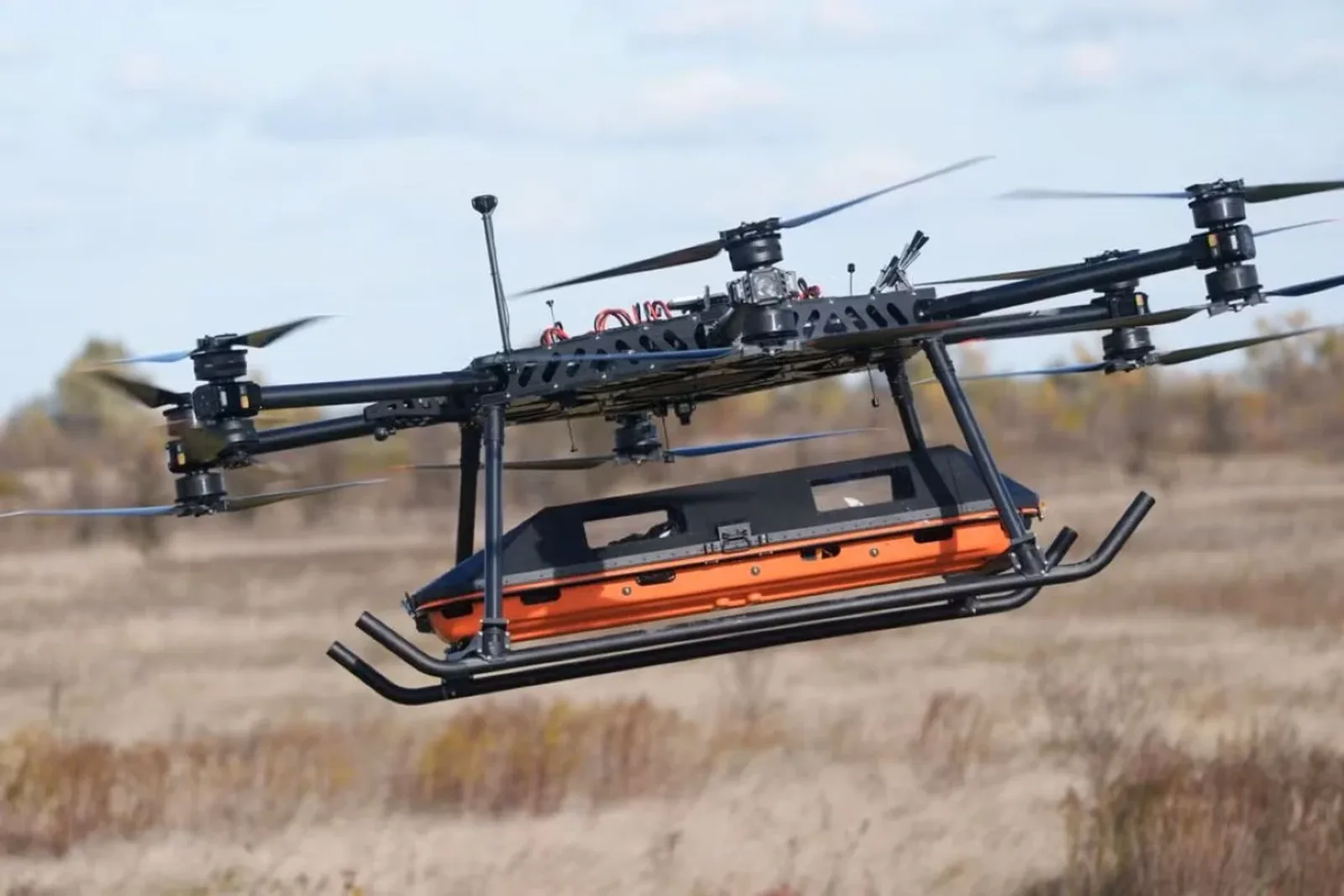
According to the ministry, an infantryman of the 30th Mechanized Brigade was recovered from a blocked position by a Heavy Shot Ayudag-6 hexacopter. Preparations took months. The man had amputated his own lower leg in order to survive. His comrades had long since fallen.
The equipment needed for the evacuation had also been dropped to the soldier beforehand by drones, and he had to secure himself to the winch on his own. Neighbouring units launched bomber drones to draw enemy interceptor drones away from the rescue aircraft. In the end it was a successful operation, but one that demanded enormous effort.

The rescue is nevertheless the opposite of a routine procedure. Reports describe the flight, covering a distance of several dozen kilometres, as exceptional: the passenger hung in an open harness, with no enclosed protection and no medical monitoring on board. They also say that rescue by air was attempted only because all other routes were blocked.

That would explain why an evacuation by drone was attempted at all. In a war in which the battlefield has become transparent, and in which flying systems at the front are both an omnipresent threat and a target, the chances of survival fall, particularly for large drones and their human passengers.

Evacuation drones: two Ukrainian systems

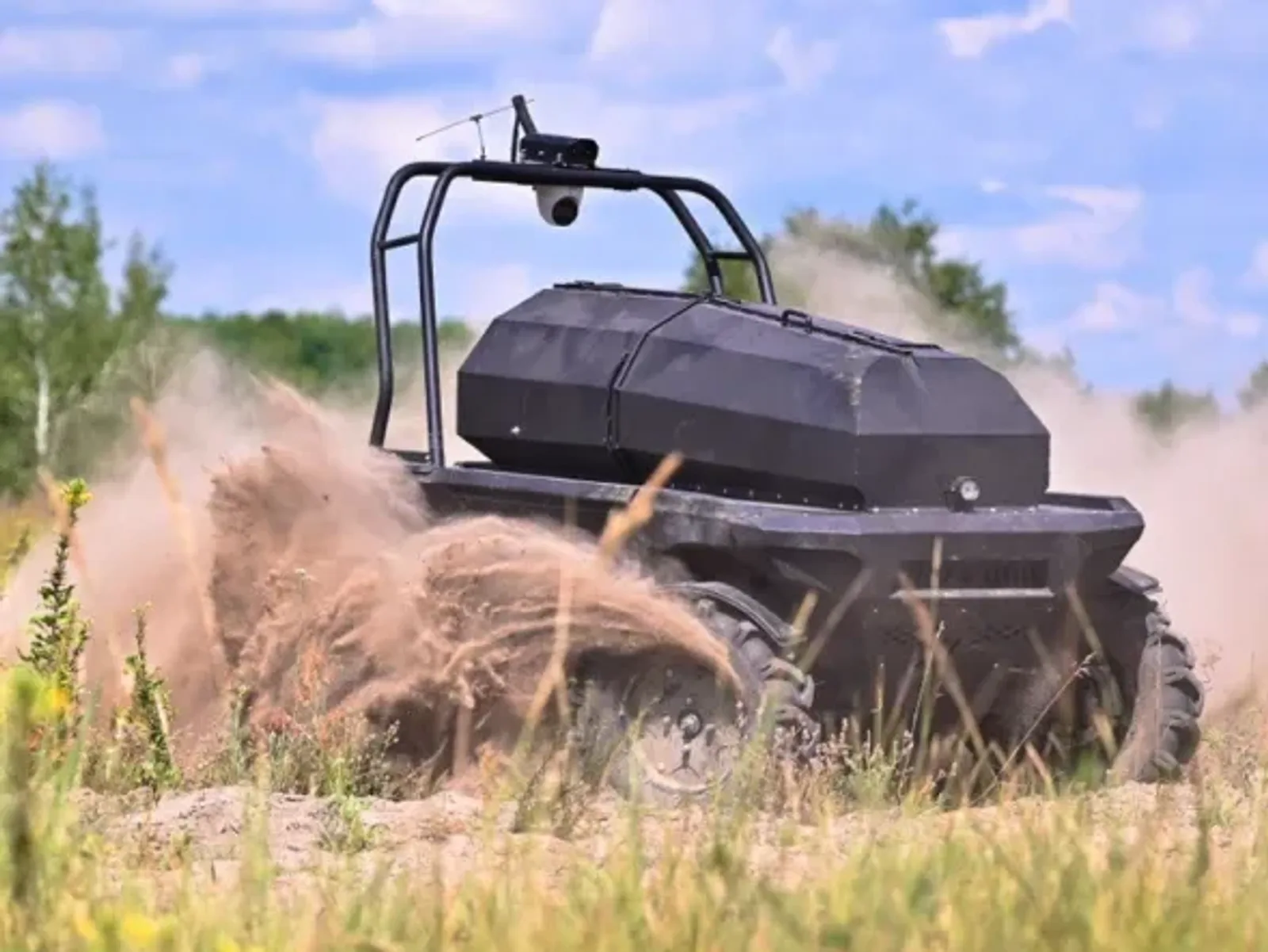
But what works once can work a second time. The Ukrainian drive for evacuation drones is therefore understandable. Yesterday the ministry named two systems developed for this purpose. The Ayudag-6, however, is not an aerial ambulance built for the job.

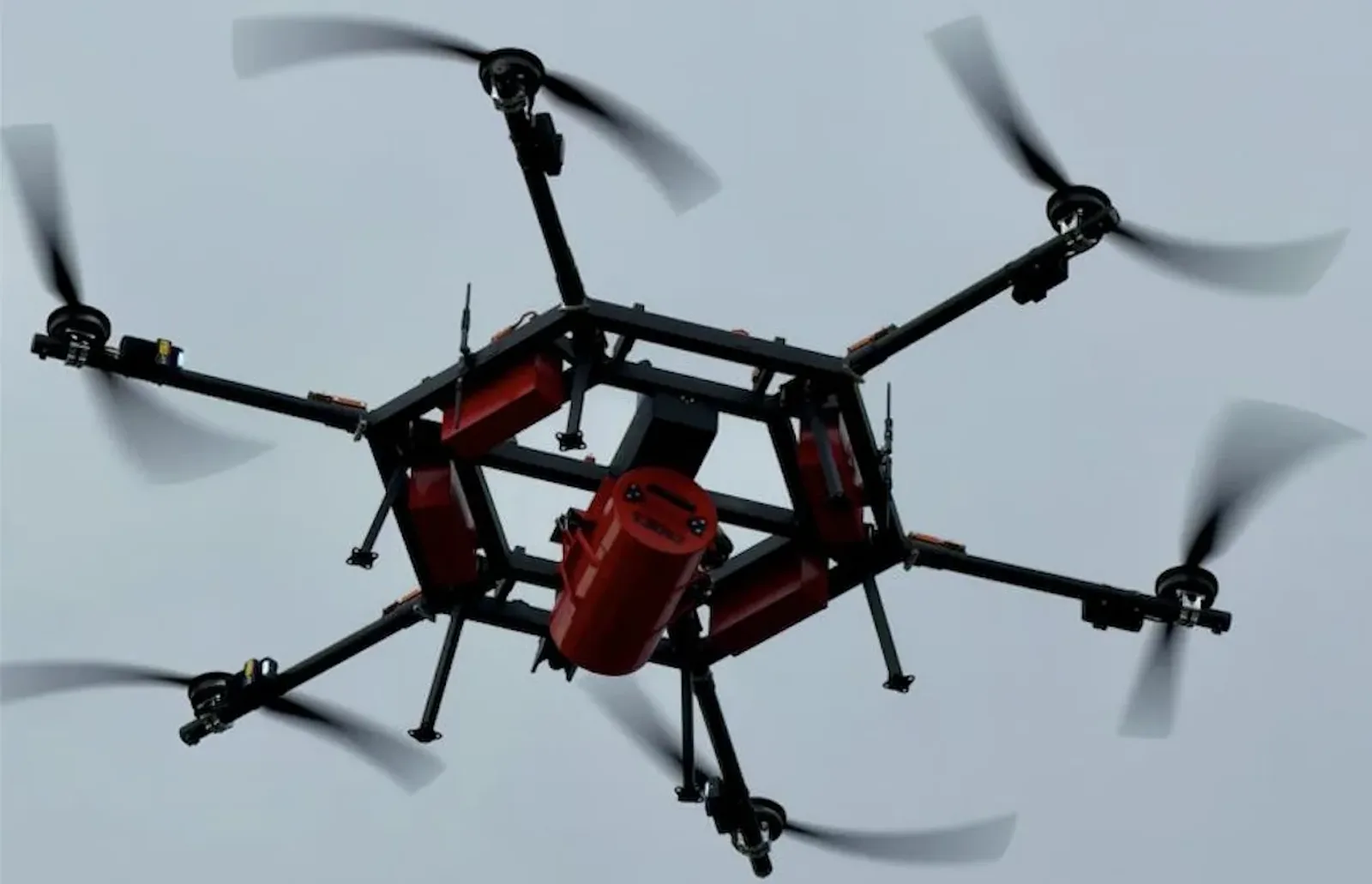
The Ukrainian heavy transport drone, the Ayudag-6, carried 130 kilograms.
Foto: Gurzuf Defence

The drone belongs to Gurzuf Defence’s Heavy Shot series, which primarily transports cargo and munitions. The ministry gives its weight as 98 kilograms and its payload as 130 kg. A range of 15 kilometres was stated. A drone of this type is said to have carried out the successful evacuation in Ukraine, and this is where the limitation of the shorter range becomes apparent. Some reports therefore say that additional batteries were fitted specially for this version.

The second system, StarGate by SkyFall, was by contrast actually designed as an evacuation drone. The system is said to be ready for use within ten minutes. StarGate carries 150 kilograms at up to 105 kilometres per hour and also includes a medical module with a stretcher.

AI-based software allows it to plan a route on its own and return to a safe area if navigation is disrupted. According to Ukraine’s Ministry of Defence, soldiers of the CODE 9.2 regiment have already used StarGate for two evacuations within one week.

The StarGate drone from Ukraine, developed for CASEVAC operations.
Foto: Skyfall

The evacuated soldiers were reportedly five kilometres from the Russian border, where difficult terrain, water obstacles and the threat of FPV drones made a rescue on the ground impossible.

The evacuation drone relies on Starlink terminals and SkyFall’s own L-Link system. It is said to be able to fly 15 kilometres to the wounded person and back.

Timeline contradicts the ministry’s account

The Ukrainian report cites 2024 as the start of development, when the following requirements for evacuation drones were set:

  • The unmanned aircraft must be able to reliably carry 130 kilograms over a distance of at least 15 km;
  • To survive in an electronic warfare environment, the drones must have an integrated communication system (at least three alternative types).

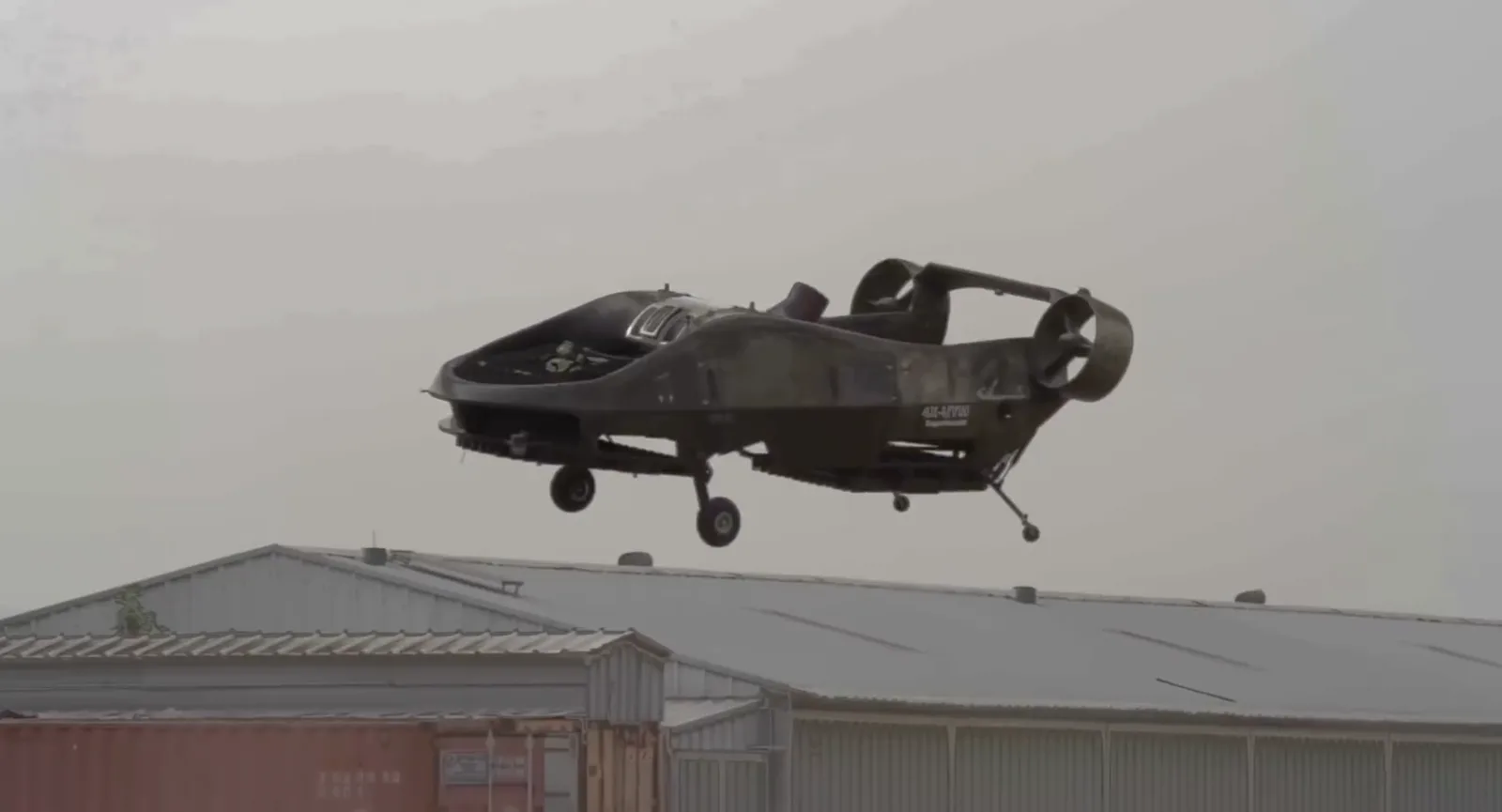
Yet as early as the aftermath of the 2006 Lebanon War, the Israeli armed forces formulated an operational requirement for an unmanned VTOL platform for resupply and medical evacuation from the front line. The answer was the Cormorant platform from Tactical Robotics, a company that has since ceased operations.

The Cormorant, an unmanned vertical take-off aircraft developed by the Israeli company Tactical Robotics, was designed for supply and rescue operations.
Foto: Urban Aeronautics

In a 2018 demonstration, the UAV flew autonomously with a medical dummy on board. A monitor supplied by the IDF’s chief surgeon transmitted vital signs, and a camera allowed two-way communication with the “patient”.

Other developers followed. In February 2024, BAE Systems unveiled a casevac version of its T-650 heavy-lift drone at the World Defense Show. In October 2024, the US Army Applications Laboratory selected LIFT Aircraft and Near Earth Autonomy to develop a payload for blood supply and casualty evacuation.

Germany, too, saw a corresponding development. According to the company Avilus, the Bundeswehr has been evaluating the Grille UAV since 2021 as part of its Drone Innovation Hub. The Grille’s second prototype, the 9X-02, made its maiden flight on 14 August 2024 at the WTD 61 test site in Manching.

When the Ukrainian requirement for evacuation drones was set in 2024, there was already more than one platform that met the required capabilities or was at least working towards them.

The Grille

The Grille is an unmanned heavy-lift aircraft for patient transport and medical evacuation (Military Medicine reported on it as early as 2023). It has a modular cabin with first-aid equipment, in-flight monitoring of vital signs and remote video support for psychological care. It flies fully autonomously, with jamming-resistant navigation, redundant avionics and powertrain, and an emergency parachute.
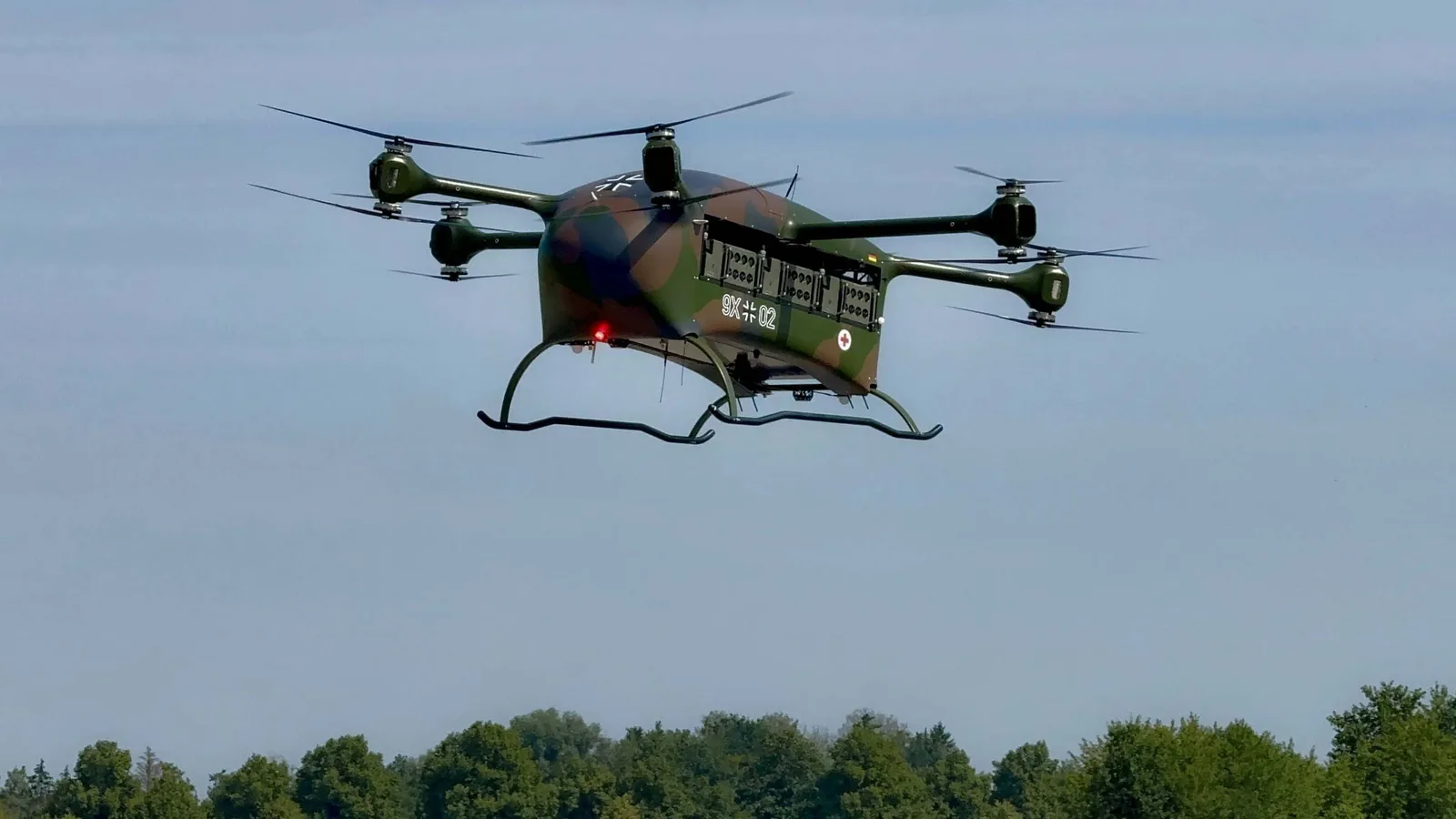
The Grille unmanned medical and rescue drone, manufactured by Avilus, on its maiden flight in 2024.
Foto: Avilus

Two operators can make it ready for use in 15 minutes without tools, and it fits into a 20-foot ISO container. The current Grille 9X is fully electric, with a stated maximum payload of 175 kg, a range of 51 km and a cruising speed of 86 kilometres per hour.

As far as is known, it has not yet been tested under combat conditions. In April 2026, however, the Bundeswehr contracted Avilus to deliver two flying systems, flight trials and operator training, so that the system can be adapted to the requirements of the medical service.

Evacuation drones compared

Compared with the Ukrainian systems known so far, the Grille comes out ahead in cabin, monitoring and range. It is, however, a considerably larger aircraft (maximum take-off weight 750 kilograms) and has not yet been tested in an environment saturated with FPV drones and jammers. The Ukrainian systems have what the Grille lacks: experience under fire.

Two unmanned aerial systems, including Avilus’s Grille, are operating in rainy conditions at the Bergen military training area in autumn 2026.
Video: CPM / Navid Linnemann

Soldiers in Ukraine may have flown the world’s first combat use of a heavy transport drone to evacuate a wounded person. The first development of evacuation drones, however, goes to someone else. Israel formulated the requirement early and developed an initial system, and others followed. The German Grille, too, was already in testing before the Ukrainian requirement.

Even so, one thing holds: evacuation by air is no cure-all. The Ayudag-6 mission at the Ukrainian front required months of preparation and the cooperation of several brigades. The passenger was exposed to risks he could hardly influence. Rescue from the air should be used only when manned pickup and unmanned ground vehicles are genuinely out of the question.

Mit WhatsApp immer auf dem neuesten Stand bleiben!

EN: Subscribe to our WhatsApp channel to receive the latest news directly on your mobile phone. Simply scan the QR code or click on this link.

DE: Abonnieren Sie unseren WhatsApp-Kanal, um die Neuigkeiten direkt auf Ihr Handy zu erhalten. Einfach den QR-Code scannen oder auf diesen Link klicken.

Beitrag teilen

Das könnte Sie auch interessieren

DEF-JOBS