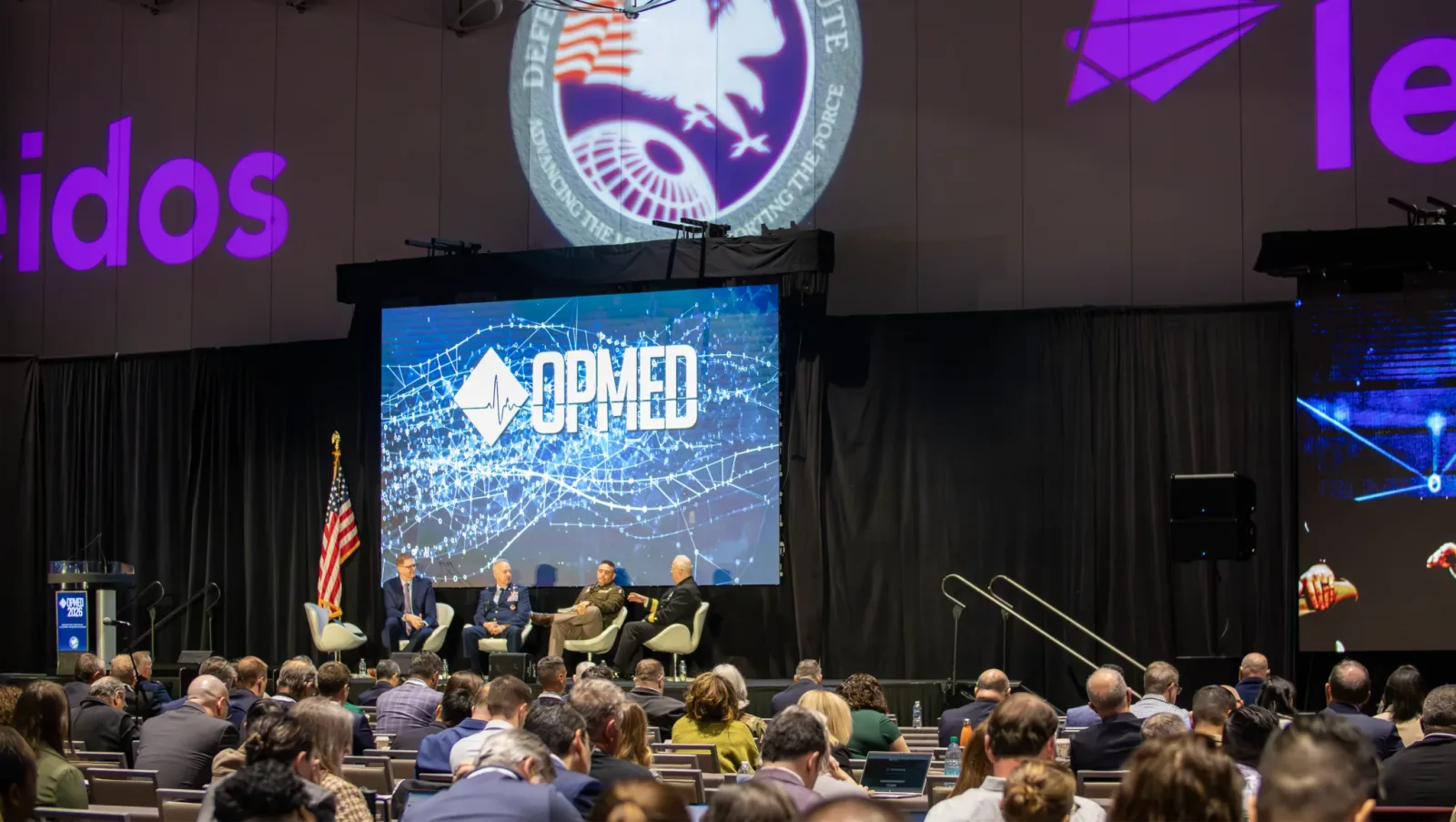
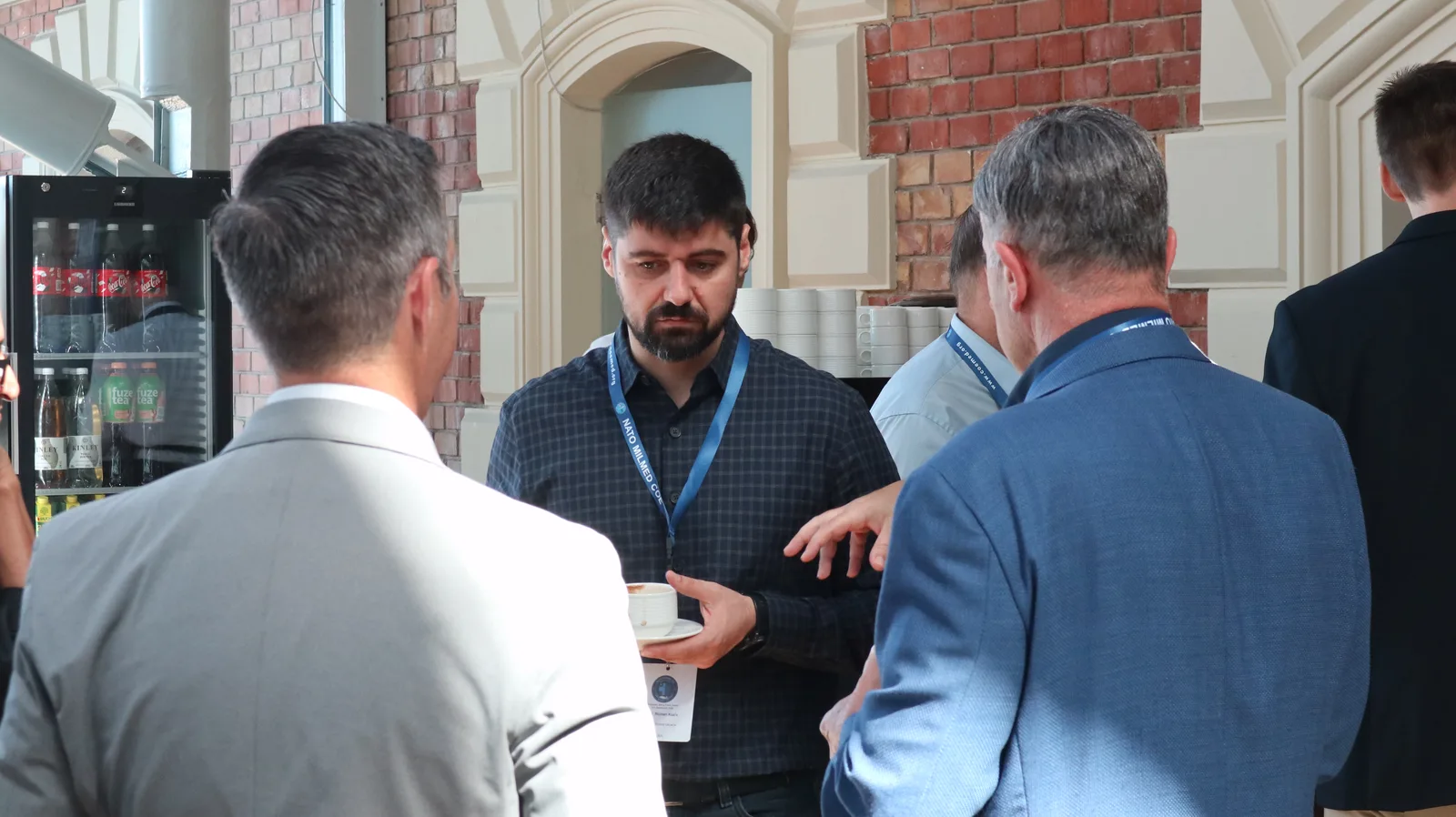
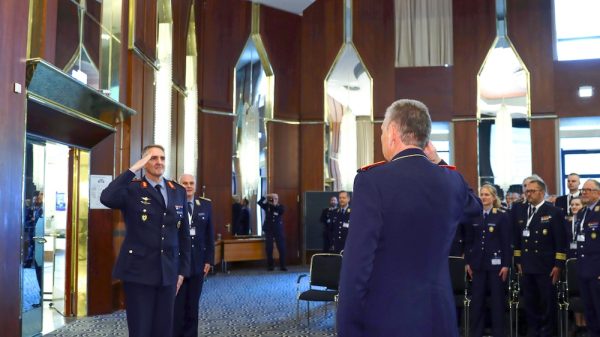
Using fire as an image for humanity’s oldest innovation, Brigadier General Jens Diehm, Director of the NATO Multinational Medical Coordination Centre / Centre of Excellence (MILMED COE), opened the first NATO Medical Innovation Workshop today. The aim of the new event in Budapest: bringing together military medical services, science and industry. Participants are looking for answers to the question of how the best possible medical care can be ensured under today’s operational conditions. Time frame as of today: 853 days.
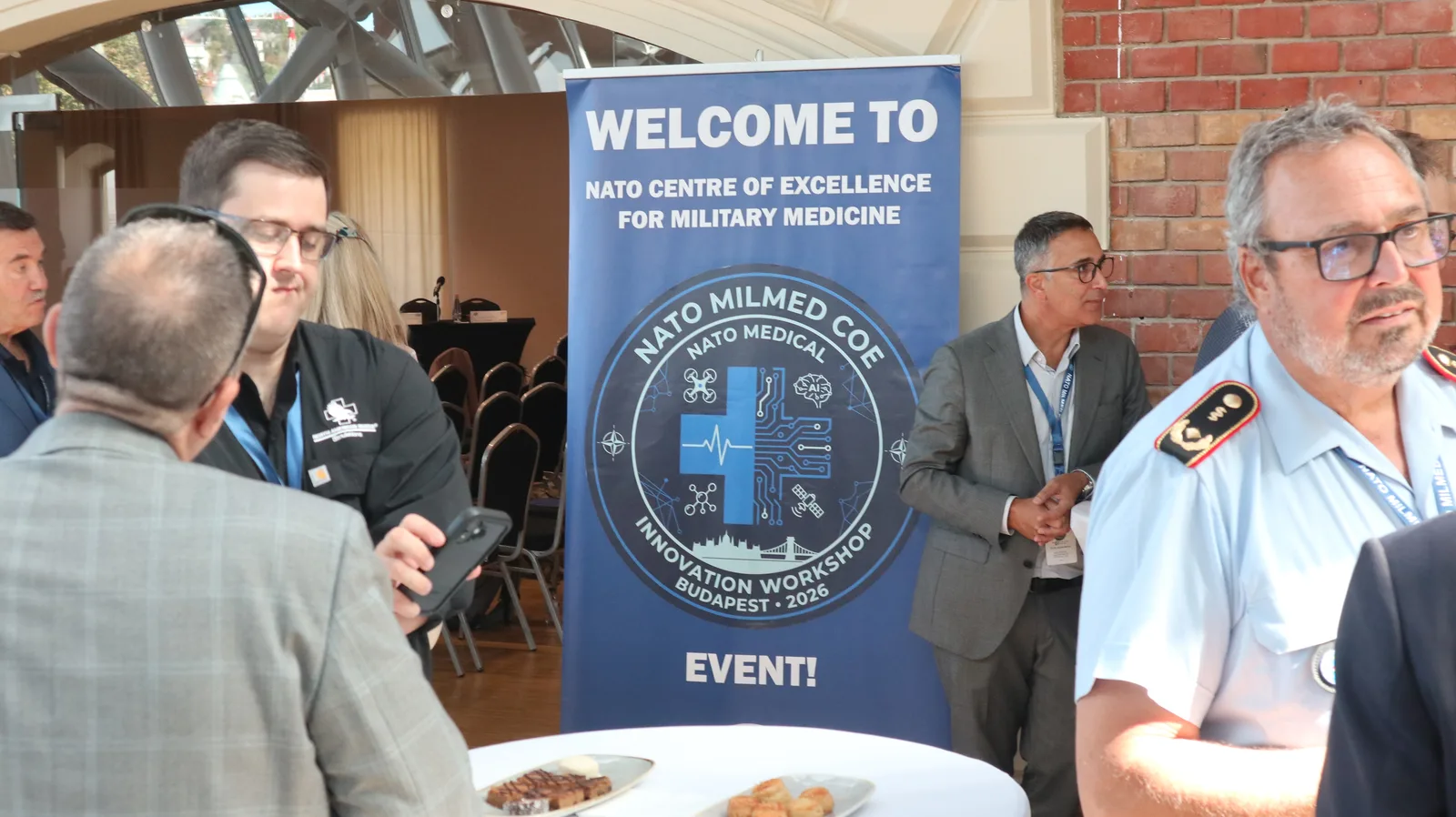
Military medicine, too, needs innovation. Warfare has changed enormously since the start of Russia’s war of aggression against Ukraine, and no one can expect military medicine to remain untouched by that shift. Here as well, medical services must respond with innovation to the new conditions of the battlefield — first and foremost, drone warfare. Brigadier General Diehm, however, chose an example that could hardly be older, or more „double-edged“: fire.
Fire warmed humanity and made food digestible, making it a driver of human development over millennia — yet it has always remained a danger that can burn you. „That’s the flip side of the coin, and that’s almost always the case with innovation,“ Diehm concluded, extending the point to other developments as well. New technologies and concepts, he said, can be just as useful as they are harmful; either way, once they exist, they cannot be pushed back. The only choice is to learn how to handle them and how to draw benefit from them.
Medical Innovation inspired by Ukraine
With that, Diehm turned his attention to Ukraine. There, an adversary that does not respect the protected status of the Red Cross is systematically changing the character of warfare. Innovation, he argued, is therefore not a purely technical matter. It concerns concepts, training and mindset just as much — both within armed forces and within the broader population.
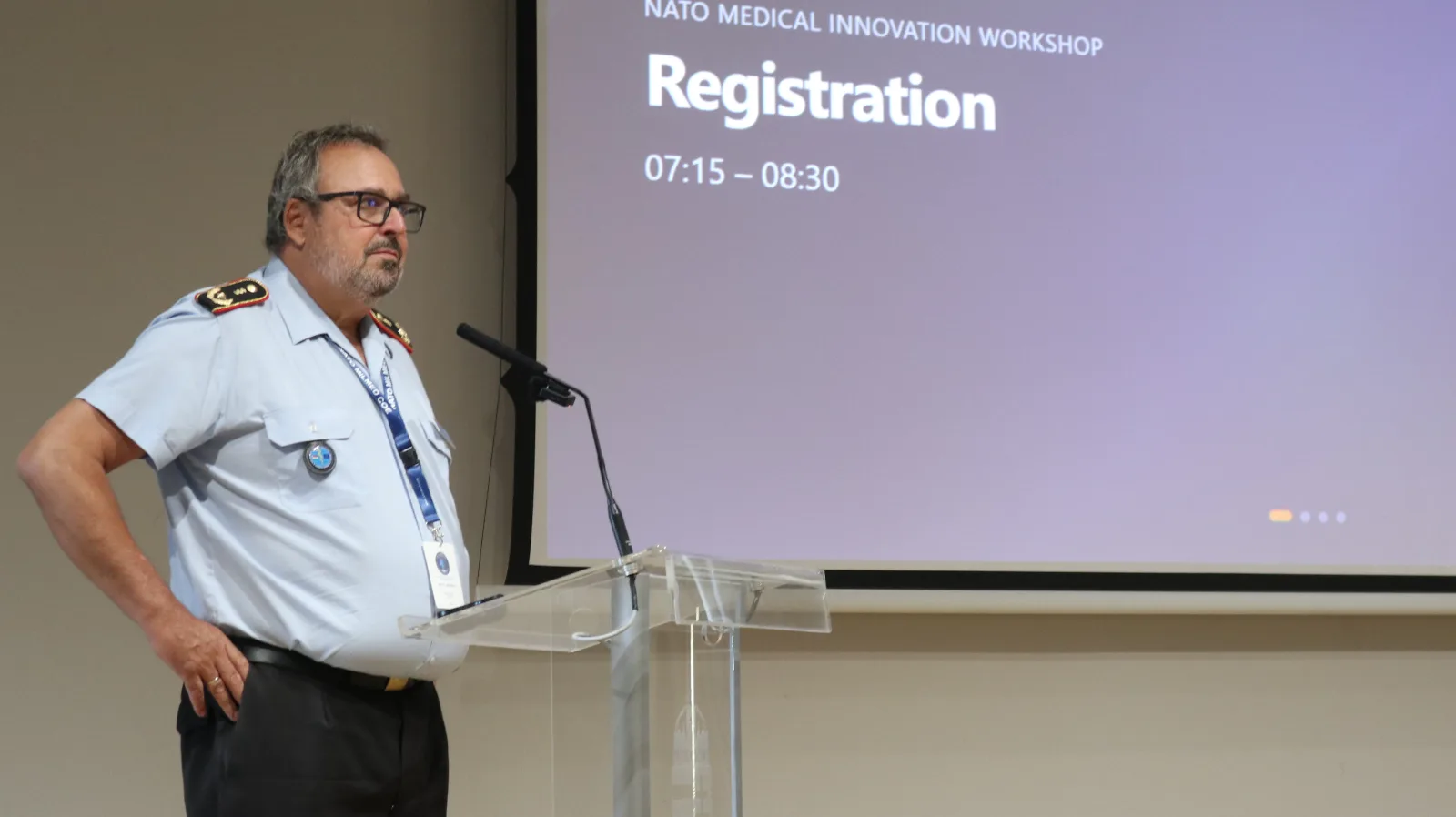
Generalarzt Diehm cited Ukrainian society as a positive example: during the war, it has not only produced countless different drone solutions outside of any single large defence contractor, but its medical service also digitalised the entire medical support chain in the middle of the war. His central appeal in Budapest followed accordingly: „We need to learn to use what we already have differently and better, instead of tying innovation solely to new equipment.“
That, Diehm continued, is precisely why the workshop brings three parties together: the military medical services of NATO nations, science and research, and industry. Innovation and planning, he said, too often still happen in national isolation — risking wasted synergies and making standardisation harder. The workshop is meant to serve as a platform where experiences, ideas and industrial developments can be exchanged, closely coordinated with the relevant NATO command structures.
General Zsolt: Innovation Is More Than New Technology
Colonel General Sándor Zsolt, Chief of the General Staff of the Hungarian Armed Forces, also addressed the participants with welcoming remarks. He too stressed that medical innovation in a military context is usually first associated with artificial intelligence, autonomous systems, drones or digital medical devices — but that it in fact encompasses far more: new ideas, changed processes, new operational concepts, organisational forms, training methods and closer cooperation.
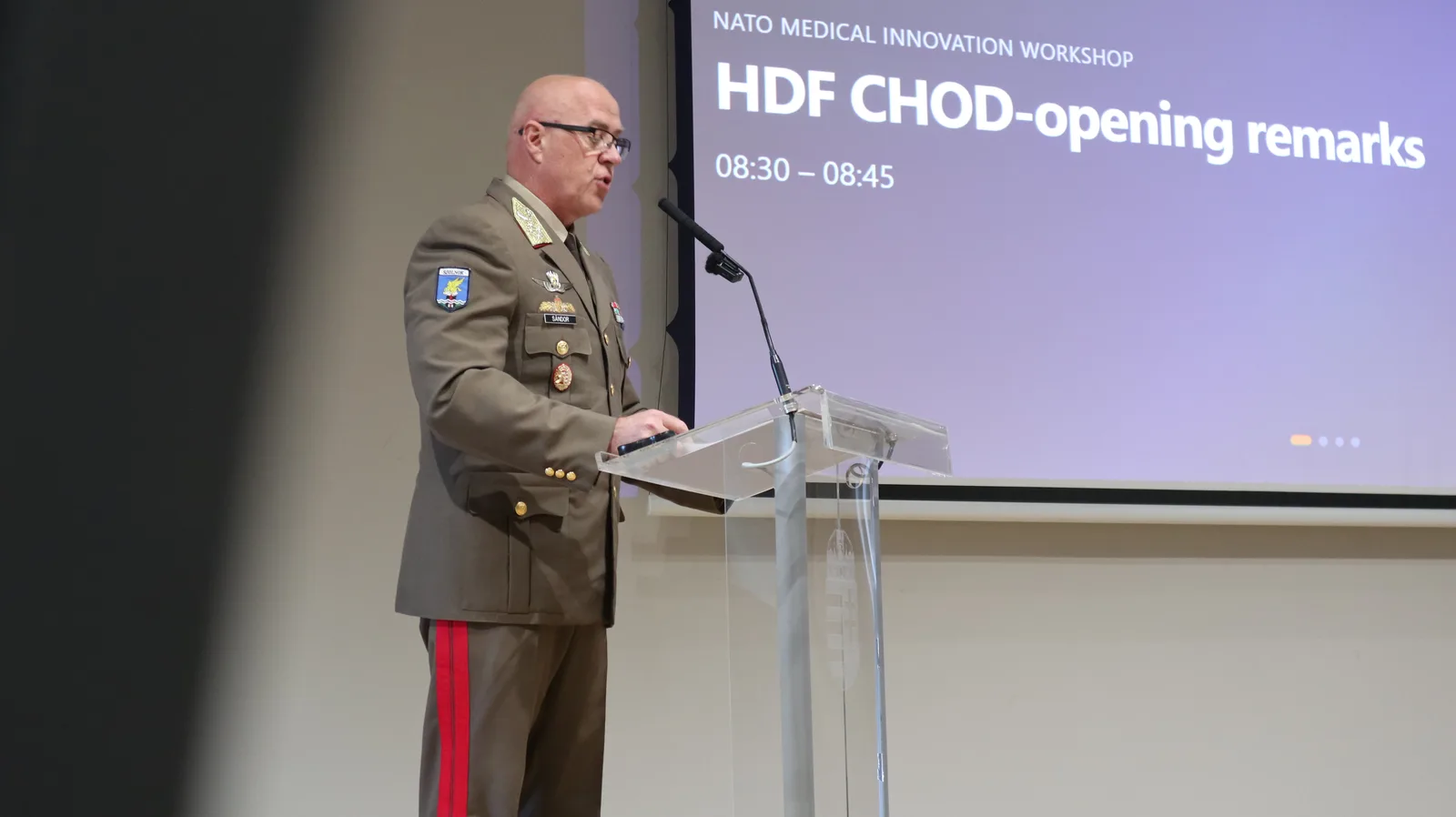
What matters, he said, is not whether something can be technically implemented, but whether it actually helps. „The real questions,“ Colonel General Zsolt said, „are: Is the innovation truly important? Does it solve the actual problem? Does it improve effectiveness or efficiency? Can it be implemented under real conditions? And ultimately: does the innovation improve outcomes and help us survive?“
Colonel General Zsolt also welcomed the workshop’s ambition not to get lost in long-term basic research, but to prioritise solutions that can realistically be implemented within the next six to twelve months — ranging from improved procedures to training innovations to digital, interoperable tools.
As the NATO framework nation for MILMED COE, he said, Hungary intends to take on an active and reliable role for the Alliance and for the centre’s sponsoring nations.
The Best Care Under the Worst Conditions
The overarching question at the start of the first NATO Medical Innovation Workshop could be summed up this morning as follows: how can an operating environment be created for military medical personnel that comes as close as possible to the best possible care — knowing full well that it will never match the conditions of civilian hospitals?
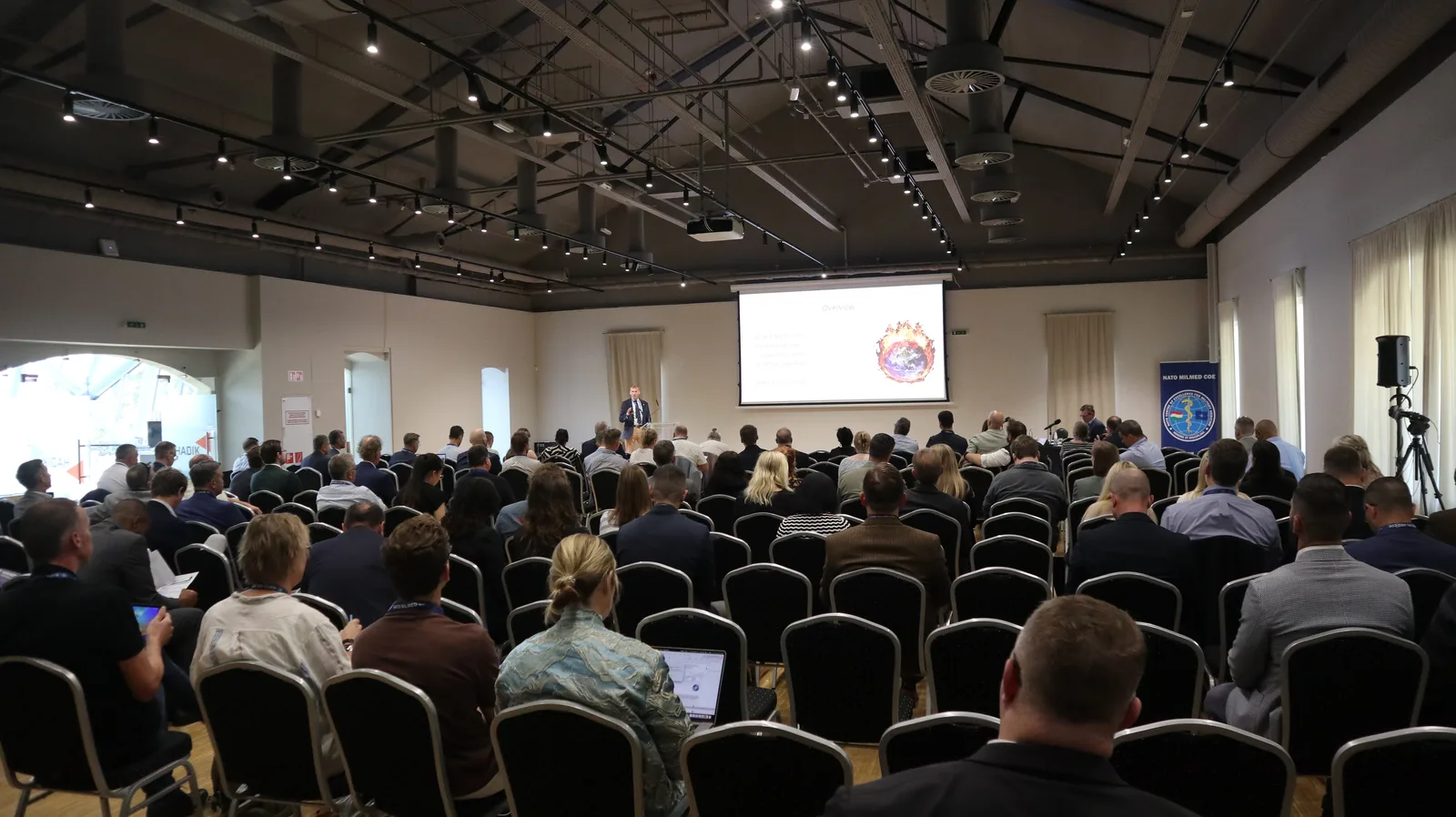
While civilian medical staff can rely on stable power supplies, diagnostic equipment, laboratories, operating theatres, specialised materials and functioning communication systems, military medical personnel often have to treat the wounded in extreme temperatures, in darkness, in difficult terrain or under enemy fire. On top of that come limited supplies, disrupted communications, uncertain evacuation times from the front, and at times a high number of severely wounded requiring simultaneous treatment.
This is precisely the tension the NATO Medical Innovation Workshop aims to address. At the event that opened today in Budapest, armed forces, science and industry are meant to work together to keep the gap between civilian and military standards of care as small as possible. There are exactly 853 days left to do so. That is when, according to one of the workshop’s first speakers, 1 January 2029 arrives — the year in which, according to intelligence assessments, Russia could attack a NATO country.
Mit WhatsApp immer auf dem neuesten Stand bleiben!