For more than five decades, air rescue has been an integral part of emergency medical care in Germany – and the German Armed Forces continue to play an important role in this field. The winch training of the Berlin-based ‘Christoph 100’ crew shows how military precision and civil cooperation go hand in hand. At the same time, Airbus Helicopters presented the H140 last week, a new helicopter developed specifically for air rescue, for the first time in Germany.
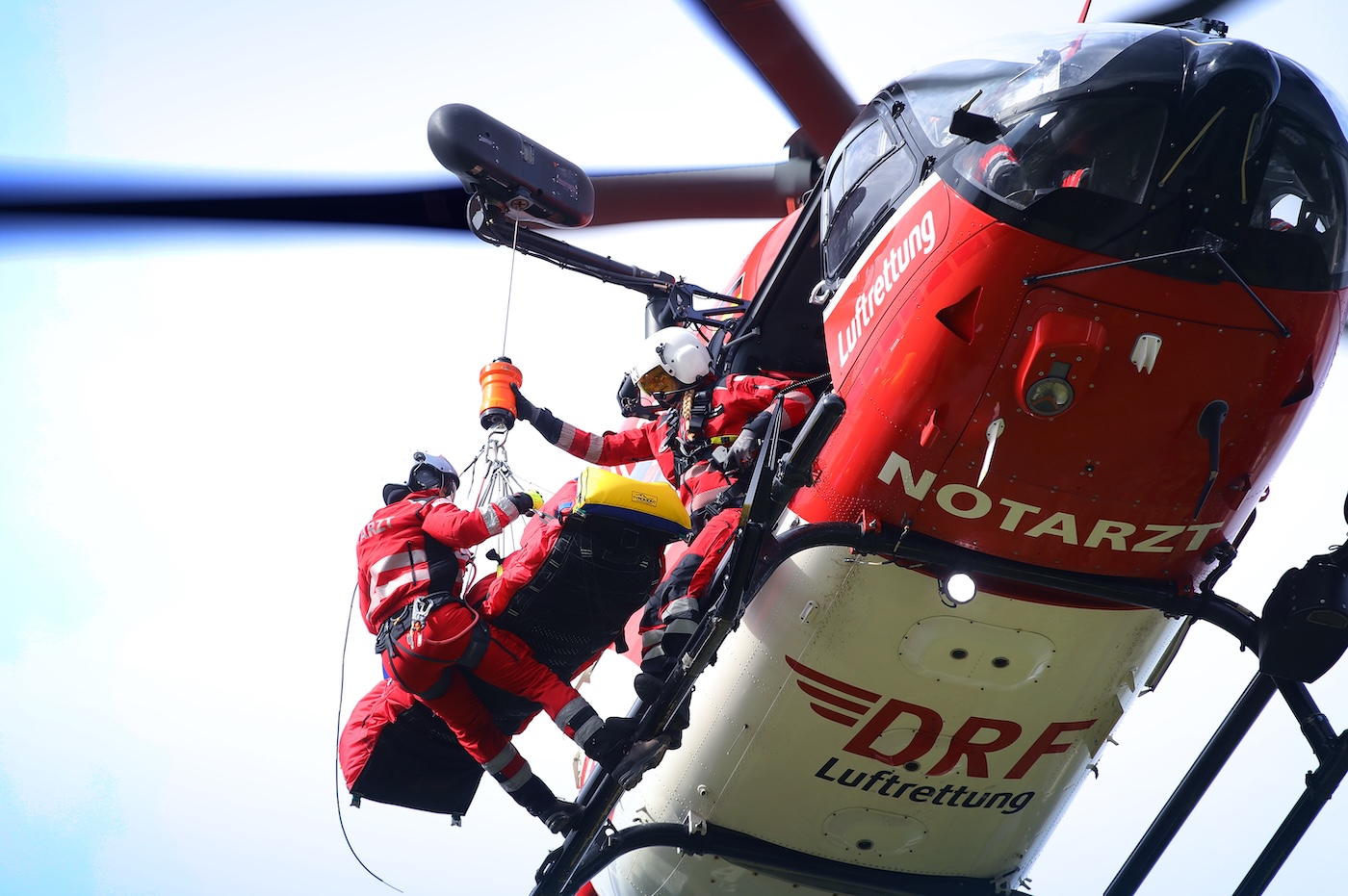
A dull, increasingly loud rattling of the rotors is usually the first thing you notice when a helicopter approaches. Same above the Lehnin military training area, where the crew of the ‘Christoph 100’ rescue helicopter was flying for particularly important winch training.
Air rescue by winch – when every second counts
Air rescue by helicopter is crucial because it saves time in critical emergencies, which often means the difference between life and death. Helicopters can reach locations in minutes that are difficult or impossible to access by ambulance – whether in rough terrain, on motorways or on high-rise buildings.
But even they cannot land everywhere – this is where the winch comes in. It can be used to drop off emergency doctors and pick up patients. ‘This is extremely challenging for the winch operator, who is also a pilot,’ explained Senior Medical Officer Dr Lutz Siegl. He is part of the helicopter crew and head of the Centre for Emergency and Rescue Medicine at the Bundeswehr Hospital in Berlin, and took part in the winch training.
Winch training is precision work
Once a year, the crew of the Berlin rescue helicopter trains in winch rescue from the air under realistic conditions. The winch scenario is particularly demanding – often operations have to be carried out in confined spaces or at an angle.
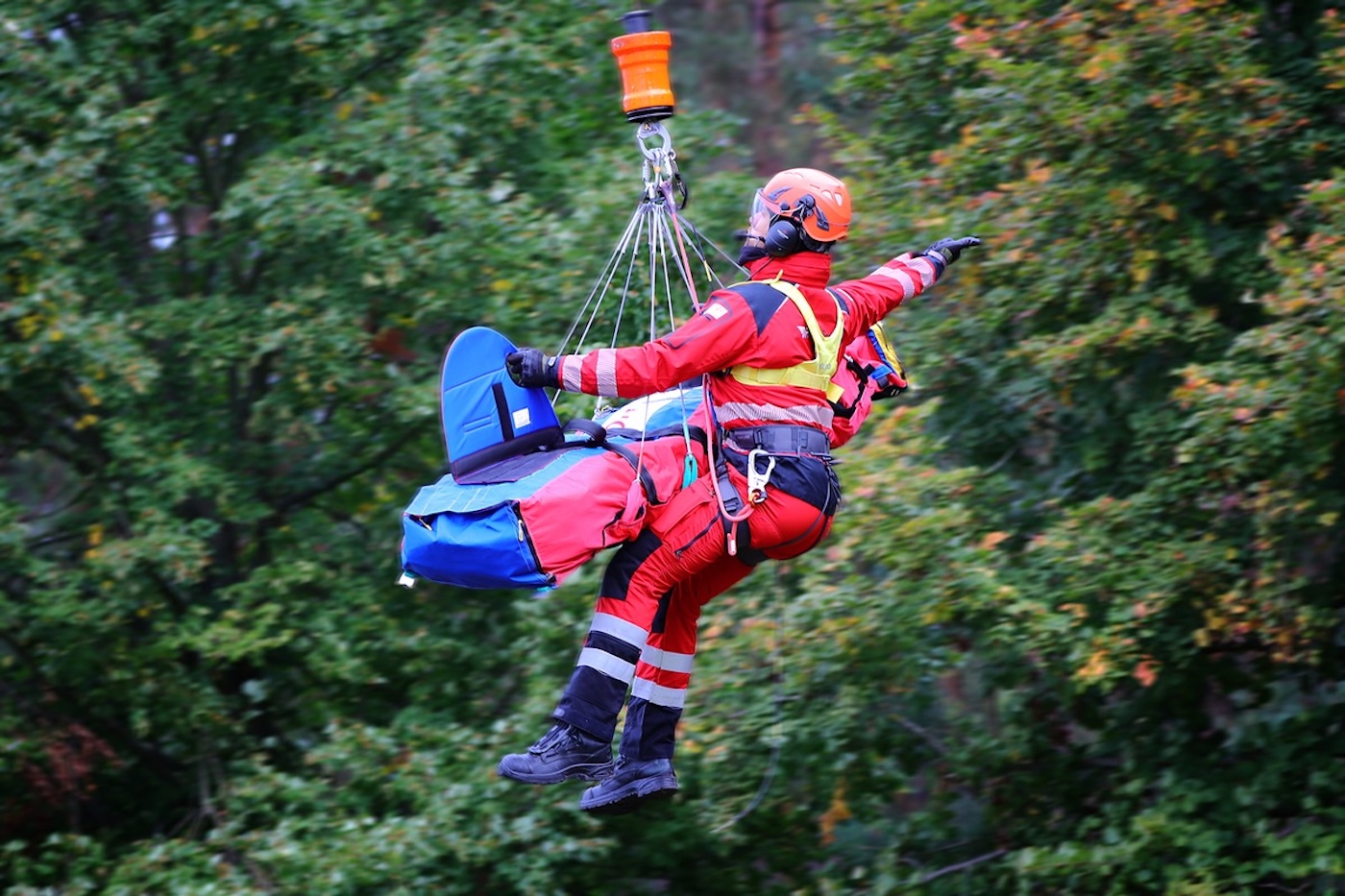
The challenge in winch training lies in teamwork: the pilot must position the aircraft precisely in the air so that the winch can drop off or pick up the rescue team with pinpoint accuracy – even in adverse conditions such as crosswinds, at night or in confined urban spaces. Tact and teamwork are crucial in saving seconds and thus lives.
‘The pilot only sees us as a small dot swinging back and forth on a 50-metre-long rope,’ said Dr Siegl, describing the training of the crew members of the DRF helicopter RTH 2706 ‘Christoph 100’. ‘This is particularly dangerous in windy conditions, because the helicopter shifts and so does the rope, and he still has to drop us off.’
Over two days, the Berlin crew practised different scenarios during winch training – sometimes with a ‘rescue bag’, sometimes with a rescue sheet. It is important to establish a routine so that hand signals and commands are clear and behaviour with the cabin door open is safe.
55 years of air rescue – military experience in civilian operations
There are 88 rescue helicopter stations nationwide with 135 RTHs, most of which are operated by the ADAC. The first deployment of ‘Christoph’ (now ‘Christoph 1’) took place in Munich in 1970. At that time, the German Armed Forces were also heavily involved in civil air rescue.
They operated several bases with helicopters, mostly of the Bell UH-1D type, including those above the German Armed Forces hospitals in Hamburg, Ulm and Koblenz. After reunification, the German Armed Forces also took over responsibility for air rescue bases in Schwerin, Jena, Erfurt and Bad Saarow.
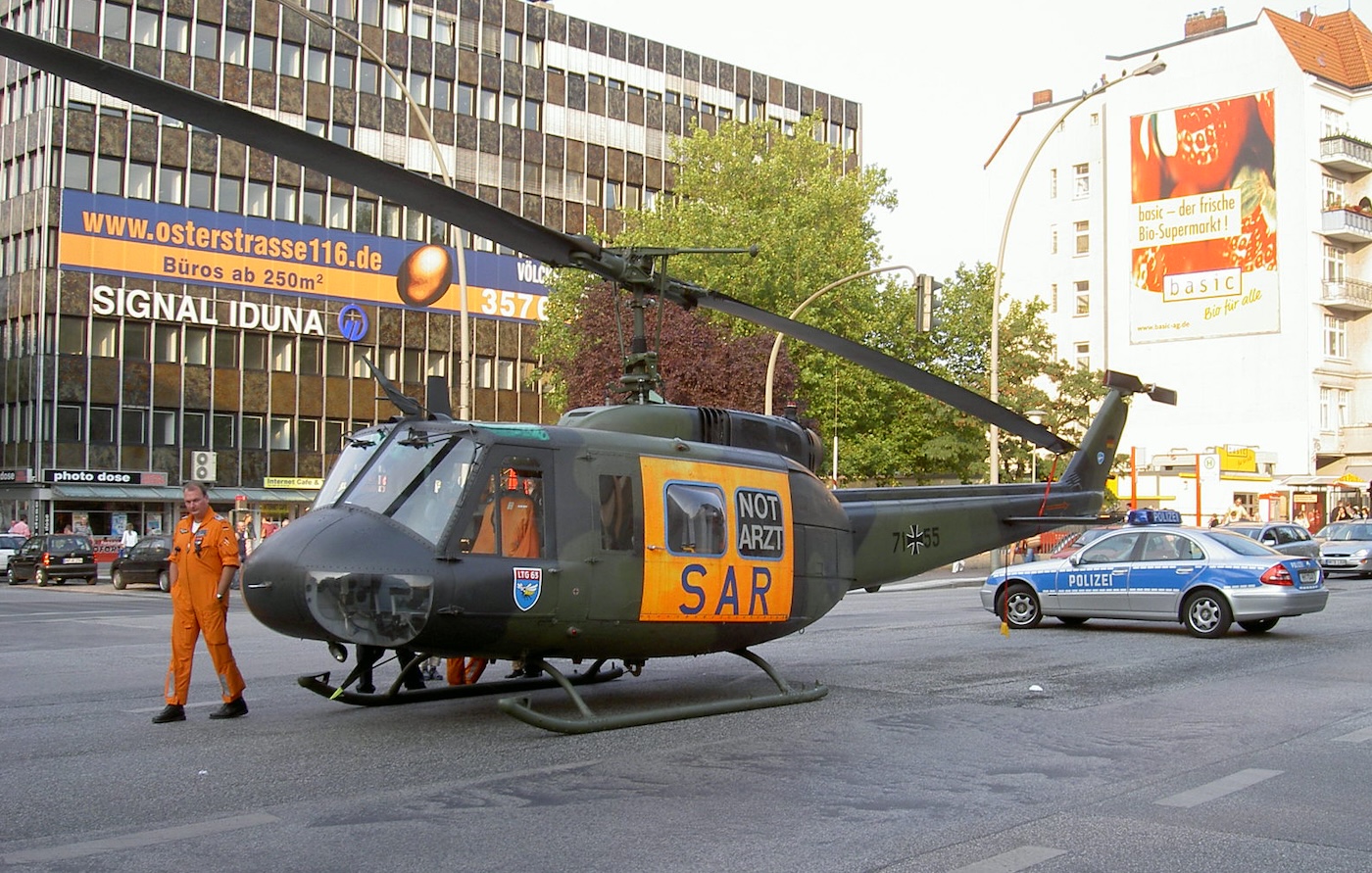
Military involvement in air rescue – which constitutes a case of administrative assistance – has declined sharply in recent years. Today, the German Armed Forces only fly in the SAR sector, no longer as part of the ‘Christoph’ fleet.
However, as in the case of ‘Christoph 100’, civil-military cooperation still exists here too. This Berlin crew is stationed at the Helios Clinic in Berlin-Buch as one of three RTHs in the capital. The helicopter and pilots are provided by the German Air Rescue Service (DRF), while the medical personnel are provided partly by the German Armed Forces and partly by the fire brigade. In Koblenz and Ulm, for example, soldiers are also deployed as medical personnel for the local air rescue services.
Technology in transition – from the UH-1D to the Airbus H140
While the personnel on board the rescue helicopters are constantly training their skills, the technology used in air rescue must also remain up to date. A good example of this is the new Airbus H140, which was unveiled to the public in Germany for the first time this week.
You can read a detailed report on our sister site security-network.com.
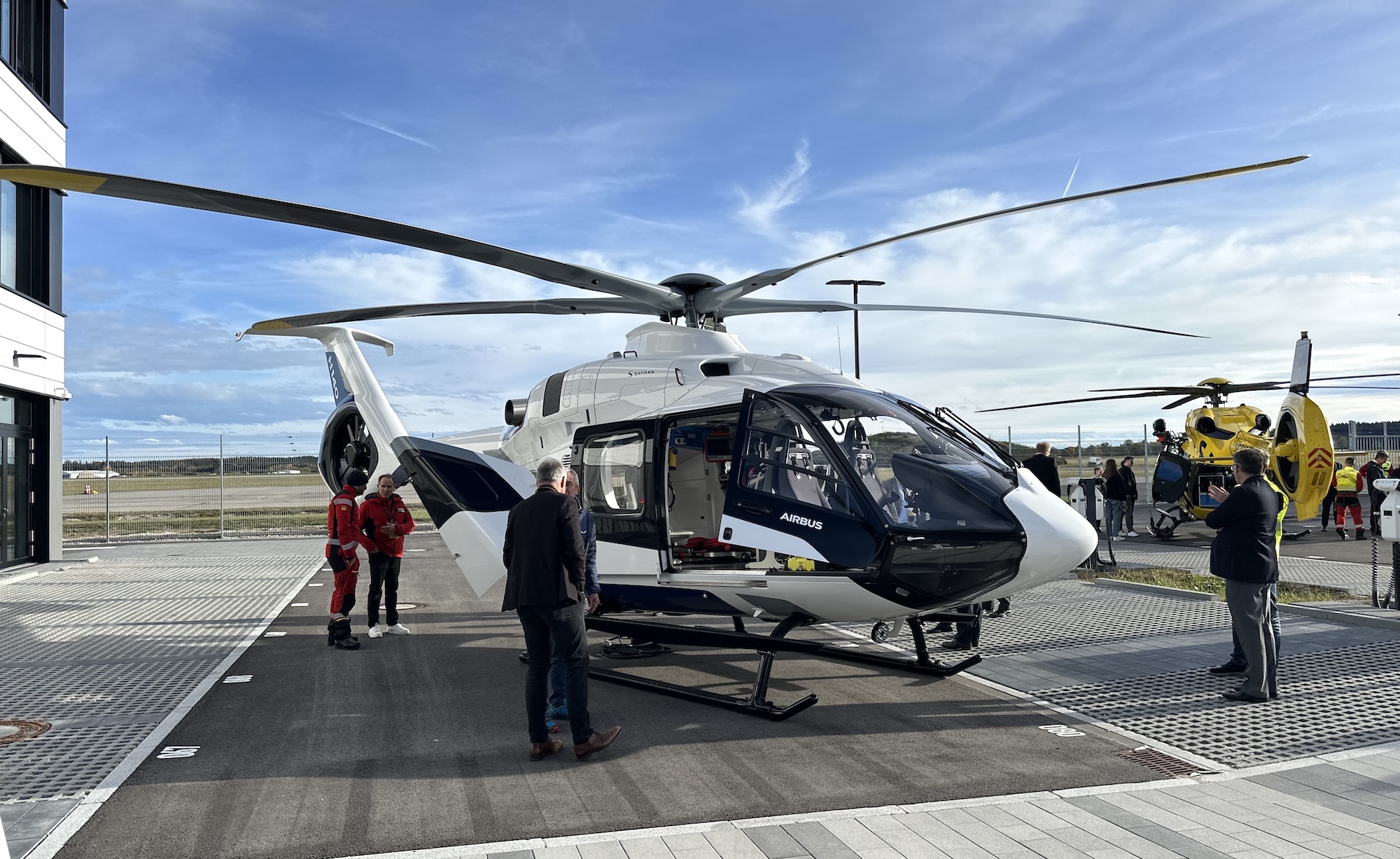
The H140 is intended to bridge the gap between the proven H135 and H145 models. What makes it special is that Airbus Helicopters developed the new aircraft in close cooperation with air rescue services. DRF, ADAC and other air rescue services have already signed initial contracts for the H140 or issued letters of intent. It is not yet known whether and when the H140 will also be used for military purposes.
A future built on experience
Whether in joint exercises such as those in Lehnin or with a view to new helicopters such as the Airbus H140, air rescue shows how cooperation can be used for the benefit of people – be it civil-military cooperation or cooperation between industry and users.