In Budapest, a Ukrainian medical commander showed NATO doctors and industry representatives combat footage that left the room in silence. Danger is everywhere; escape is barely possible. Soldiers hit by FPV drones present injuries unlike anything seen in previous military conflicts. Colonel Dr. Roman Kuziv delivered a blunt message: the drone war unfolding in Russia’s invasion of Ukraine has permanently transformed military medicine.
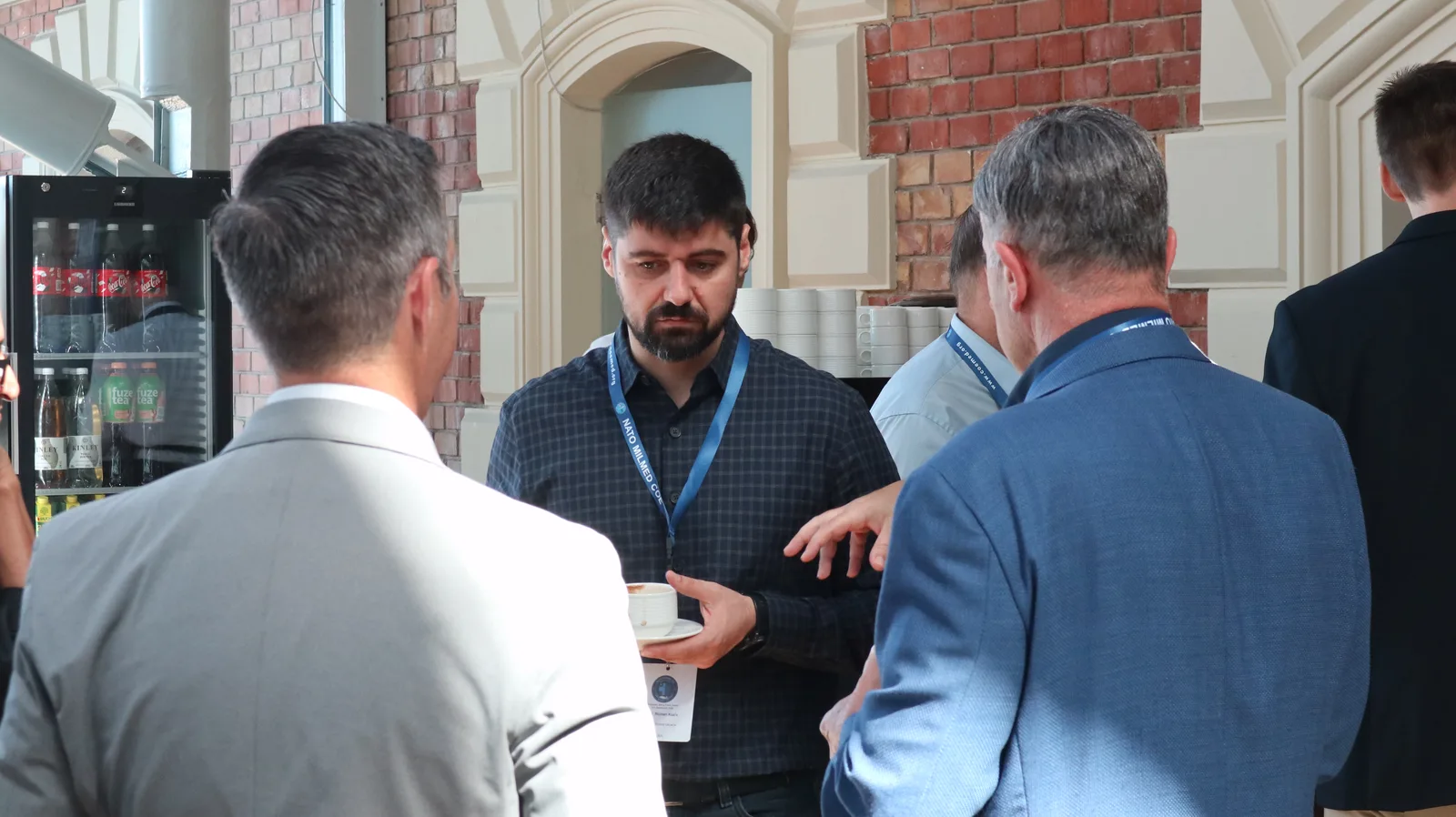
Dr. Roman Kuziv is a Colonel of the Medical Service in the Armed Forces of Ukraine and commander of the Military Medical Clinical Centre of the Eastern Region (VMKTs SR) in Dnipro. The surgeon previously ran the mobile military hospital in Pokrovsk before taking command of the Zaporizhzhia Military Hospital. His firsthand experience from the front lines carries real weight for Western medical services — and at the NATO Medical Innovation Workshop, where he attended as part of the WEM Fund team, he didn’t hold back.
At Budapest’s Bálna Defence Centre — a kind of military-style convention hall — Kuziv laid out what NATO medical services urgently need to learn from Europe’s largest war since 1945. He opened with a warning to the audience: he hadn’t brought a „magic solution,“ only an account of what his units had learned under fire.
Drone Warfare: The Invisible Enemy
Kuziv, who is responsible for medical support across a sector covering roughly 600,000 soldiers and nine million civilians, was blunt about what Ukraine is facing: a full ecosystem of air, sea, and ground drones that has turned the battlefield into a deadly patchwork of reconnaissance drones, drone motherships, and fiber-optic-guided kamikaze UAVs.
Ranges run from a few kilometers to well over a hundred kilometers behind the front line, he said, with individual units costing only a few hundred dollars. Most alarming is the steadily rising share of unmanned systems in combat casualties: in his sector, gunshot wounds now account for just 1.5 percent of injuries, while drones cause 75 percent.
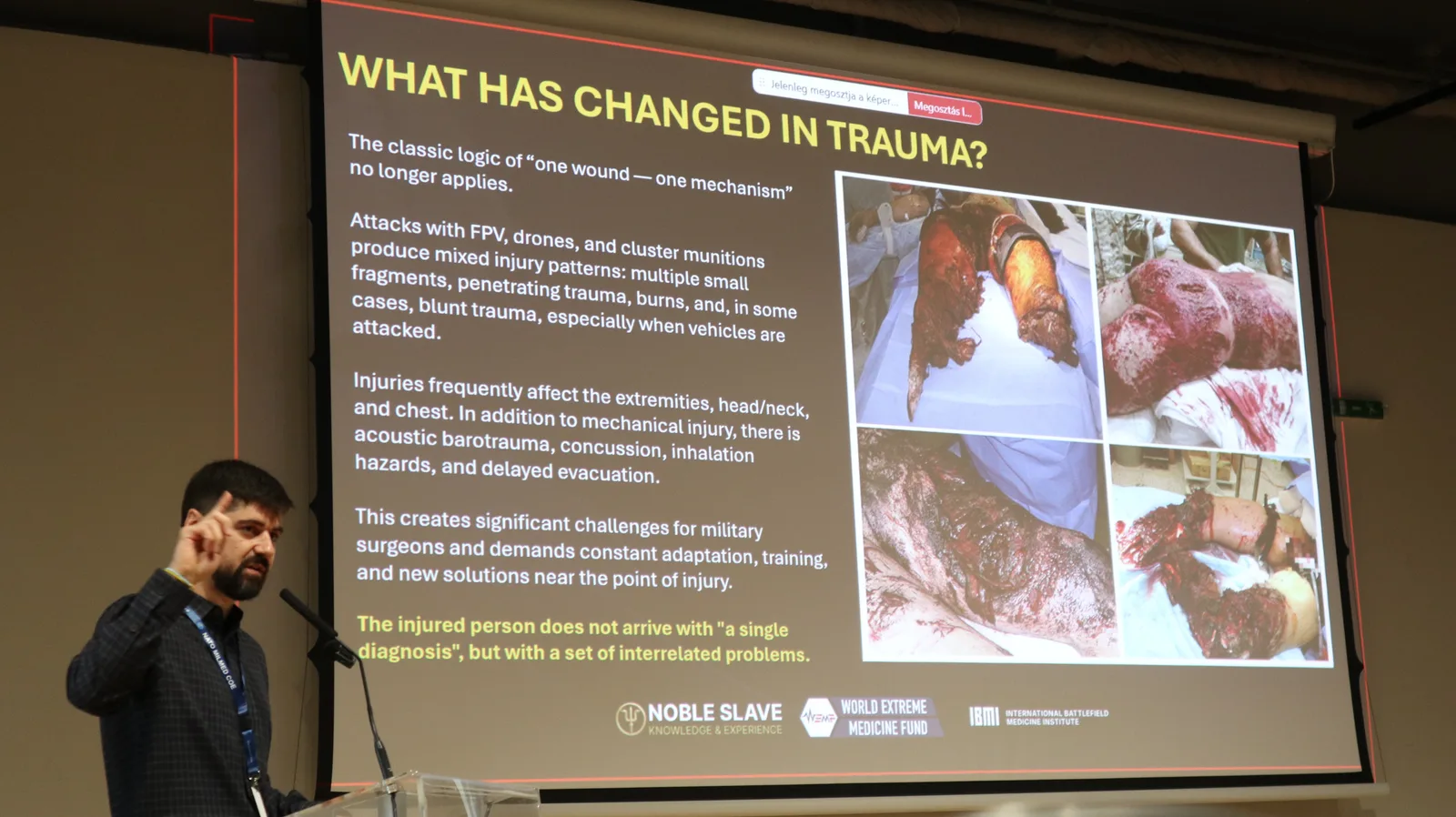
That sharp rise over the past two to three years has come with another shift: the entire injury profile has been turned upside down, Kuziv reported. Soldiers and civilians alike are now presenting with burns, shrapnel wounds, and blast trauma simultaneously. Particularly stark is the surge in head and neck injuries, now far more common than before the era of mass drone use. His sober conclusion: personal protective equipment, still largely designed around lessons from Iraq and Afghanistan, needs to be rethought from the ground up.
When the „Golden Hour“ No Longer Counts
„Golden Hour doesn’t work here,“ Kuziv said, summing up the central dilemma. Sometimes the golden hour becomes a golden day — or even a golden week — depending on how long a wounded soldier remains pinned under fire. The reason: within a roughly twenty-kilometer strip along the front, he said, almost any movement can be spotted and struck by a drone within seconds.
The classic rescue chain — detect, report, plan, evacuate — simply no longer functions in this zone. Recovering a single wounded soldier, he said, often requires two to four personnel, who expose themselves to mortal danger in the process. A video Kuziv showed drove the point home.
Ukrainian soldiers race across a bombed-out field in a white pickup truck. Top speed over muddy ruts. Tension. The truck stops; soldiers vault over the side. A four- or five-meter sprint to the wounded man. Part of his lower leg is missing. No time for a stretcher, no time for anything. Three comrades grab his uniform and haul him onto the truck bed like a sack. They climb aboard as the driver floors it. Mud sprays. They just keep moving — ten meters, twenty meters — and then it happens: a Russian FPV drone detonates right beside the truck. Glass shatters across the frame — less than 45 seconds into the video.
Robots Instead of Soldiers: How UGVs Save Lives
So what’s the answer? Ukraine’s approach leans heavily on unmanned ground vehicles (UGVs), deployed at scale for a wide range of tasks — including the evacuation of wounded soldiers.
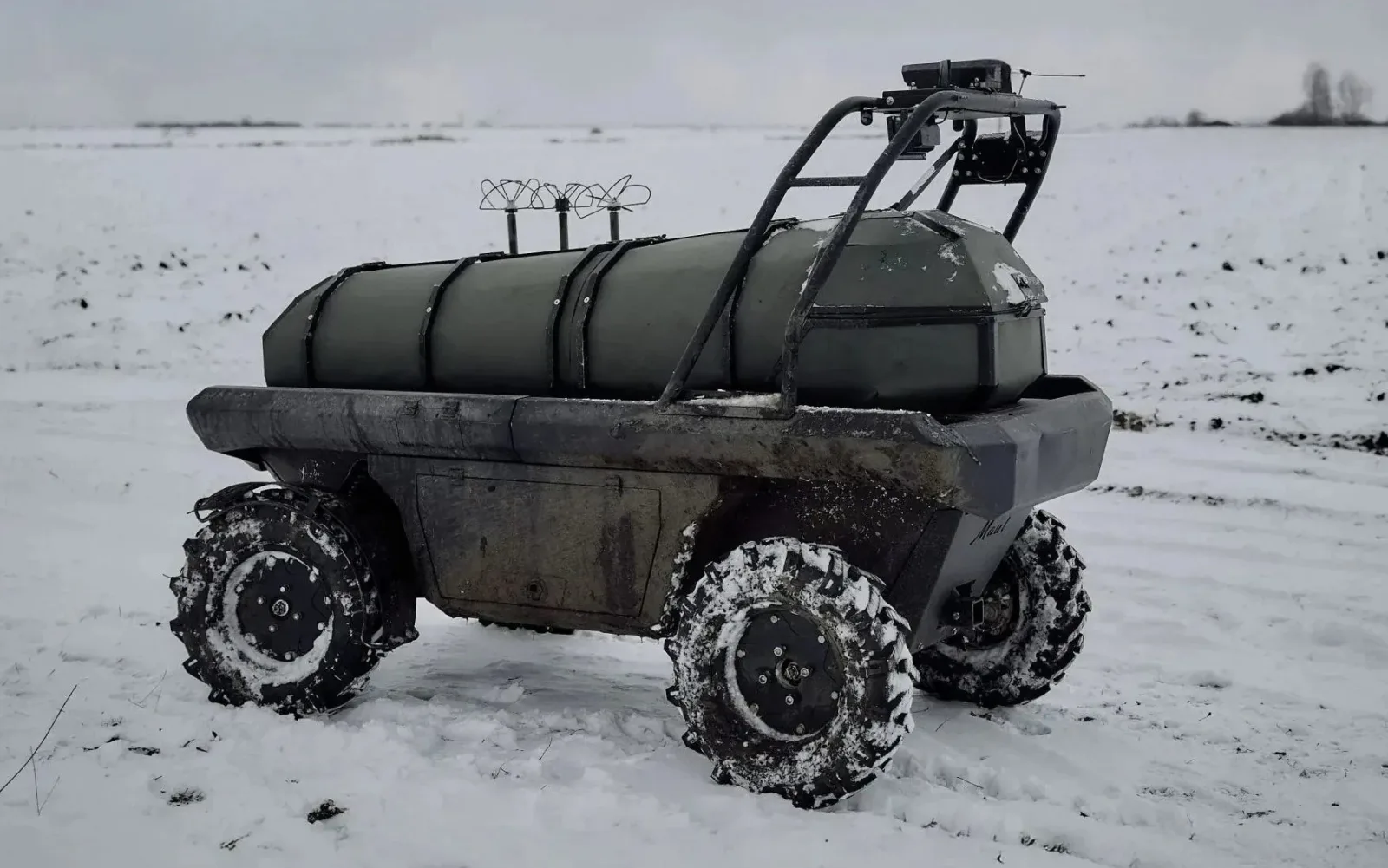
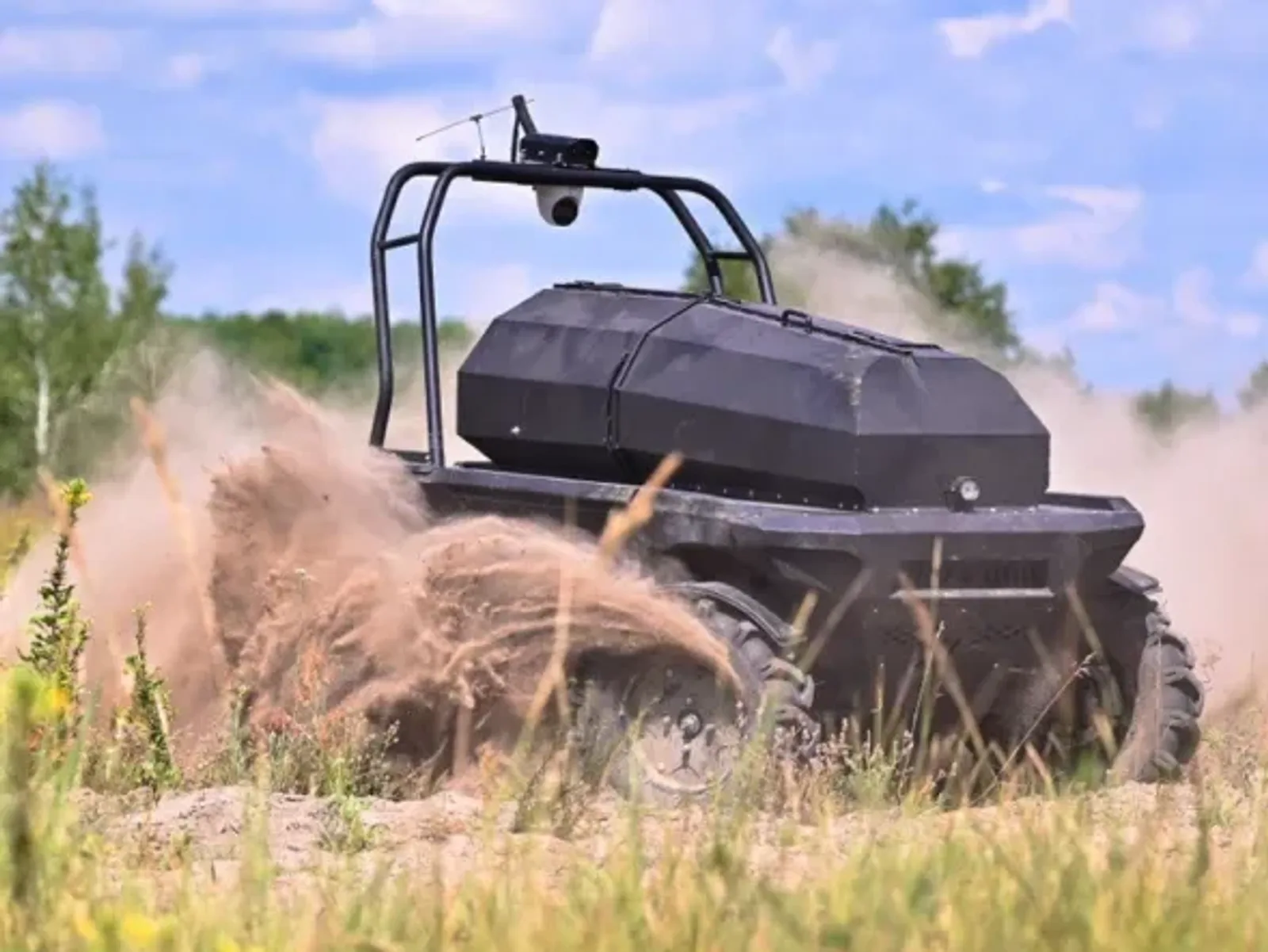
Kuziv presented one of more than 50 different UGV systems now in use: a Ukrainian-developed „drone ambulance“ capable of retrieving casualties from dozens of kilometers away, without requiring medical personnel to enter the danger zone at all.
Earlier systems relied on one or two stretchers mounted on a UGV chassis. The newer „Maul“ system instead uses what can only be described as a coffin-like enclosed box, in which the wounded soldier is transported — with an integrated camera monitoring their condition throughout.
In one of the first major operations using such a UGV, Kuziv described the successful extraction of a soldier who had been trapped for weeks in a besieged city — a drone-based rescue that required eight to ten hours of preparation and roughly six hours of active operation. While such missions demand extensive planning and skilled remote operators, Kuziv believes UGV deployment will grow substantially more important in the years ahead.
Safety, Deep Underground
Kuziv was also directly involved in introducing another line of defense for wounded soldiers: underground hospitals. Together with the industrial group Metinvest, he helped build Ukraine’s first underground field hospital in 2024.
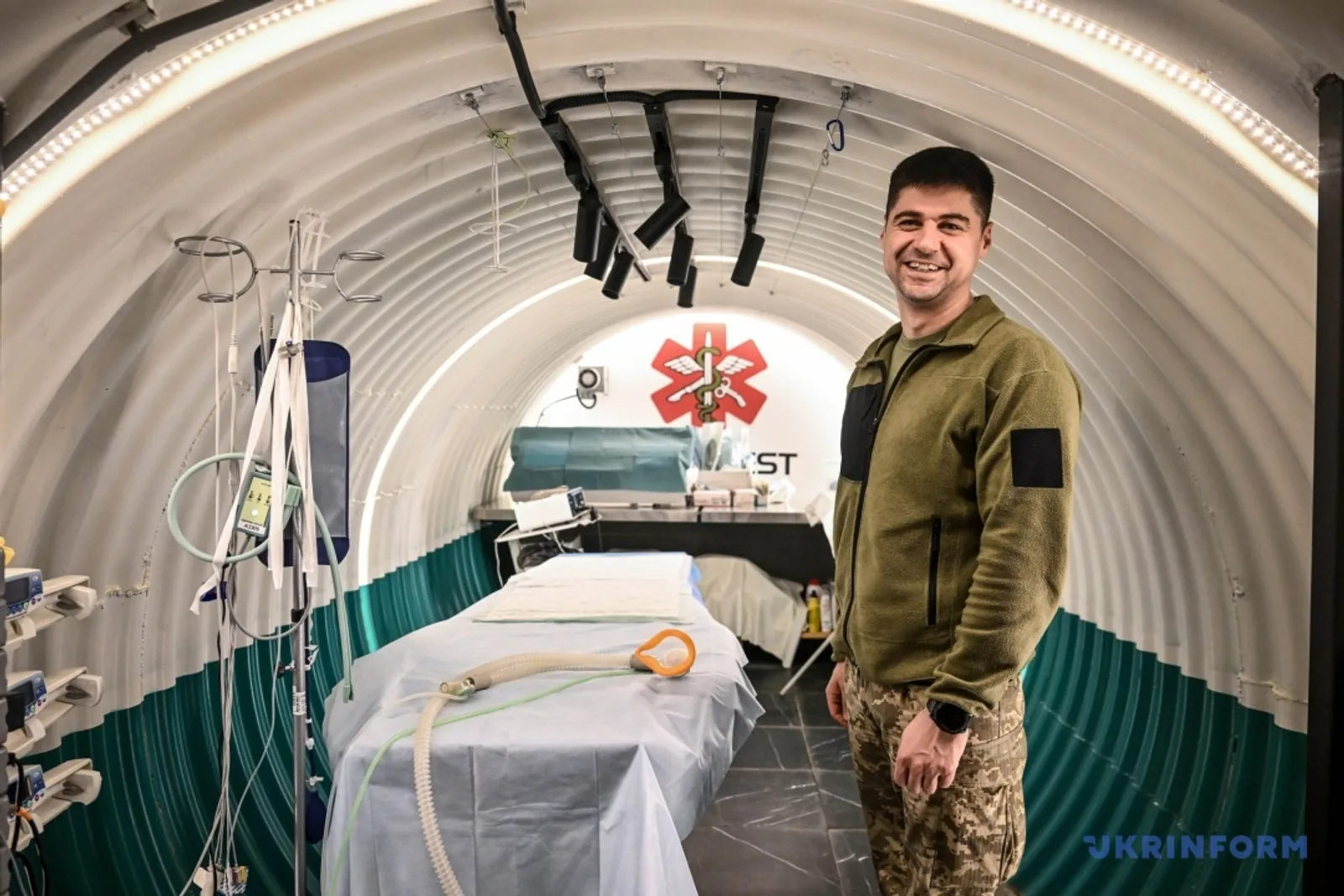
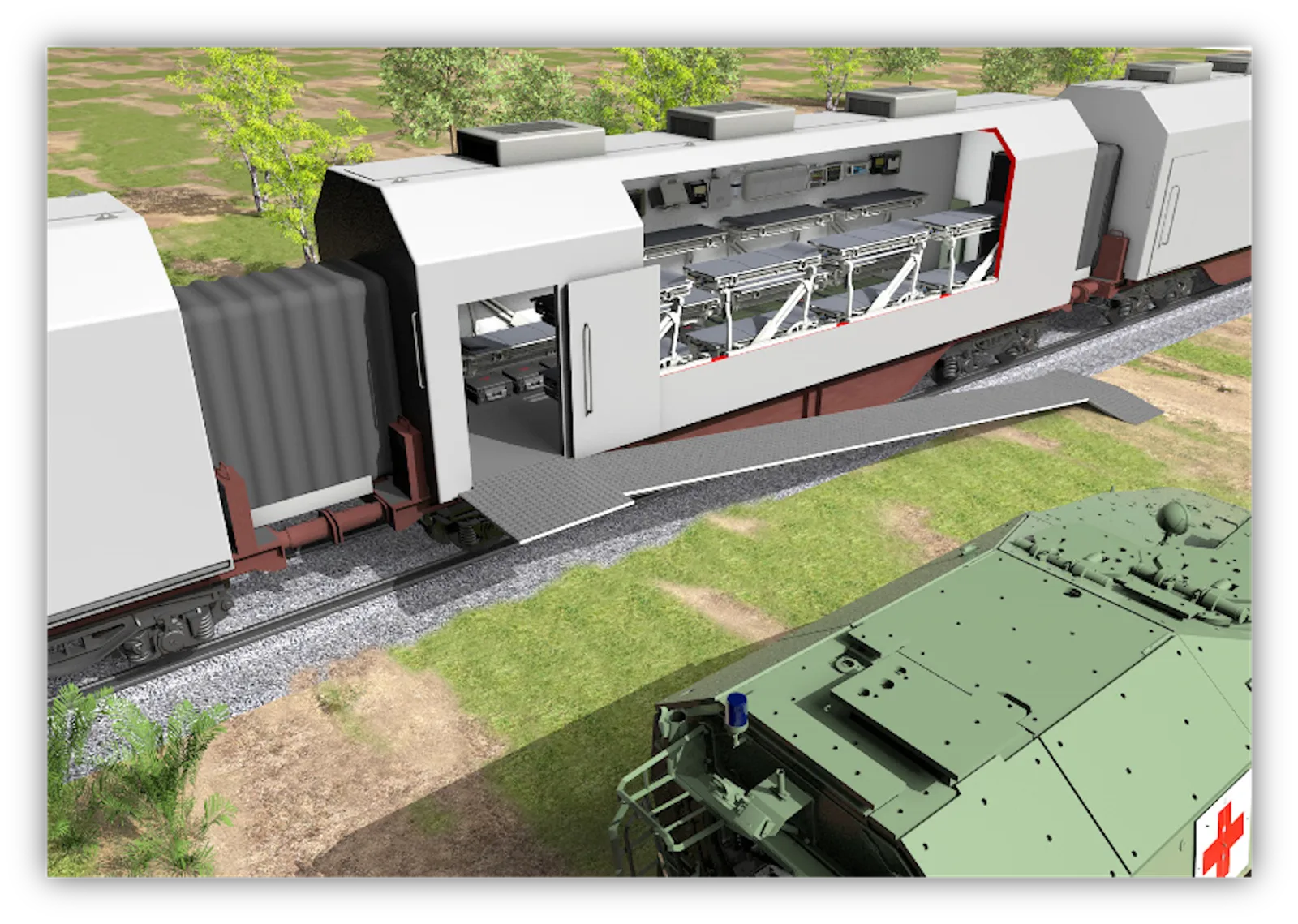
These underground clinics draw on expertise from Metinvest’s „Steel Front“ initiative, which produces steel protective bunkers. Modules resembling large buried steel cans were sunk roughly six meters underground for the project. Equipped with operating rooms and an intensive care unit, the facility was tested against a range of potential attacks.
According to Metinvest, more than 6,000 wounded soldiers were treated at the first underground field hospital in its opening year alone. A second facility followed in 2025, with at least twenty more approved by Ukraine’s Ministry of Defense.
An App to Support Diagnosis
In Budapest, Kuziv had one more announcement: with outside support, he plans to launch a digital tool for sharing military medical knowledge, aiming to deliver Ukraine’s battlefield medical experience directly to combat medics and field doctors worldwide. The planned app is called TAAA — „Tactical Aid Assist.“
It will build on „Noble Slave,“ a closed, internationally oriented professional platform where verified case studies, treatment protocols, and training materials from the war are being compiled. Similar to the technology platform TrophyLab, access is granted only after verification of the user’s professional credentials.
Medical Services Must Keep Preparing
After a string of vivid and grim accounts — booby traps, drone attacks, and wounded Russian soldiers shot in the head by their own comrades — the audience was left largely speechless.
It set up the perfect closing line for Colonel Roman Kuziv’s unambiguous conclusion: anyone who wants to survive the next war needs to start thinking differently today — not once their own wounded are bleeding out in a front zone that FPV drones have made impossible to reach.
Mit WhatsApp immer auf dem neuesten Stand bleiben!