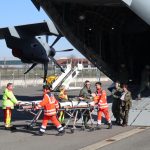
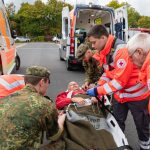
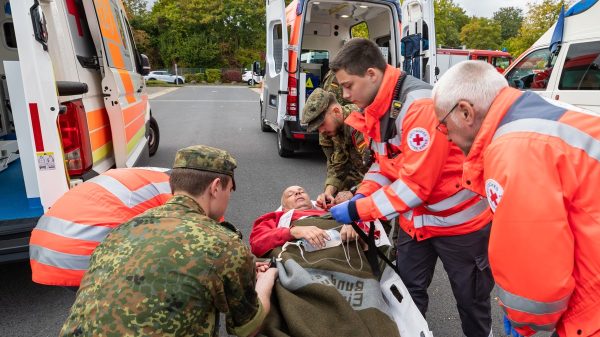
At Berlin-Brandenburg Airport today, the German Armed Forces demonstrated what matters in a defence scenario: a functioning rescue chain from the battlefield on NATO’s eastern flank to civilian hospitals in Germany. Cooperation with civilian rescue organisations is crucial. This is precisely what was practised as part of Medic Quadriga. Defence Minister Boris Pistorius was able to get his own impression of the exercise on site.
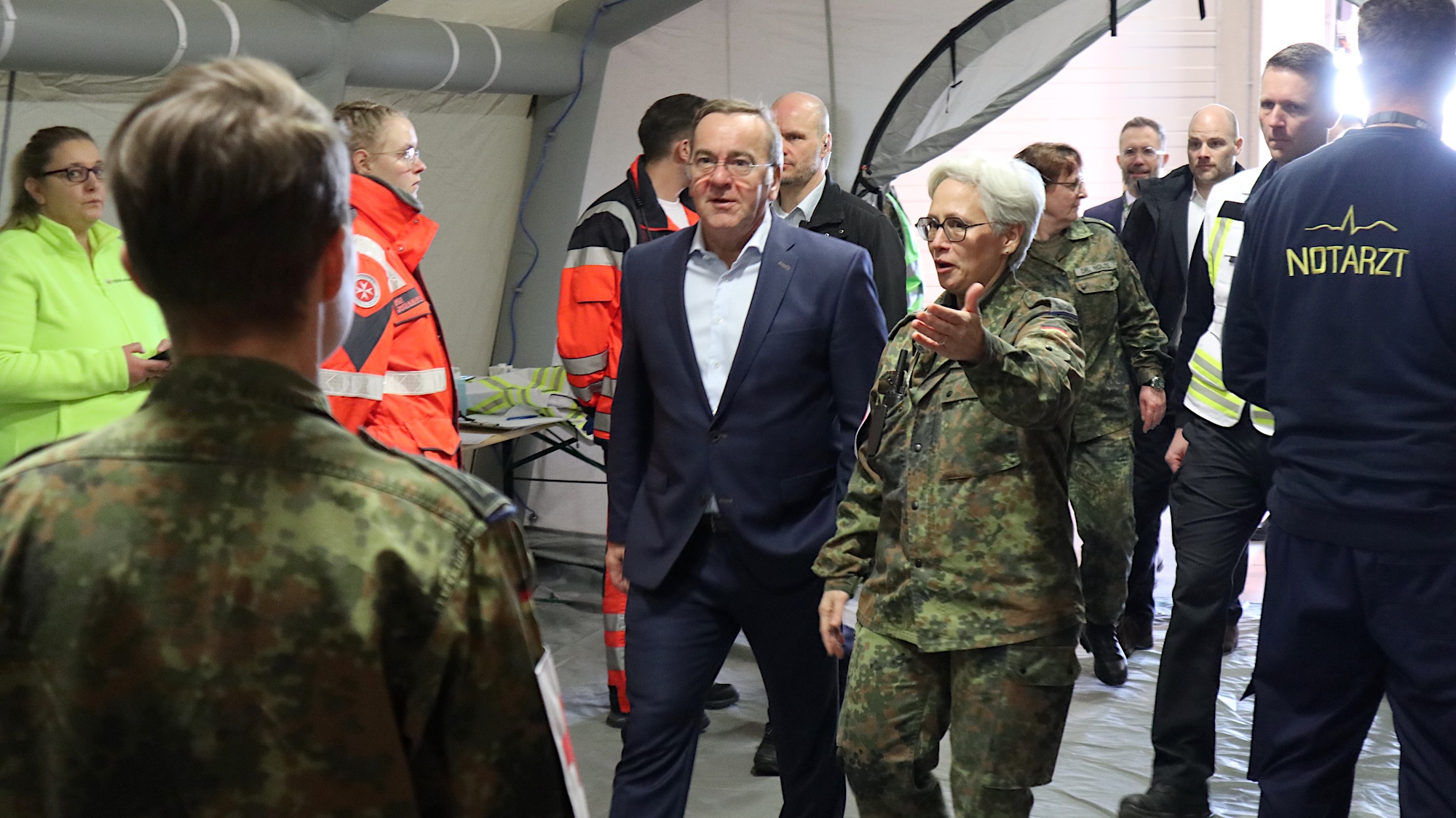
One of the German Armed Forces‘ largest medical exercises in decades is currently taking place at the ExpoCenterAirport at Berlin-Brandenburg Airport. It is called Medic Quadriga and is part of the larger Quadriga 2026 exercise cluster.
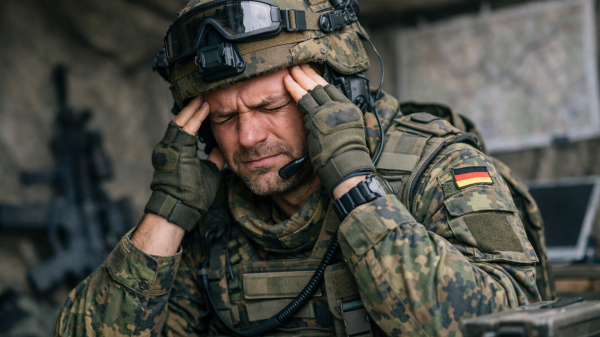
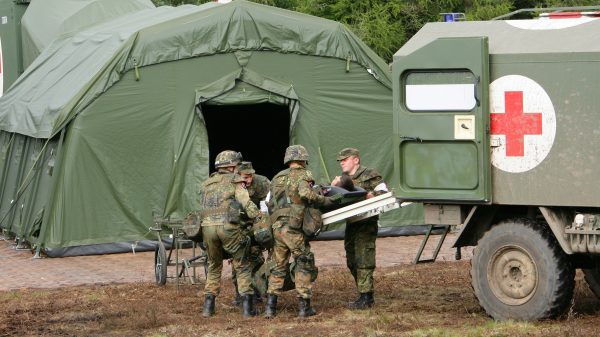
The aim is to put the entire medical rescue chain through its paces under realistic conditions – from initial treatment in the field to further treatment in Germany. In the first part of the exercise, medical personnel practised providing initial treatment and evacuating wounded personnel in Lithuania. Up to 1,000 casualties could be expected there per day.
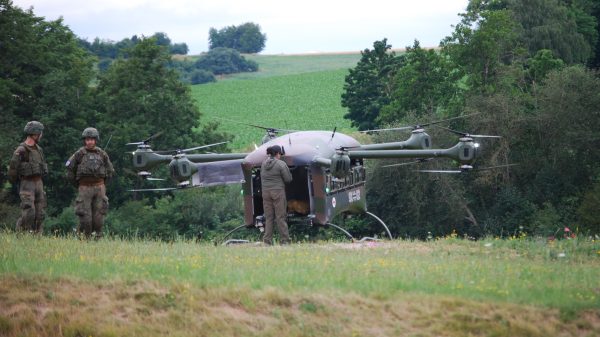
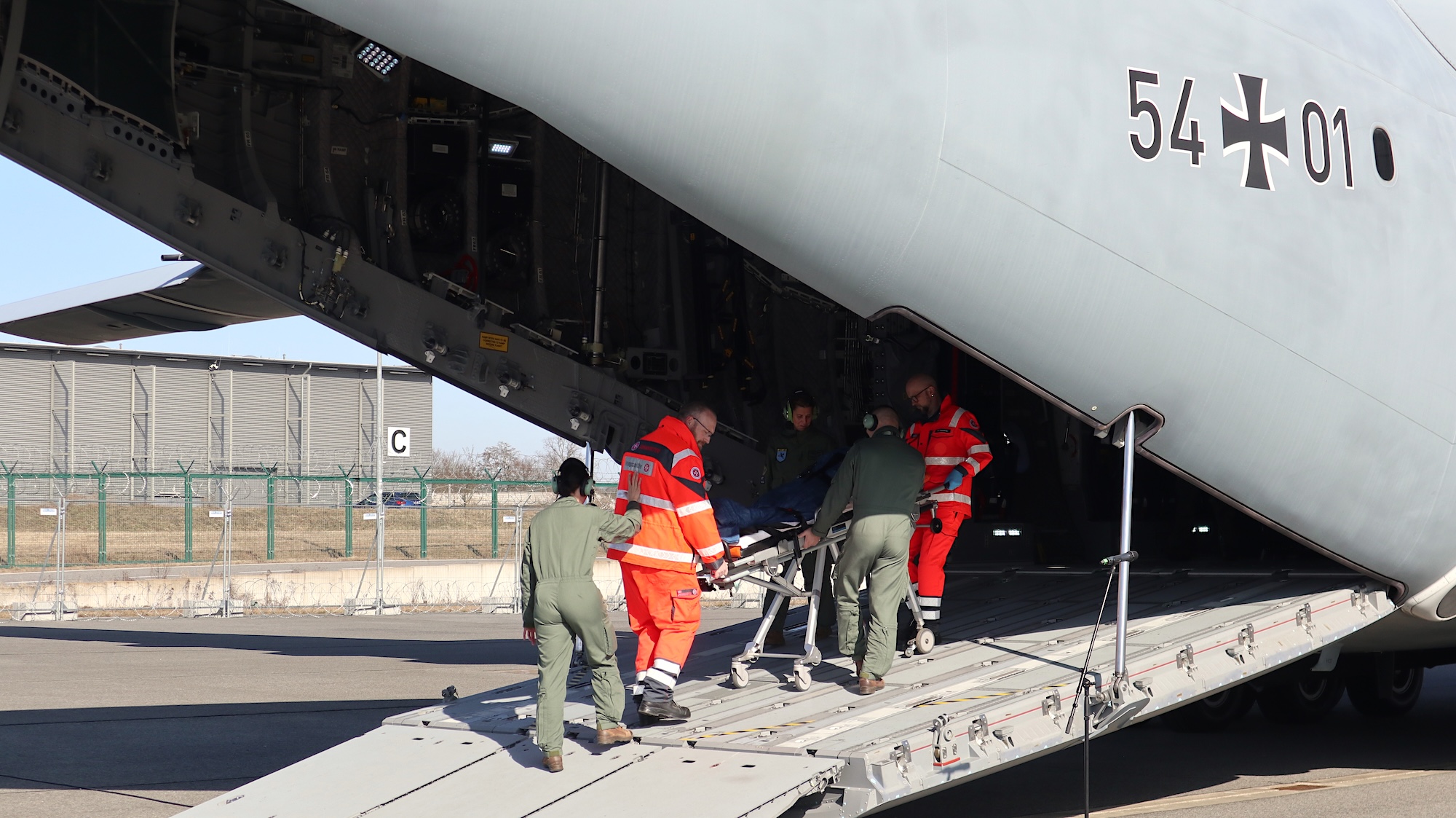
Once the wounded are reasonably stable, they are to be transported to Germany by air, land or sea. The air transport planned for Medic Quadriga had to be cancelled; the aircraft had been kept on standby to evacuate people from the recent war zone if necessary.
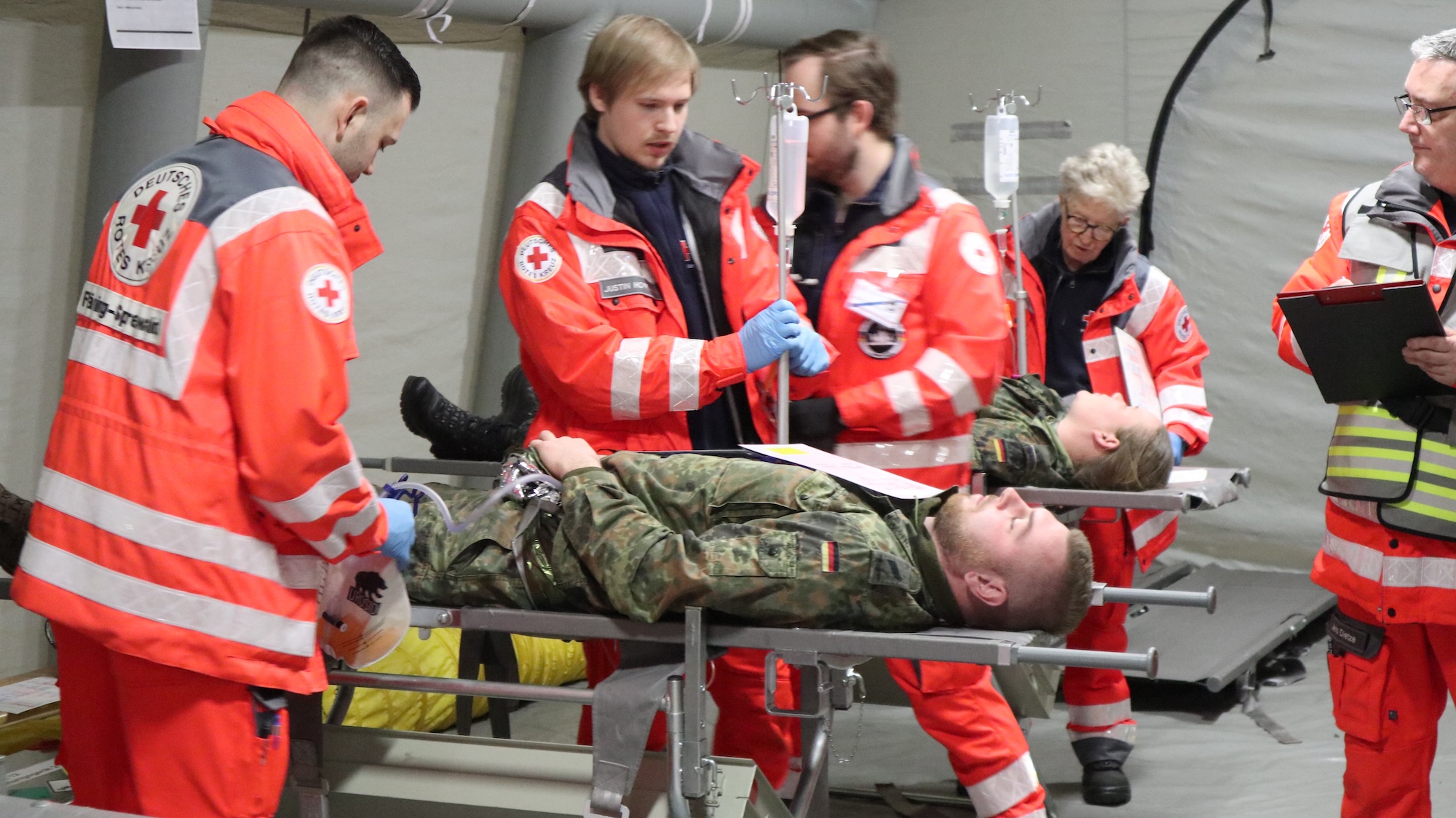
The exercise was conducted from Berlin, where a medical hub was set up. Here, the wounded are received, prioritised, triaged and distributed as quickly as possible to hospitals throughout Germany by civilian organisations such as ADAC Luftrettung, Johanniter and Malteser.
Medic Quadriga aims to deter
Perhaps it was the proximity to Berlin that motivated Defence Secretary Boris Pistorius to announce a last-minute visit to Medic Quadriga. ‘We practise for emergencies in times when there are none, so that we are ready when an emergency does occur,’ Pistorius explained. It is not a question of when an emergency will occur, but of being prepared when it does.
Pistorius certainly couldn’t gain a deep insight into the exercise in such a short time, but the troops probably conveyed its core message to their minister: the link between military and civilian medical care. Transporting wounded soldiers quickly and efficiently to suitable hospitals is a capability that not every army has.
From a German perspective, however, maximising the survival rate of wounded soldiers is fundamental – not only because of our own commitment to care, but also beyond that.
Pistorius accordingly emphasised the signal effect of the exercise to the outside world: ‘By practising something like this, we are sending a strong signal to the alliance.’ Through Medic Quadriga, allies can see that the Bundeswehr is practising exactly what would be important in an emergency. ‘But it is also a signal to a potential aggressor in the sense of deterrence,’ added the minister.
Chain of rescue must be interlinked
Senior Medical Officer Dr. Ralf Hoffmann is aware of the military and medical significance of the exercise. ‘It is important that the chain of rescue, with all its components, functions in an interlinked and resilient manner,’ explained the commander of the Bundeswehr Central Medical Service.
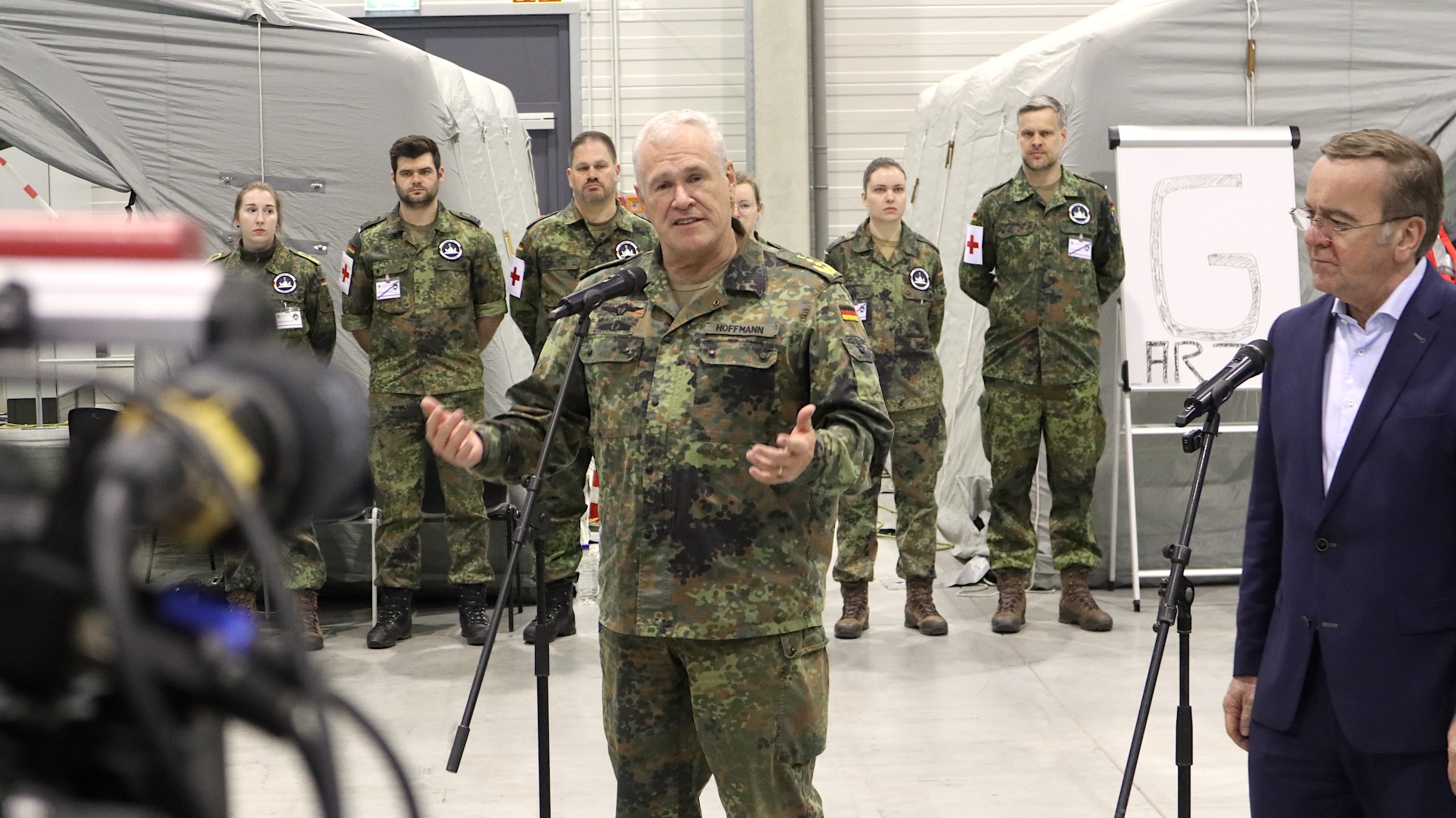
‘This means that the soldiers who are being treated at the front are brought back, admitted here, and then distributed to the appropriate treatment facilities in the country.’ For Senior Medical Officer Dr. Hoffmann, Medic Quadriga is more than just an exercise: ‘This is the only way we can contribute to the resilience and endurance of the armed forces.’
And, as with Pistorius, Dr. Hoffmann also emphasises the deterrent aspect: ‘It sends a signal to potential aggressors that we, as Germany and as the Bundeswehr, do not stand alone, but that we stand together and see this as a task for the entire state.’
Not public relations, but professionalisation
The fact that Medic Quadriga is a national task was also evident in the participation of the civilian side. Dr Ina Czyborra, Berlin’s Senator for Health, was also present. She made it unmistakably clear what the exercise achieves and what it is not: ‘Medic Quadriga is not a symbolic act in which we are engaging in PR in any way, but it is really an exercise.’
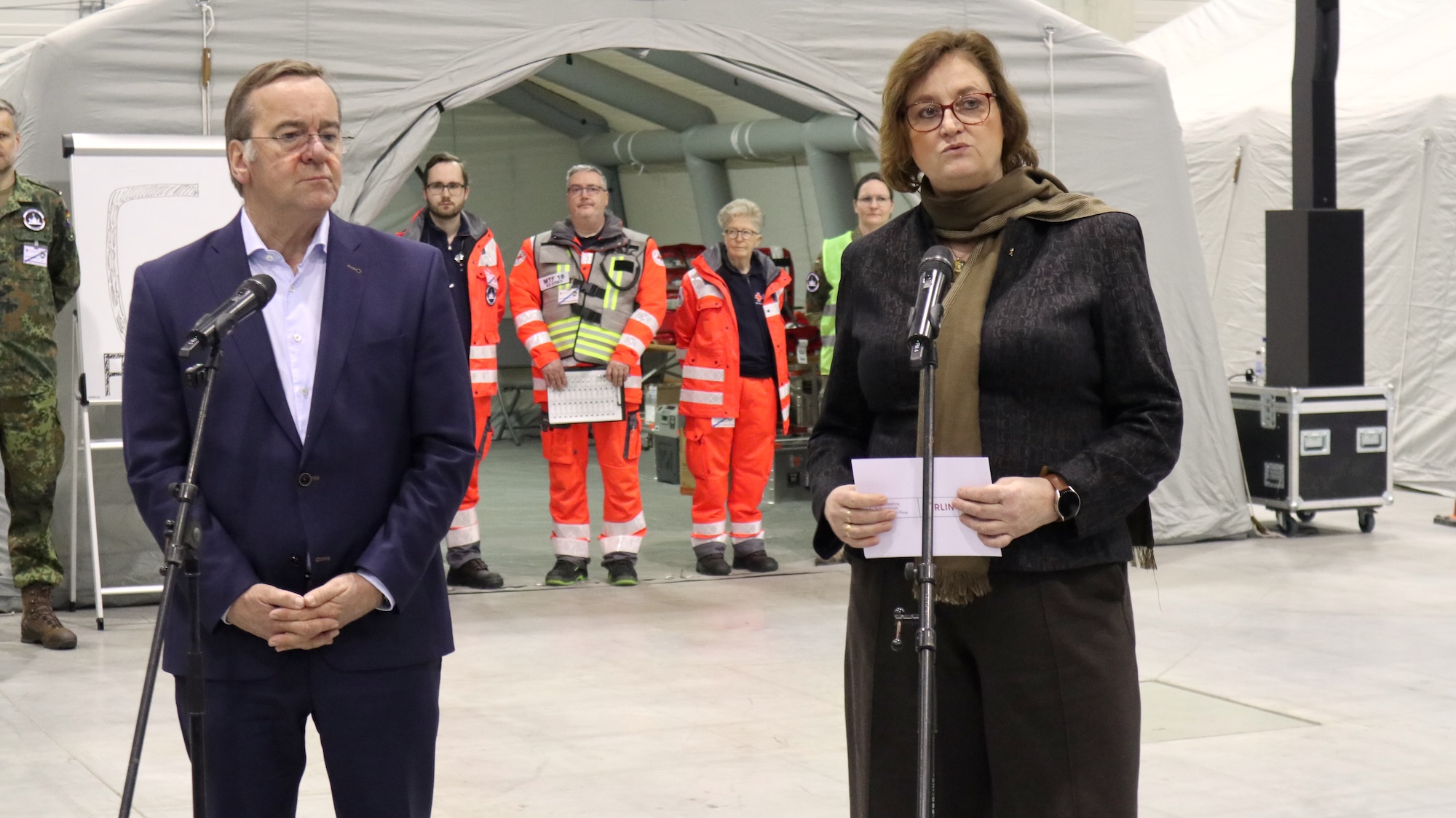
It is not about dramatisation, but about professionalisation – and thus about providing essential services: for the population as well as for the care of the wounded in the event of defence.
Czyborra emphasised the jointly developed structures: „We practise a wide variety of scenarios, including mass casualties, very intensively. It is important to find out what does not work – who has to do what in which case, who decides where. Certain debates must not only begin in a crisis situation.“
Exercise as a promise
Medic Quadriga 2026 is more than a military stress test. It is a public commitment: Germany is practising seriously, Germany is preparing itself – and Germany understands national defence as a joint task of the military, aid organisations and politics.
It is clear to everyone involved that not everything is running smoothly yet. After all, the purpose of an exercise is to identify shortcomings and improve what has been practised. However, when speaking to management below the level mentioned above in Berlin today, we were told that a great deal has actually worked very well in recent days.
Hopefully, we will never have to find out whether this will be enough when an emergency actually occurs. But the fact that exercises are being carried out is already part of the answer.
Mit WhatsApp immer auf dem neuesten Stand bleiben!