When it comes to the Lithuania Brigade, the talk is usually of tanks, drones and armoured infantry. But one thing is also clear: German soldiers stationed permanently on NATO’s eastern flank need adequate medical support. That support is to be larger than previously known, as Brigadier General Christoph Huber, commander of Panzer Brigade 45, revealed in an interview with Defence Network: a medical battalion is to deploy to Lithuania in 2027.
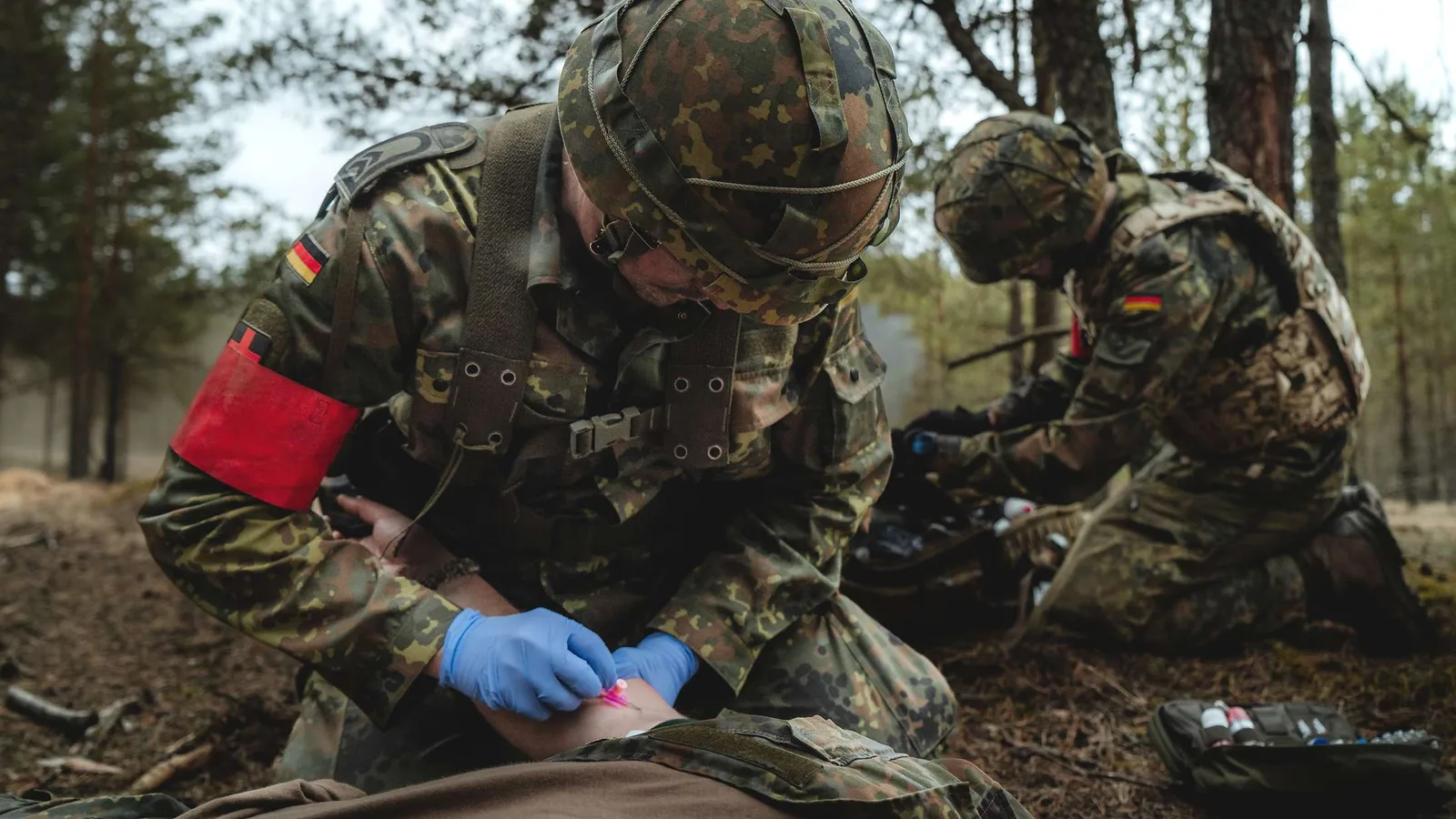
In the interview published today, Brigadier General Huber, commander of Panzer Brigade 45 “Lithuania”, mentioned a new detail about the medical support for his troops, almost in passing. “In the future, we will have a medical battalion here on site, which will deploy to Lithuania in the second half of 2027,” General Huber said.
It was not previously public knowledge that medical forces of this size would deploy to the Baltics. According to information obtained by Defence Network, the unit is to be called “Sanitätsbataillon Litauen” (Medical Battalion Lithuania). It is currently being staffed and equipped in Germany and is thus working towards deployment readiness.
From Medical Centre to Chain of Rescue
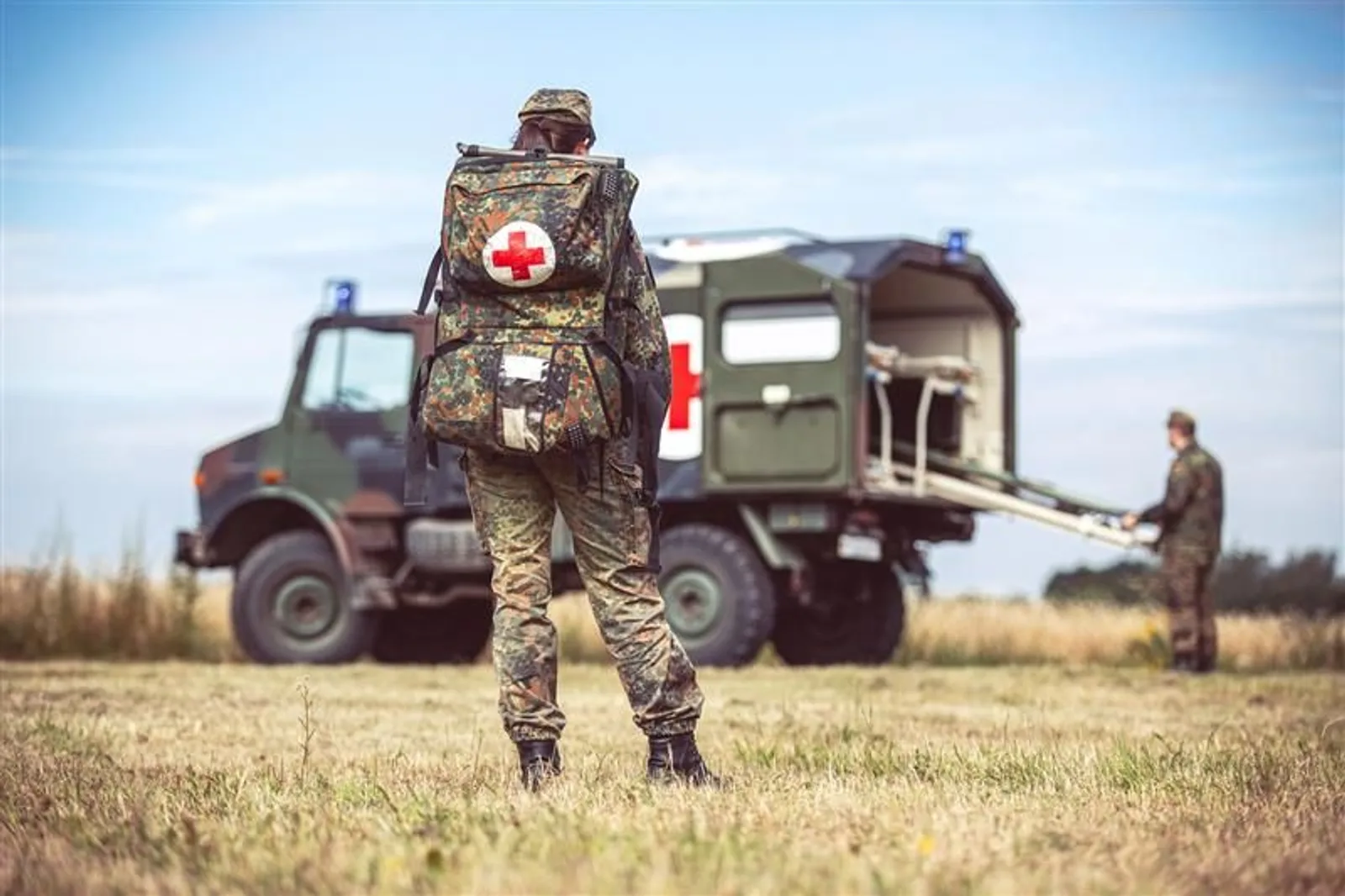
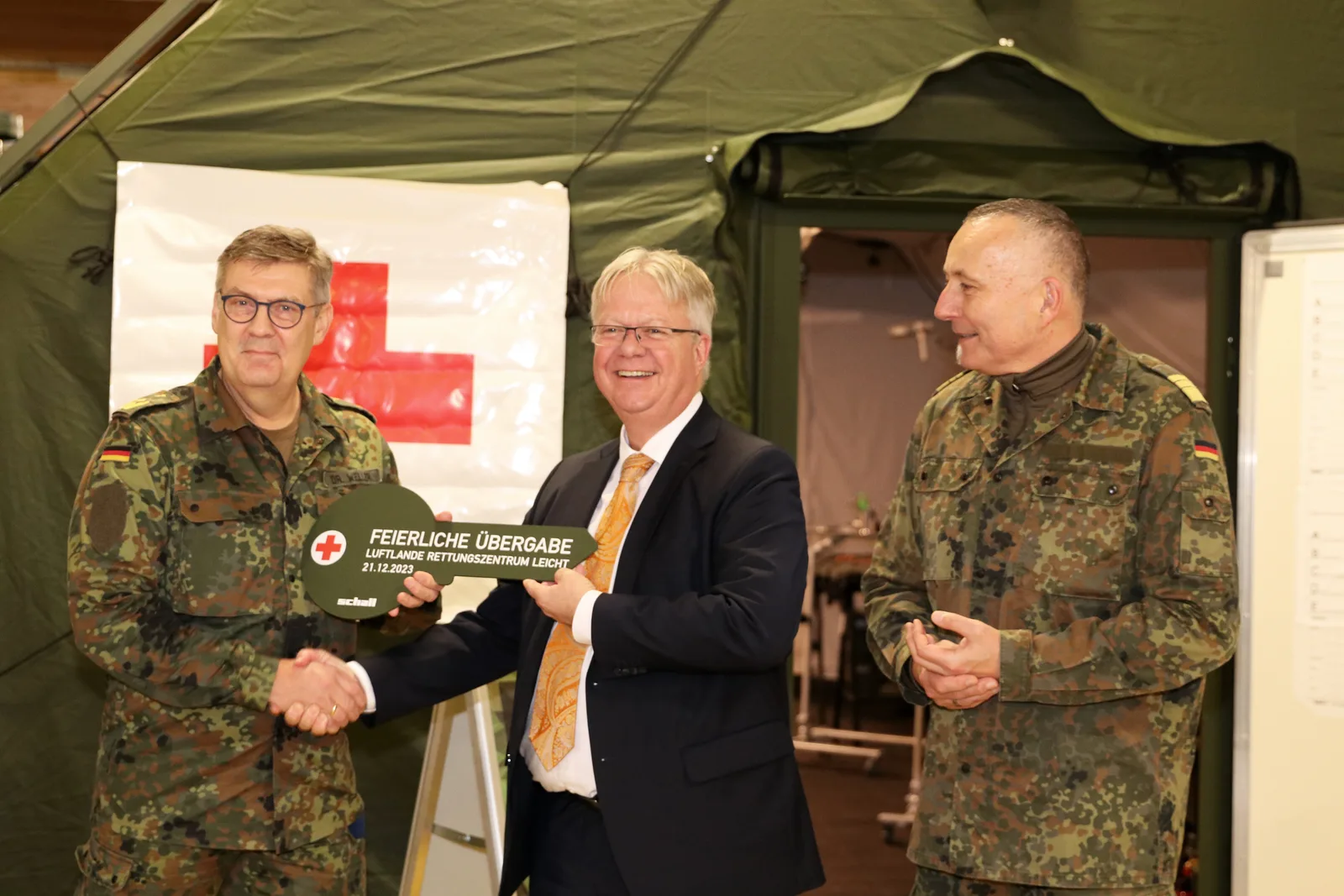
“At present, the Medical Service is represented in Lithuania at the Rudninkai site with a medical centre that provides troop medical and dental care as part of the free-of-charge troop medical care,” a spokesperson for the Bundeswehr Support Command told Defence Network. The target structure includes a second medical centre in Rukla.
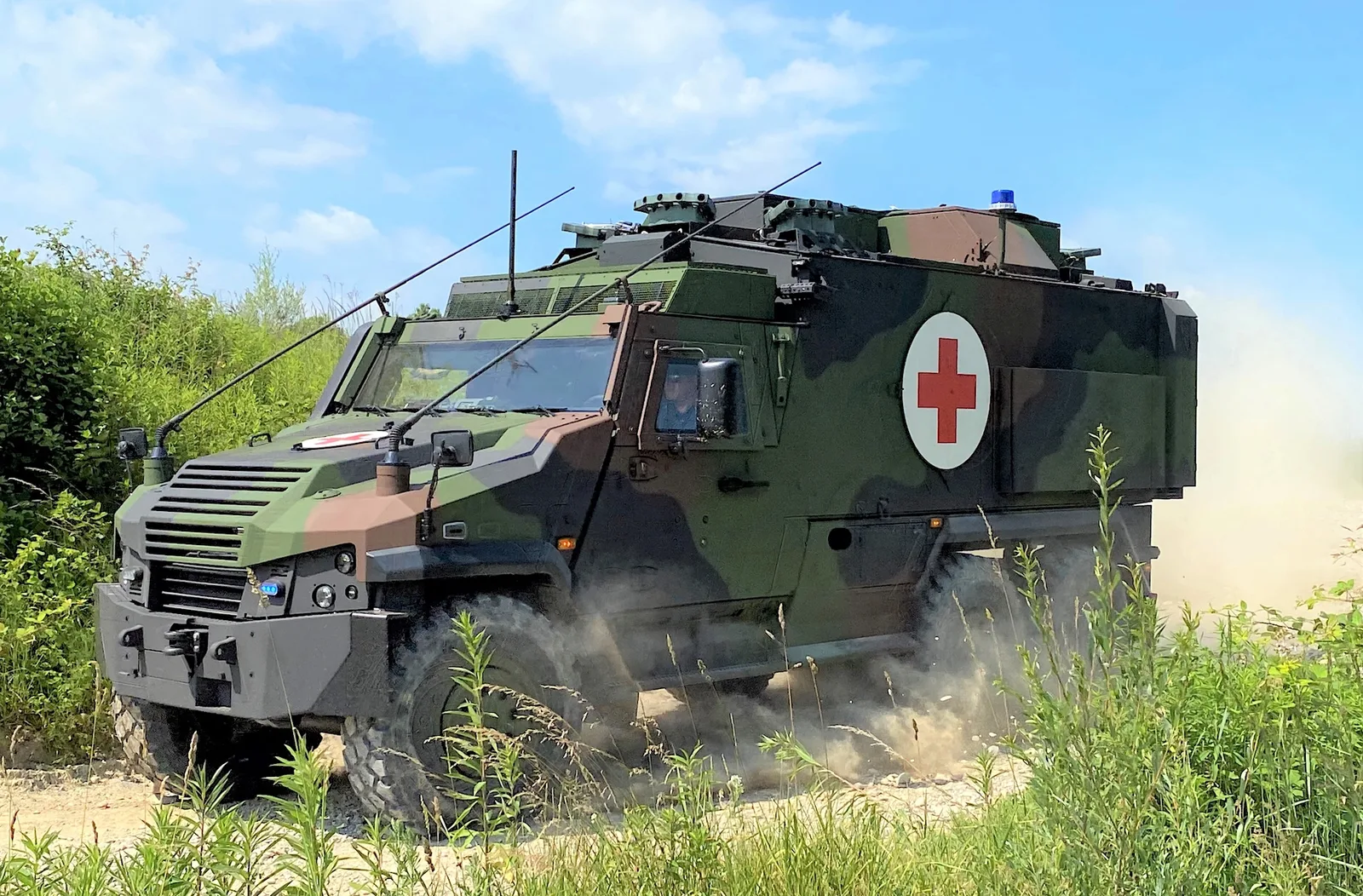
When it will come depends on the growth of the brigade and on the available infrastructure. In peacetime, which currently persists despite Russia’s hybrid war against Germany and NATO, the medical forces are led by the Support Command. Its deputy commander, Surgeon General Ralf Hoffmann, is at the same time Commander of the Bundeswehr Joint Medical Service. The medical forces are not subordinated to the Army, not even in Lithuania. This means the Medical Battalion Lithuania will not be integrated into Panzer Brigade 45.
In the event of collective defence, this changes for part of the forces: Role 1 forces (rescue stations) will be placed under Army command, but “forces of Role 2 (rescue centre/medical battalion) will not be, even then,” the spokesperson said. Both Role 1 and Role 2 are planned for Panzer Brigade 45 and other German forces in Lithuania. These forces are to reach full operational capability by 1 January 2028.
Chain of Rescue from the Baltics to Germany
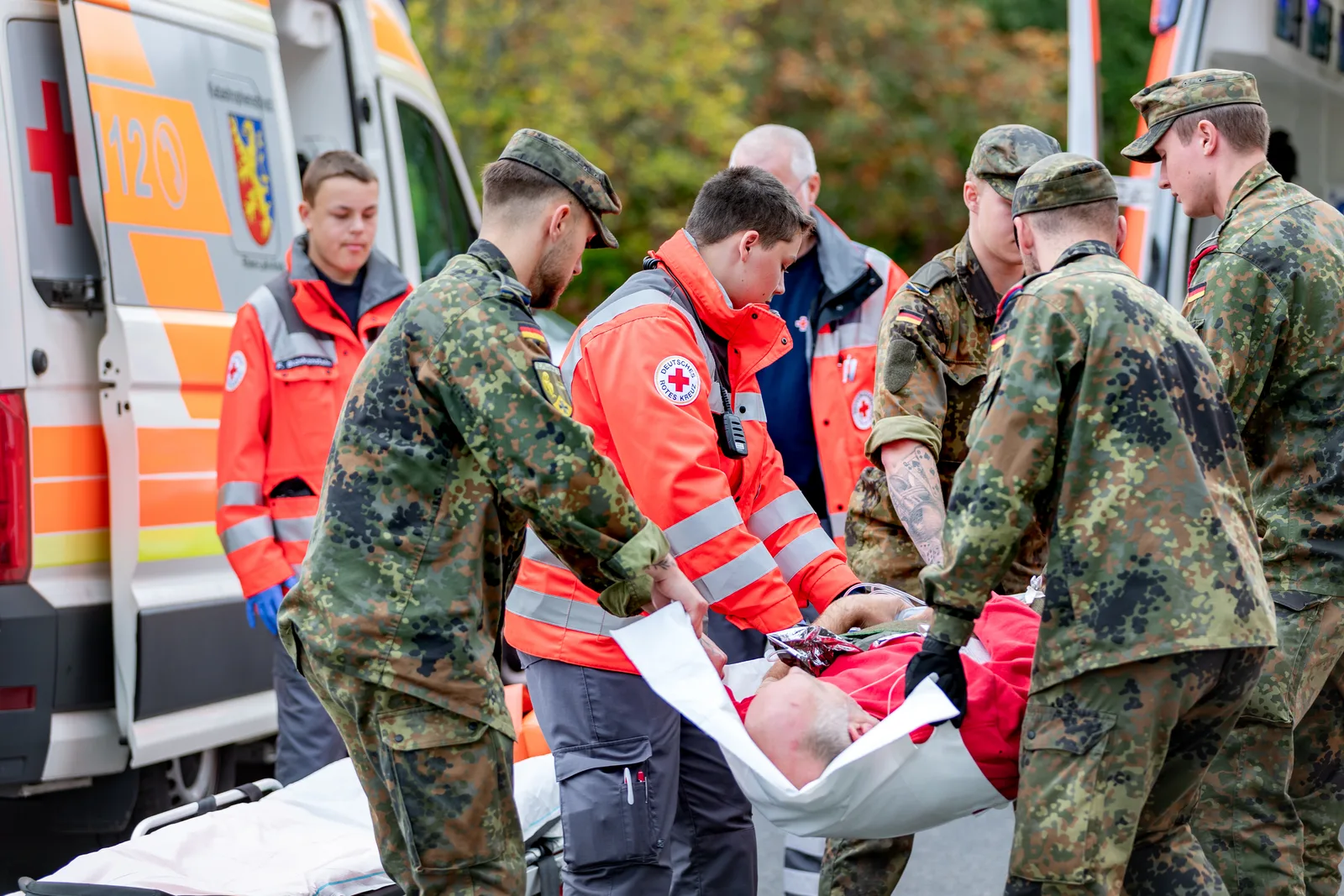
How all this works together in combat is described by the chain of rescue for national and alliance defence (LV/BV). It begins with first responders A and B, that is, combat troops who learn mainly haemorrhage control in roughly one week of basic training.
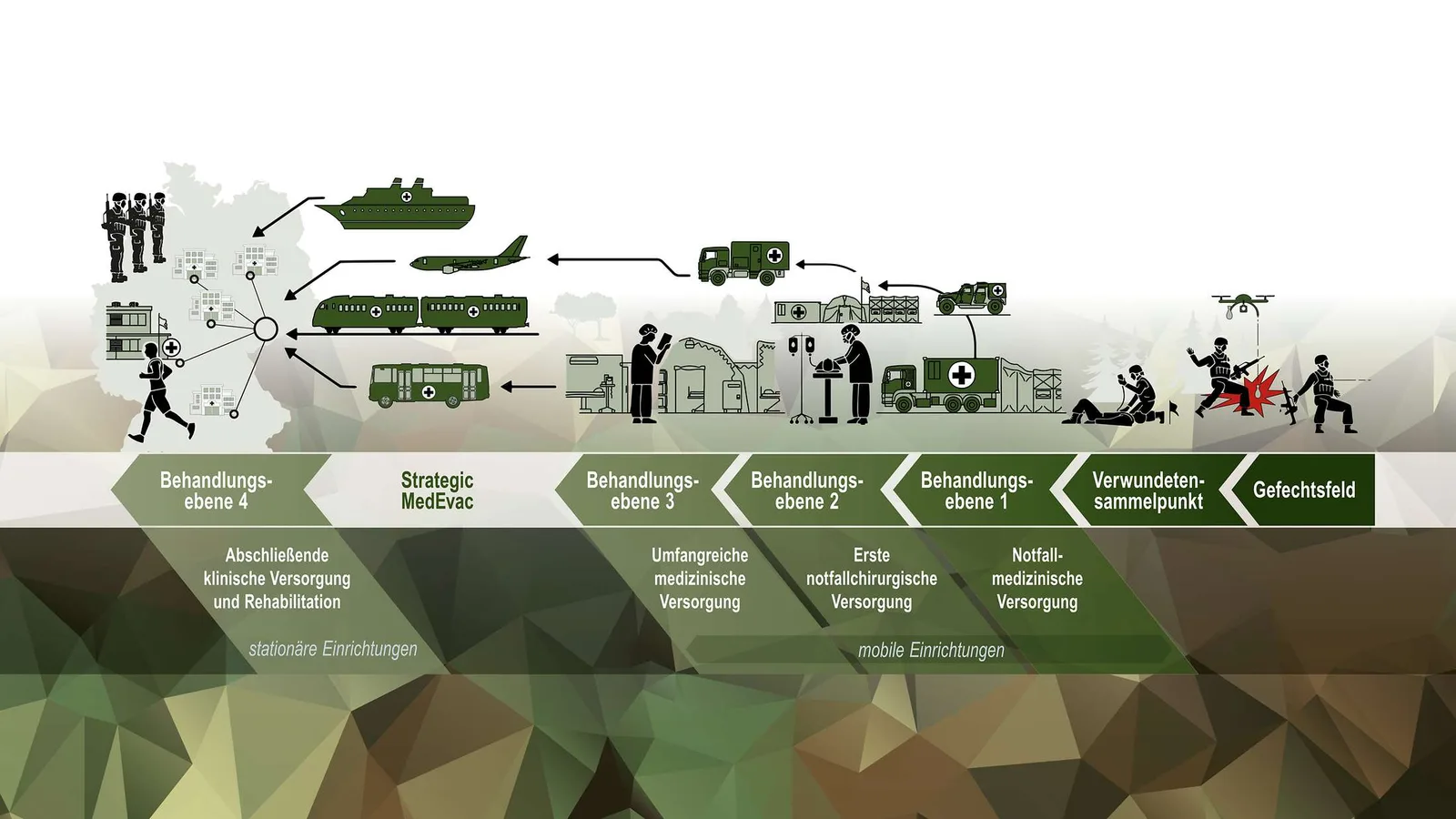
A rescue team, usually with a protected medical vehicle, brings casualties to the Role 1 rescue station. There, triage and stabilisation take place. At brigade level, Role 2 offers emergency surgical care with an operating theatre, intensive care beds and a ward. At division level, a Role 3 field hospital with up to 144 beds stands ready in the event of collective defence.
How great the demand could become is indicated by a figure quoted for LV/BV: current estimates assume up to 1,000 casualties per day. However, this is a planning figure for the entire scenario and not a forecast for the Lithuania Brigade. The loading point for strategic casualty transport to the home country is also located at the field hospital.
How Many Medics Are Coming to Lithuania?
How many medical personnel will deploy to Lithuania is currently unknown. A medical battalion typically comprises several hundred soldiers in several companies. According to information available to Defence Network, the Medical Battalion Lithuania is to be included in the known total for the Lithuania Brigade, which covers all forces stationed in Lithuania: around 4,800 soldiers and 200 civilian employees. Hence, within the target structure, the following applies: the higher the number of medical personnel, the lower the number of combat troops.
The number of medical personnel already in Lithuania is also not publicly known. The Support Command does, however, point to a two-part approach, with forces permanently present in Lithuania and reinforcement forces in Germany. On this, the spokesperson said: “This way, comprehensive medical support for the entire Lithuania Brigade can and will be ensured.”
Medical Battalion Lithuania: Training for the Real Thing
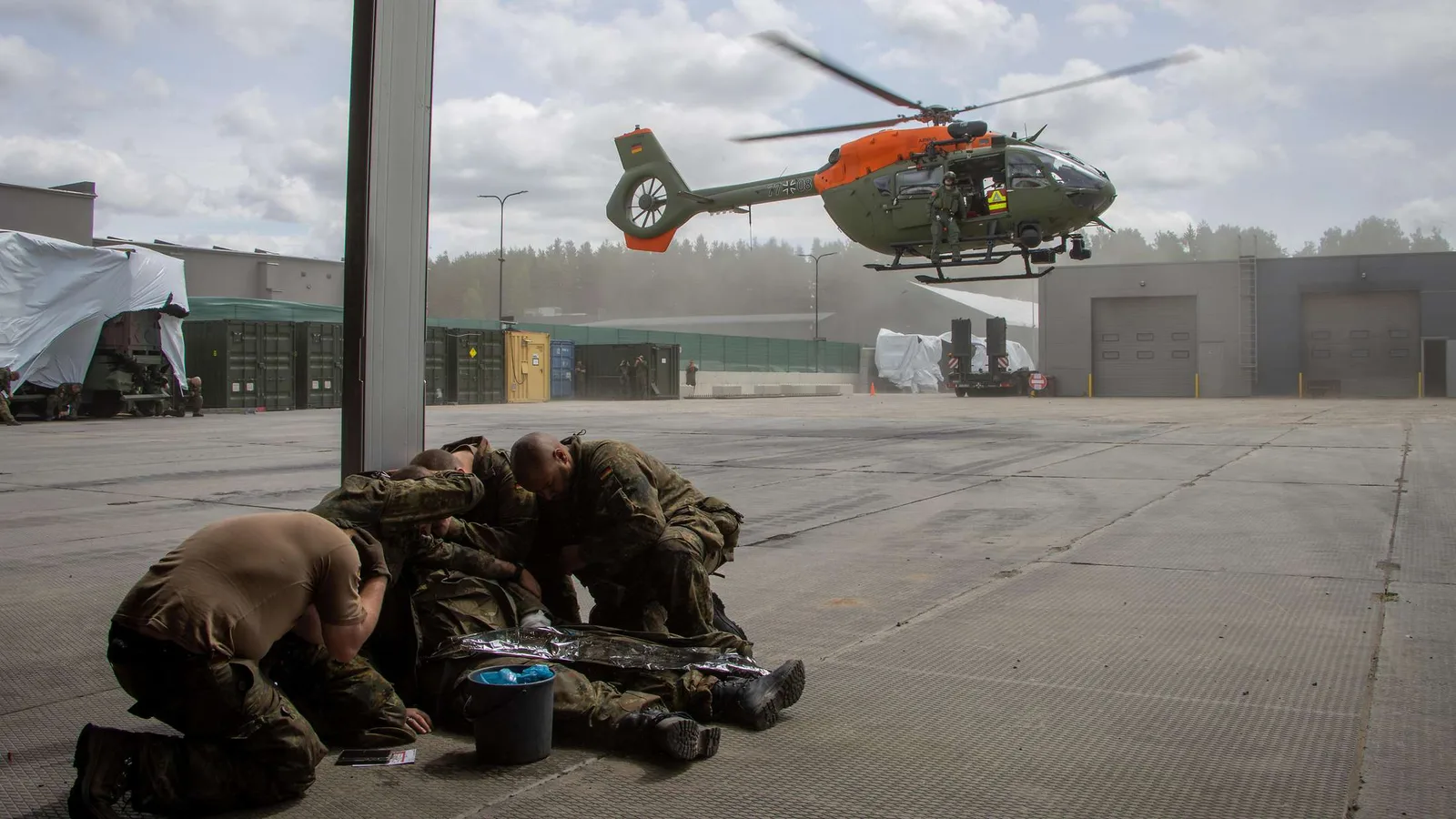
That medical support is important to General Huber, however, he makes clear in the interview: “Casualty care [has] top priority for me.” Soldiers are trained in it with the help of the Medical Service during every exercise, starting with self-aid and buddy aid.
In November, the brigade will conduct the exercise “Freedom Shield 26-II”. The chain of rescue will also be played through with realistic distances up to Role 2: Are there enough vehicles, and what must the combat troops themselves manage during CASEVAC up to Role 1?
The Medical Battalion, which will arrive in the second half of next year, is intended to make cooperation between combat and medical troops even closer than it sometimes is in Germany because of “scarce resources”, General Huber said.
Mit WhatsApp immer auf dem neuesten Stand bleiben!